A low-sugar protein supplement is defined as a product delivering 20–30 grams of protein and under 5 grams of sugar per serving, within a 100–200 calorie range. That single standard, drawn from Johns Hopkins Medicine nutrition guidelines, gives you a clear filter before you read a single marketing claim. When you choose a low-sugar protein supplement, you are making a decision that affects blood sugar, body composition, and long-term dietary results. The criteria are not complicated, but the supplement aisle is designed to obscure them.
Why is keeping sugar low important in protein supplements?
Sugar in protein powder is not a minor detail. Some protein powders contain up to 23 grams of sugar per scoop. That is nearly six teaspoons of sugar in a product most people assume is a clean, health-focused food.
High sugar content in a protein supplement creates three real problems:
-
Blood sugar spikes. Rapid glucose rises trigger insulin responses that promote fat storage and energy crashes, especially in people managing diabetes or insulin resistance.
-
Calorie surplus. A protein powder with 23 grams of sugar adds roughly 90 extra calories from sugar alone. Across a week, that accumulates fast.
-
Undermined goals. Weight management and metabolic health both depend on stable blood glucose. A high-sugar supplement works against both.
Current guidance targets under 3 grams of added sugar per serving as the practical benchmark. That is a tighter standard than the 5-gram ceiling, and it reflects where nutrition science has moved in 2026. The difference between 3 grams and 23 grams is not trivial. It is the difference between a supplement that supports your goals and one that quietly undermines them.
Pro Tip: Check the “Added Sugars” line on the Nutrition Facts panel separately from “Total Sugars.” Natural sugars from milk in whey concentrate will appear in total sugars but are not the same metabolic concern as added sugars.
What nutritional and ingredient factors matter when choosing a protein supplement?
Protein quality and sugar content are the two headline numbers, but five other factors determine whether a supplement actually works for you.
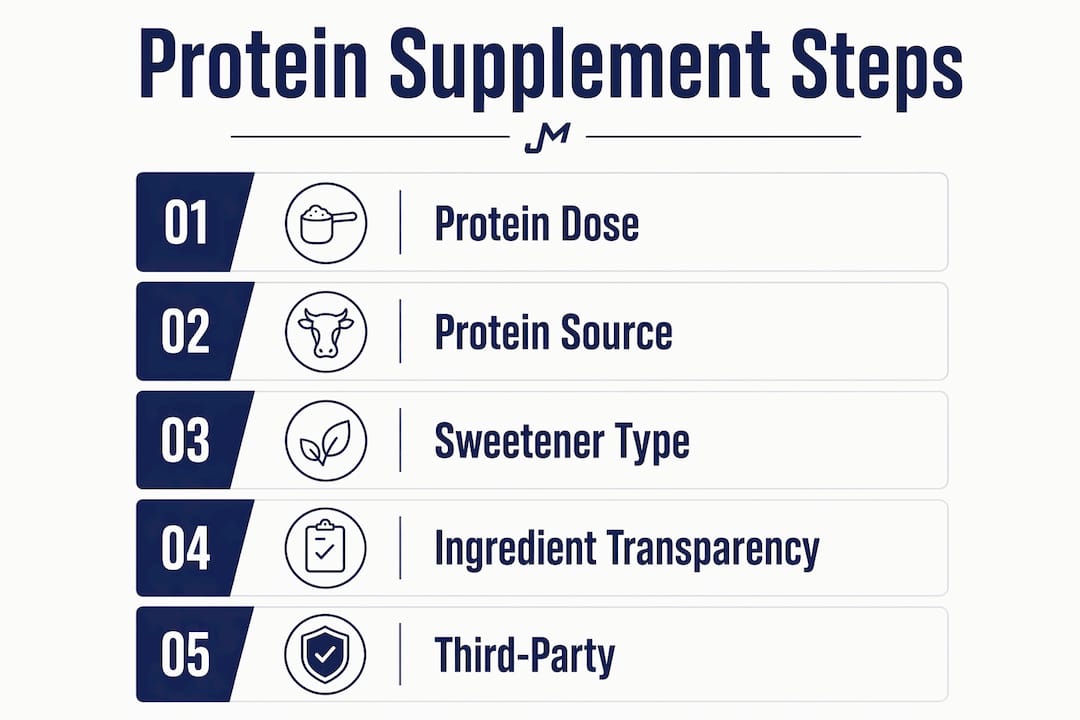
1. Protein dose per serving
Target 20–30 grams of protein per serving. This range supports muscle protein synthesis without excess calories. Products delivering less than 15 grams per serving rarely justify their price or calorie cost.
2. Protein source
Whey protein isolate is preferred over whey concentrate for muscle support. Isolate contains higher leucine levels, absorbs faster, and carries significantly less lactose. That matters for anyone with mild dairy sensitivity. For plant-based needs, a blend of pea and rice protein delivers a complete amino acid profile. Complete proteins like whey and soy blends are nutritionally superior to collagen alone for muscle maintenance. Collagen is a useful add-on, not a primary protein source.
3. Sweetener type
Natural sweeteners like stevia and monk fruit are the preferred choice for blood sugar control. They add sweetness without raising glucose. Artificial sweeteners such as sucralose and acesulfame potassium are not inherently dangerous, but they are less preferable for people managing metabolic conditions.
4. Ingredient transparency
Proprietary blends often obscure protein concentration and may contain fillers. A label that lists “protein blend” without individual ingredient weights is a red flag. Choose products that list every ingredient with its exact amount.
5. Third-party certification
Third-party certification from organizations like Informed Sport confirms that what is on the label is actually in the product. It also screens for banned substances. This matters for competitive athletes and for anyone who simply wants to trust what they are consuming.
The table below summarizes what to look for versus what to avoid.
| Factor |
Look For |
Avoid |
| Protein per serving |
20–30 grams |
Under 15 grams |
| Sugar per serving |
Under 3 grams added sugar |
Over 5 grams total sugar |
| Sweetener |
Stevia, monk fruit |
High-fructose corn syrup, cane sugar |
| Ingredient labeling |
Full transparency, exact amounts |
Proprietary blends |
| Certification |
Informed Sport or equivalent |
No third-party verification |
Pro Tip: If a product lists digestive enzymes like protease or lactase in its ingredient panel, that is a genuine quality signal. Digestive enzymes improve absorption and reduce bloating, which is one of the most common reasons people abandon protein supplements.
How do health goals and dietary needs shape your selection?
The best low-sugar protein options for dieters are not the same as the best options for someone focused on muscle maintenance. Matching the supplement to the goal is the step most people skip.
-
Muscle maintenance. Prioritize whey isolate or a complete plant blend with 25–30 grams of protein per serving. Leucine content drives muscle protein synthesis, so source quality matters more than brand name.
-
Weight loss. Choose a lower-calorie formula in the 100–150 calorie range. High-protein, low-sugar options keep you full without adding caloric load. Pairing protein with a weight management plan that includes independent testing and quality sourcing gives you the best foundation.
-
Diabetes or blood sugar management. Natural sweeteners are non-negotiable. Avoid any formula with maltodextrin, dextrose, or cane sugar, even in small amounts. These ingredients spike glucose regardless of the total sugar count.
-
Dairy intolerance or vegan diet. A pea and rice protein blend covers all essential amino acids. Read the vegan versus whey comparison carefully before choosing, since not all plant blends are nutritionally equivalent.
-
Smaller appetite or medication effects. Concentrated protein powders delivering 20–30 grams in 6–8 oz of liquid reduce GI discomfort and are easier to finish. Large-volume shakes become a burden for people with appetite suppression.
-
Meal replacement use. A protein powder used as a meal replacement needs more than just protein. Look for added fiber, healthy fats, and micronutrients. A plain isolate works for post-workout, but it falls short as a full meal substitute without added nutrition.
What practical steps help you evaluate and select the right product?
Reading a supplement label correctly takes about 90 seconds once you know what to look for. These steps make the process repeatable.
-
Start with the Nutrition Facts panel, not the front label. The front label is marketing. The Nutrition Facts panel is regulated. Check total calories, protein grams, and the “Added Sugars” line first.
-
Scan the ingredient list for hidden sugars. Maltodextrin, dextrose, fructose, and cane syrup all raise blood glucose. They appear under different names to avoid obvious “sugar” labeling.
-
Reject proprietary blends. If the label says “protein matrix” or “performance blend” without individual weights, the manufacturer is hiding something. Move on.
-
Confirm the protein source. “Whey protein” without the word “isolate” or “concentrate” tells you nothing. Isolate is the higher-quality option for most goals.
-
Look for a third-party certification seal. Informed Sport, NSF Certified for Sport, and USP are the three most recognized. A seal means an independent lab verified the label claims.
-
Test before committing to a full tub. Digestive tolerance, taste, and mixability all vary by person. Buying a sample or variety pack before a full-size purchase is the most practical way to avoid wasting money.
Pro Tip: When muscle recovery is a primary goal, time your protein intake within two hours of training. The supplement’s sugar content matters less in that window than protein dose and amino acid profile.
The calorie trap is real. Some high-protein formulas pack 400 calories per serving by adding fats, carbohydrates, and sugars to improve taste. That calorie load works for hardgainers but undermines weight management goals. Always check whether the calorie count fits your daily target, not just the protein number.
Key Takeaways
Choosing a high-protein, low-sugar supplement requires matching protein source, sugar limits, ingredient transparency, and third-party certification to your specific health goal.
| Point |
Details |
| Sugar limit |
Target under 3 grams of added sugar per serving to protect blood glucose and calorie control. |
| Protein dose |
Choose products delivering 20–30 grams of protein per serving for effective muscle and weight support. |
| Protein source |
Whey isolate and complete plant blends outperform collagen as primary protein sources. |
| Label transparency |
Reject proprietary blends and verify every ingredient with its exact amount listed. |
| Third-party certification |
Informed Sport or NSF certification confirms label accuracy and screens for contaminants. |
What I’ve learned from years of watching people pick the wrong protein
Most people choose a protein supplement based on flavor or price. Both are reasonable starting points, but they are the last two factors that should drive the decision. I have seen people spend months on a product that tasted great and quietly loaded them with 18 grams of sugar per serving. They wondered why their weight was not moving. The supplement was the answer.
The one-size-fits-all approach to protein selection is the biggest mistake in this category. A 60-year-old managing blood sugar has completely different needs than a 28-year-old training for a half marathon. The protein dose might be the same. The source, sweetener, and serving volume will not be.
Transparency in labeling is the clearest signal of a quality product. When a brand lists every ingredient with its exact weight and backs the label with third-party testing, that is a brand worth trusting. When a brand hides behind a “proprietary blend,” that is a brand protecting its margins, not your health.
The practical advice I give consistently: use a protein powder as a meal replacement only when the formula is built for that purpose. A plain isolate post-workout is excellent. The same isolate as a lunch substitute, without fiber or fat, leaves you hungry in 90 minutes and reaching for food that erases the calorie benefit.
Start with the label. Match the product to your goal. Test before you commit. Those three steps eliminate most of the bad decisions in this category.
— Just
Justmovesupplements: low-sugar protein options built for real goals
Justmovesupplements builds its protein line around the criteria that matter: transparent labeling, low sugar content, and quality protein sources suited to multiple diet types.
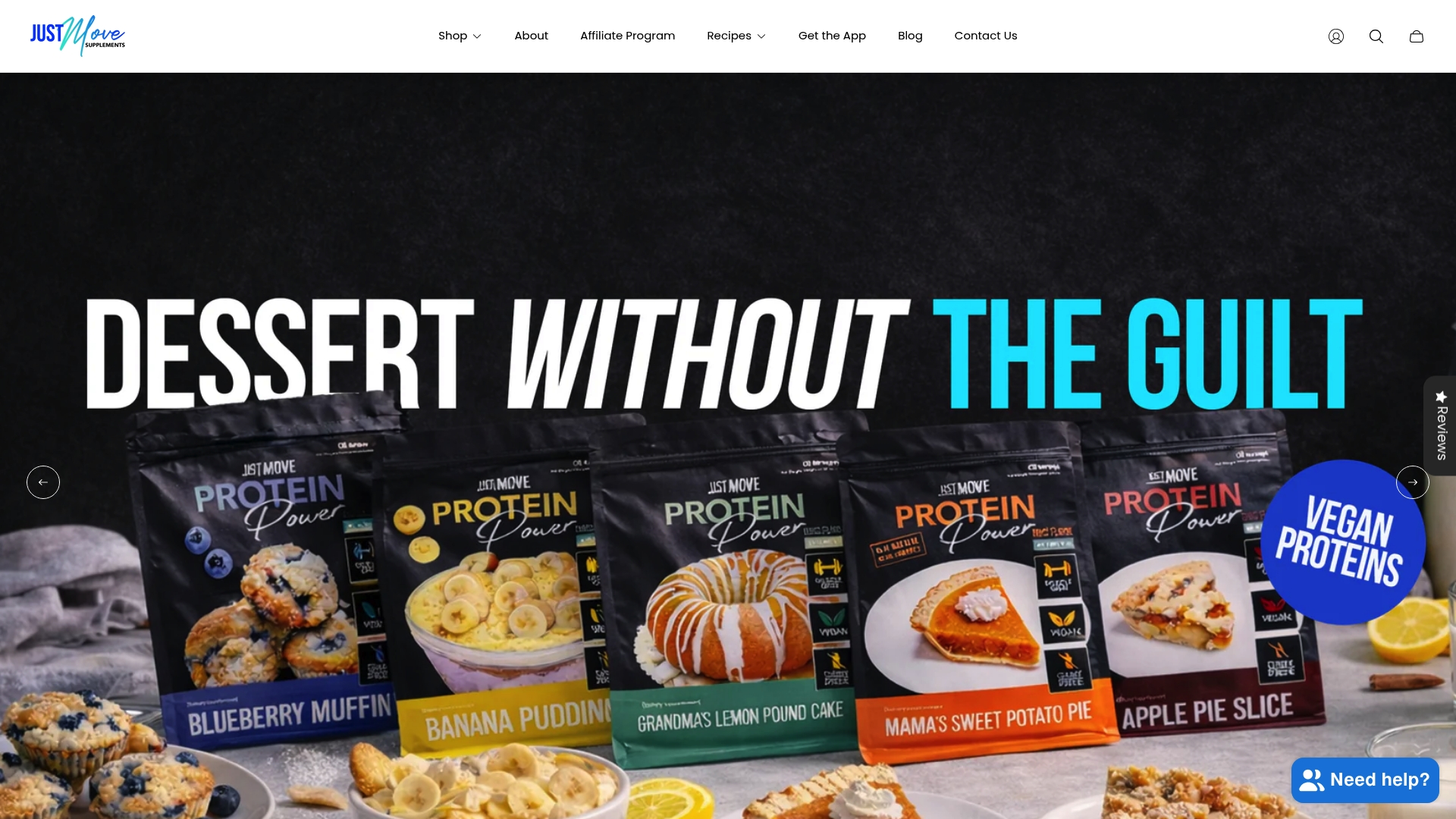
Whether you are focused on weight management, muscle support, or finding a clean meal replacement option, Justmovesupplements offers products tested for quality and crafted with taste in mind. The protein sample variety pack lets you test multiple flavors before committing to a full-size purchase. That approach removes the guesswork from tolerance and taste. For those pairing protein with a weight loss plan, the fat burner collection offers complementary support designed to work alongside a high-protein, low-sugar nutrition strategy.
FAQ
What is considered low sugar in a protein supplement?
A protein supplement is considered low sugar when it contains under 5 grams of total sugar per serving, with current guidance favoring under 3 grams of added sugar specifically.
Is whey isolate better than whey concentrate for low-sugar diets?
Whey isolate is the better choice. It delivers higher leucine content, absorbs faster, and contains significantly less lactose than concentrate, making it more suitable for both muscle support and digestive comfort.
Can people with diabetes use protein supplements?
People with diabetes can use protein supplements safely by choosing products sweetened with stevia or monk fruit and avoiding formulas containing maltodextrin, dextrose, or cane sugar, which raise blood glucose.
How do I spot hidden sugars on a protein powder label?
Look for maltodextrin, dextrose, fructose, cane syrup, and evaporated cane juice in the ingredient list. These are sugar sources that appear under different names to avoid obvious labeling.
Why does third-party certification matter for protein powders?
Third-party certification from organizations like Informed Sport confirms that the label accurately reflects what is in the product and that the formula is free from banned substances or contaminants.
Recommended


