Ashwagandha genuinely helps reduce stress and can improve energy levels over time, though not in the way a cup of coffee does. Meta-analyses of randomized controlled trials confirm it reduces perceived stress, anxiety, and depression across diverse adult populations. The NIH Office of Dietary Supplements notes that clinical trial doses typically range within a moderate, commonly used range, with standardized root extracts showing the most consistent results. The role of ashwagandha in stress and energy management is best understood as gradual and downstream: lower cortisol leads to better sleep, which leads to less fatigue and sharper focus.
Key facts to know before you read further:
- Pooled trial data show reductions in stress scores and morning salivary cortisol over several weeks.
- Energy improvements are indirect. Ashwagandha reduces the physiological burden of chronic stress rather than stimulating the central nervous system.
- Evidence is promising but carries important caveats: high heterogeneity across studies and limited long-term safety data.
-
Harvard Health recommends pairing ashwagandha with lifestyle measures and seeking clinician input if you are on medication or have a chronic condition.
- Justmovesupplements publishes this guide as part of its commitment to evidence-based wellness education.
Key Takeaways
Ashwagandha reduces stress and cortisol through HPA-axis modulation, with measurable improvements in PSS and HAM-A scores typically appearing within weeks of consistent use at commonly studied doses of standardized root extract.
| Point |
Details |
| Clinical evidence is real but limited |
Meta-analyses confirm stress and cortisol reductions; evidence certainty is rated low due to high heterogeneity across trials. |
| Energy effects are indirect |
Ashwagandha lowers cortisol and improves sleep, which reduces fatigue over weeks, not hours. |
| Dose range from trials |
Clinical trials use 125–600 mg/day; 300–500 mg of standardized root extract is the most common effective range. |
| Safety requires attention |
Avoid during pregnancy; use with clinician oversight if on thyroid, sedative, or immunosuppressant medications. |
| Justmovesupplements’ Just Chill option |
Just Chill D3, Magnesium & Ashwagandha pairs ashwagandha with magnesium and D3 for a study-aligned multi-nutrient approach. |
Table of Contents
What does the clinical research show for stress and anxiety?
The evidence base for ashwagandha is more substantial than most adaptogens can claim, though it still has real limitations worth understanding.
A systematic review and meta-analysis published in BJPsych Open pooled data from randomized trials and found statistically significant reductions in HAM-A (Hamilton Anxiety Rating Scale) and PSS (Perceived Stress Scale) scores, along with lower morning salivary cortisol at eight weeks. Quality-of-life scores did not show a significant change in that same pooled analysis, which is a useful reminder that stress reduction and overall wellbeing are not identical outcomes.
A separate comprehensive meta-analysis of 22 randomized controlled trials confirmed reductions in stress, anxiety, and depression across populations. The overall certainty of evidence was rated low due to high heterogeneity across studies, meaning different extracts, doses, and outcome measures made direct comparisons difficult.
Statistic callout: Pooled analyses consistently show significant reductions in PSS and HAM-A scores at eight weeks, with morning salivary cortisol also declining in multiple trials, though effect sizes vary considerably across studies due to differences in extract type and dosing.
One well-designed trial illustrates what a strong individual study looks like. A randomized, double-blind, placebo-controlled trial used 500 mg of standardized root extract (2.5% withanolides) plus piperine daily for 60 days. Of 54 participants randomized, 50 completed the trial. The active group showed significant improvements in PSS scores, GAD-7 (Generalized Anxiety Disorder scale), cognitive task performance, and reduced morning salivary cortisol compared with placebo.
Mayo Clinic guidance echoes this picture: ashwagandha may help relieve stress and improve sleep in some people, but it is unlikely to work as a stand-alone solution. Lifestyle interventions remain central.
Summary of what the trials show:
- Stress and anxiety scores (PSS, GAD-7, HAM-A) improve significantly in most well-designed trials.
- Morning cortisol declines are a consistent signal across multiple systematic reviews.
- Sleep quality improvements appear in several trials, which connects to the energy discussion below.
- Depression signals are present but weaker and less consistent than stress/anxiety outcomes.
- Evidence certainty is limited by heterogeneity; no single dose or extract has been tested across enough trials to call it definitive.
How ashwagandha may reduce stress and support your energy levels
Ashwagandha is classified as an adaptogen, a term describing plants that may help the body maintain balance under physiological stress. The mechanism is not fully mapped, but several pathways have reasonable support.
The HPA-axis and cortisol connection
The hypothalamic-pituitary-adrenal (HPA) axis governs the body’s stress response, releasing cortisol when the brain perceives a threat. Chronic stress keeps this system overactive, which disrupts sleep, impairs focus, and drains energy. Systematic reviews and narrative reviews report that ashwagandha supplementation is associated with reduced morning cortisol in adults with elevated stress levels, suggesting it may modulate HPA-axis activity rather than simply masking symptoms.
Why energy changes feel gradual
This is the key distinction between ashwagandha and stimulants like caffeine. Ashwagandha does not activate the central nervous system directly. Instead, as cortisol normalizes and sleep quality improves, fatigue decreases and mental alertness tends to follow. Review evidence describes these as gradual improvements in subjective fatigue and focus rather than an immediate alertness spike. That same Springer Nature review notes that energy improvements appear to be indirect, mediated by reduced stress load and better sleep. For a deeper look at how this compares to caffeine-based approaches, the caffeine alternatives guide at Justmovesupplements covers the contrast well.
Other contributing mechanisms:
-
GABAergic and serotonergic pathways: Preliminary evidence suggests ashwagandha may influence GABA receptors and serotonin signaling, which could contribute to its anxiolytic effects, though this is less established than the cortisol data.
-
Antioxidant and anti-inflammatory activity: Withanolides, the primary bioactive compounds in ashwagandha root, have demonstrated antioxidant properties in laboratory studies. Reduced oxidative stress may support mitochondrial function and sustained energy over time.
-
Cognitive performance: The 500 mg/piperine trial cited above also reported improvements in cognitive task performance, suggesting benefits beyond mood that may contribute to the subjective sense of having more mental energy.
Pro Tip: If you are switching from a stimulant-heavy routine, give ashwagandha at least four weeks before evaluating its effect on your energy. The mechanism is fundamentally different from caffeine, and expecting an immediate lift will lead to premature disappointment.
Not all ashwagandha products are equivalent, and matching your supplement to the trials that showed benefit requires understanding how those trials were designed.
Extract types used in research
The NIH ODS factsheet recommends standardized preparations and notes that trial preparations vary considerably, including root-only extracts, root-plus-leaf combinations, and concentrated proprietary extracts.
Dosing ranges from clinical trials
| Dose Range |
Trial Context |
Duration |
Primary Outcomes Measured |
| 125–300 mg/day |
Lower-dose trials, some dose-response analyses |
8–12 weeks |
PSS, GAD-7, sleep quality |
| 500 mg/day |
Most common single-dose trial design |
60 days |
PSS, GAD-7, cortisol, cognition |
| 600 mg/day |
Higher-dose trials, often split dosing |
8–12 weeks |
HAM-A, cortisol, fatigue |
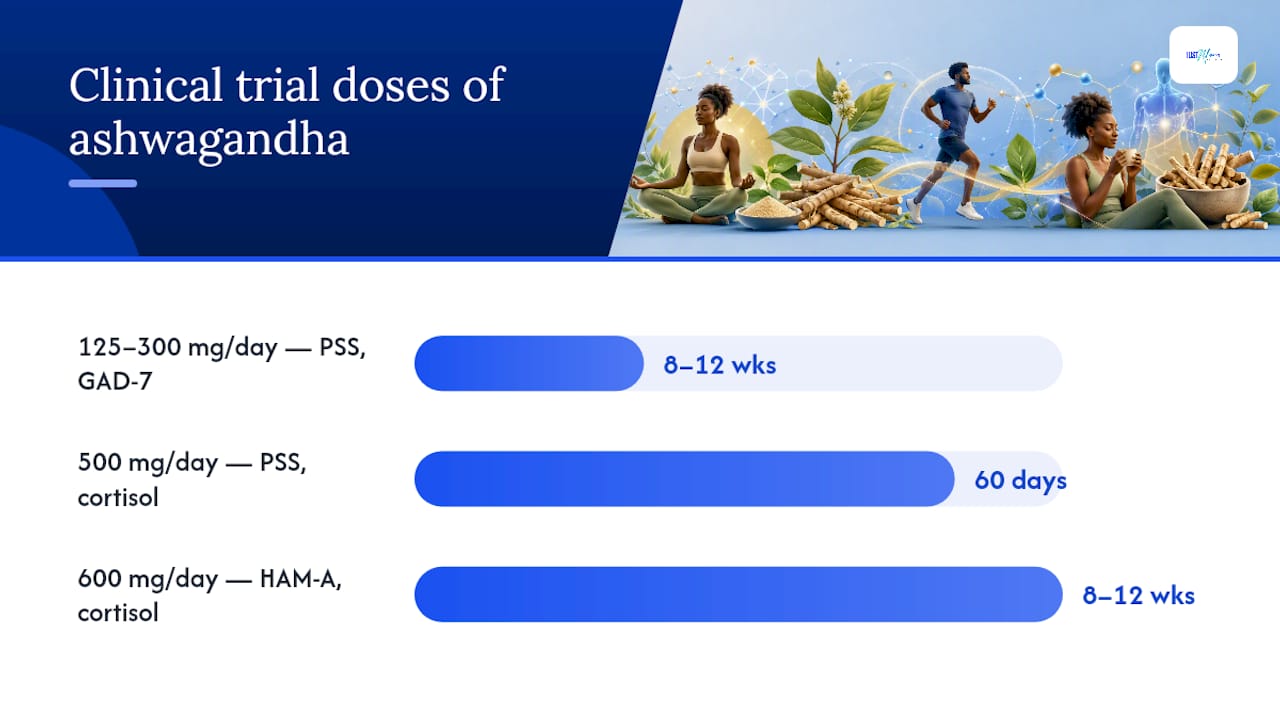
Dose-response analyses suggest that doses at or below 500 mg/day with longer intervention periods sometimes associate with better stress outcomes in pooled data, though the evidence is not strong enough to call one dose definitively superior.
Practical format notes:
-
Standardized root extract capsules are the most studied and easiest to dose consistently.
-
Powdered root (churna) is traditional but harder to standardize; withanolide content varies.
-
Tinctures offer flexibility but lack the trial data that capsule extracts have.
-
Combination formulas (ashwagandha plus magnesium, vitamin D, or piperine) are increasingly common; piperine may enhance bioavailability, though high-quality RCT evidence for piperine-augmented formulas specifically is limited.
Timing considerations:
- Bedtime dosing is often recommended when the primary goal is sleep quality and cortisol normalization.
- Morning or split dosing (morning and evening) is used in trials targeting daytime stress and focus.
Pro Tip: Start at the lower end of the clinical range (around 250–300 mg of standardized root extract) and hold that dose for four weeks before adjusting. This gives your body time to respond and makes it easier to identify any side effects early.
What are the safety risks and drug interactions you should know?
Ashwagandha has a generally favorable safety profile in short-term trials, but “generally favorable” is not the same as risk-free. Several documented concerns deserve your attention.
Common side effects reported in trials:
- Digestive upset (nausea, loose stools, stomach discomfort), most often at higher doses
- Drowsiness, particularly with evening dosing
- Rare reports of paradoxical stimulation or increased anxiety in some individuals
- Rare cases of liver injury have been reported in post-market surveillance, though causality is not always established
Contraindications and caution areas:
-
Pregnancy and breastfeeding: Ashwagandha is contraindicated during pregnancy due to potential uterotonic effects; safety during breastfeeding is not established.
-
Autoimmune conditions: Because ashwagandha may stimulate immune activity, people with rheumatoid arthritis, lupus, multiple sclerosis, or similar conditions should avoid it without clinician guidance.
-
Thyroid disease: Ashwagandha may increase thyroid hormone levels; people on thyroid medication need monitoring.
-
Planned surgery: Discontinue at least two weeks before surgery due to possible sedative interactions with anesthesia.
-
Hormone-sensitive conditions: Some evidence suggests ashwagandha affects hormone levels; caution is warranted for people with hormone-sensitive cancers.
Known or suspected drug interactions:
-
Sedatives and benzodiazepines: Additive CNS depression is possible; combining ashwagandha with sedative medications requires clinician review.
-
Thyroid medications (levothyroxine): Ashwagandha may amplify thyroid hormone levels, requiring dose adjustment.
-
Immunosuppressants: Potential immune-stimulating effects could counteract immunosuppressive therapy.
Harvard Health advises clinician consultation for anyone on prescription medications or with a chronic condition before starting ashwagandha.
Pro Tip: Keep a simple symptom log for the first four weeks. Note digestion, sleep, mood, and energy daily. If you notice worsening anxiety, significant digestive distress, or unusual fatigue, stop and consult your doctor before resuming.
How do you choose a quality ashwagandha supplement?
The supplement market is crowded, and label claims vary widely. A practical checklist cuts through the noise.
What to look for on the label and certificate of analysis:
-
Root extract, not leaf or whole-plant: Trials showing consistent benefit use root extracts; leaf-containing products have a different phytochemical profile.
-
Standardized withanolide content: Look for 2.5–5% withanolides stated on the label. A product that lists “ashwagandha extract” without a withanolide percentage gives you no way to match it to trial data.
-
Third-party testing: Certifications from USP (United States Pharmacopeia), NSF International, or ConsumerLab indicate independent verification of purity and potency.
-
GMP manufacturing: Good Manufacturing Practice certification from an FDA-registered facility is a baseline quality signal.
-
Clear serving size and dose: The label should state milligrams per serving clearly, not hide the dose inside a proprietary blend.
-
Complementary ingredients: Piperine (black pepper extract) may support absorption; magnesium and vitamin D are evidence-backed additions for stress and sleep support.
PubMed-listed RCTs show considerable variation in extract type and withanolide standardization across trials, which is exactly why label transparency matters when you are trying to replicate trial conditions.
How Just Chill D3, Magnesium & Ashwagandha maps to these checkpoints:
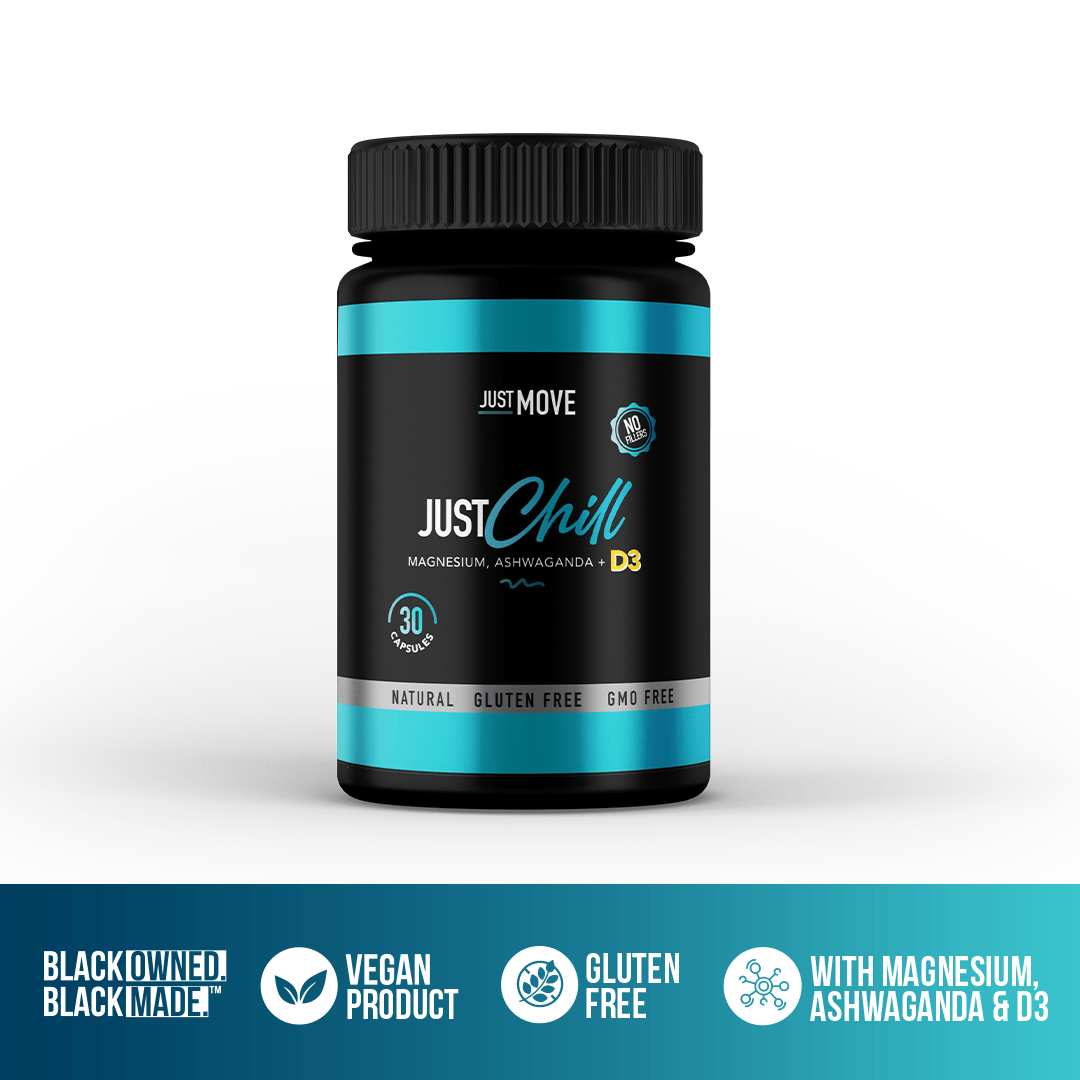
Justmovesupplements’ Just Chill D3, Magnesium & Ashwagandha combines ashwagandha with magnesium and vitamin D3, two nutrients with their own evidence base for stress resilience and sleep quality. This multi-ingredient approach aligns with the trial design of the 500 mg/piperine RCT and with the broader principle that ashwagandha works best alongside supporting nutrients rather than in isolation.
Pro Tip: Always request or download the certificate of analysis (COA) for any supplement you buy. A reputable brand makes this available without hesitation. If a company does not publish its COA, that alone is a reason to look elsewhere.
What timeline should you expect, and how can you maximize results?
Setting realistic expectations is one of the most useful things this guide can offer. Ashwagandha is not a fast-acting intervention.
Typical onset based on trial data:
Most trials measuring PSS and cortisol outcomes show meaningful changes by weeks 4–8. Some participants notice improved sleep quality earlier, around weeks 2–3, while stress score improvements tend to consolidate over the full 8–12 week period. Individual variability is real; not everyone responds at the same rate or magnitude.
How to track your progress:
-
Baseline self-rating: Before starting, rate your perceived stress on a 1–10 scale and note your average sleep duration and quality. This gives you a reference point.
-
Weekly check-ins: Re-rate stress, energy, and sleep quality each week using the same scale.
-
Morning energy log: Note how you feel within the first hour of waking, since cortisol normalization tends to show up here first.
-
Salivary cortisol testing: Only pursue this if medically supervised; it is useful for people with documented HPA-axis dysregulation but unnecessary for most healthy adults.
Lifestyle pairings that amplify ashwagandha’s effects:
-
Consistent sleep schedule: Going to bed and waking at the same time daily supports the same HPA-axis regulation ashwagandha targets.
-
Resistance exercise: Regular strength training reduces baseline cortisol over time and complements ashwagandha’s stress-modulating effects.
-
Mindfulness or breathwork: Even 10 minutes of daily practice measurably reduces perceived stress scores, stacking with ashwagandha’s physiological effects.
-
Reducing stimulant overload: Heavy caffeine use keeps cortisol elevated; cutting back amplifies ashwagandha’s cortisol-lowering potential. The mental fatigue supplement guide at Justmovesupplements covers complementary approaches worth considering.
Pro Tip: Consistency matters more than timing precision. Taking ashwagandha at the same time each day, whether morning or evening, builds a stable blood level and makes it easier to attribute changes to the supplement rather than to daily variation.
What are the real limits of the current evidence?
Honest enthusiasm for ashwagandha requires acknowledging what the research does not yet tell us.
The heterogeneity problem
The most significant limitation across meta-analyses is high heterogeneity: trials differ in extract type (root vs. root-plus-leaf), withanolide standardization, daily dose (125–600 mg), trial duration (4–16 weeks), and outcome measures (PSS, GAD-7, HAM-A, cortisol, sleep scales). This makes pooled effect sizes harder to interpret and is the primary reason evidence certainty is rated low to moderate across reviews.
Statistic callout: The comprehensive meta-analysis of 22 RCTs rated overall evidence certainty as “very low” due to heterogeneity and variable outcome measures, even though pooled effect directions consistently favored ashwagandha over placebo.
Short trial durations
Most trials run for 8–12 weeks. Long-term safety and efficacy data beyond three months are sparse. This is a meaningful gap for anyone considering ashwagandha as a long-term supplement.
Underrepresented populations and open questions:
- People with clinically diagnosed anxiety disorders (rather than elevated stress in healthy adults) are underrepresented in trials.
- Optimal dosing for older adults, people with metabolic conditions, and athletes has not been systematically studied.
- Head-to-head comparisons between different standardized extract brands have not been conducted at scale.
- The interaction between ashwagandha and common medications (SSRIs, thyroid drugs) needs dedicated pharmacokinetic research.
Pro Tip: When reading ashwagandha research, check whether the trial used a root-only standardized extract. Trials using root-plus-leaf or unstandardized preparations are harder to apply to a product you might actually buy.
A balanced way to think about adding ashwagandha to your routine
The evidence for ashwagandha is genuinely encouraging, and it is also genuinely incomplete. That combination is worth sitting with rather than resolving in one direction or the other.
What the trials show consistently is that ashwagandha can reduce perceived stress and lower morning cortisol in adults who are already experiencing elevated stress. That is a meaningful, specific outcome. What the trials do not show is that ashwagandha replaces sleep, exercise, or professional mental health support. The people who seem to benefit most are those who use it as one part of a broader routine, not as the whole plan.
The energy question is where expectations most often go wrong. Ashwagandha does not give you energy the way a pre-workout does. It removes a physiological drag, and when that drag lifts, energy and focus tend to follow. That distinction matters practically: if you are exhausted because of chronic stress and poor sleep, ashwagandha may genuinely help. If you are exhausted because of overtraining or poor nutrition, it is addressing the wrong problem.
For anyone on thyroid medication, immunosuppressants, or sedatives, clinician review before starting is not optional advice. It is the responsible path. And for everyone else, tracking your own response over 4–8 weeks with a simple daily log is the most honest way to know whether it is working for you specifically.
A study-aligned ashwagandha option worth considering
If you have read this far and want a practical starting point, Justmovesupplements’ Just Chill D3, Magnesium & Ashwagandha combines three nutrients with complementary roles in stress and sleep support. Ashwagandha targets cortisol and HPA-axis regulation. Magnesium supports nervous system function and sleep quality. Vitamin D3 addresses a deficiency that is common in people with elevated stress and disrupted sleep.
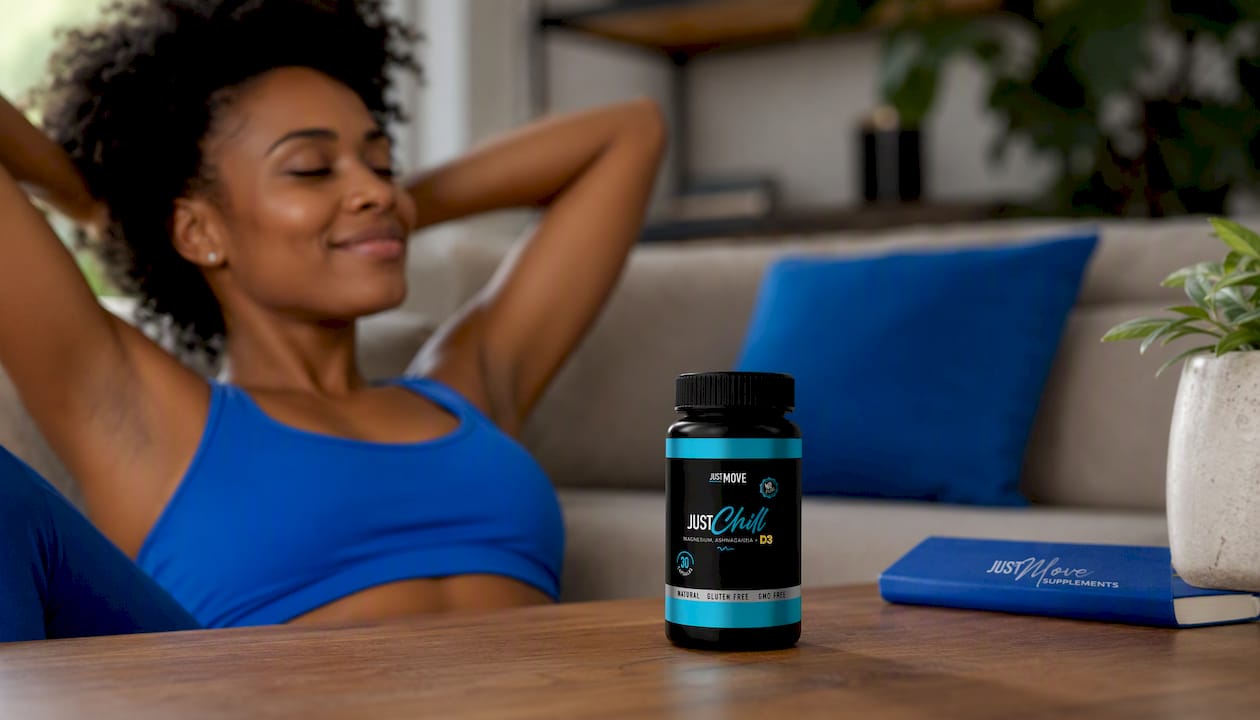
This combination mirrors the multi-ingredient logic behind some of the stronger trial designs, where ashwagandha is paired with absorption enhancers or supporting nutrients rather than used in isolation. It is a solid starting point for health-conscious individuals who want a formulation grounded in the same principles the research supports.
If you are pregnant, breastfeeding, or on prescription medication, consult your clinician before adding any new supplement. View the full product details and ingredient breakdown at Justmovesupplements to decide whether it fits your current routine.
Sources
These sources were selected based on trial design quality (randomized, controlled, blinded), sample size, recency, and institutional authority. Meta-analyses and systematic reviews are prioritized over single trials; institutional summaries are included for practical guidance.
This article is for general informational purposes only and is not a substitute for professional medical advice. Consult a qualified clinician before starting ashwagandha, especially if you are pregnant, breastfeeding, or taking prescription medications.
Recommended


