Use very ripe bananas, about 1/2 cup (roughly 60 g) protein powder, and a moisture booster like 1/2 cup Greek yogurt or cottage cheese to build a loaf that holds together and tastes right. That combination consistently lands around 8 to 13 grams of protein per slice depending on your powder and portion size. Follow the exact recipe, swaps, and troubleshooting below to make it repeatable every time.
TL;DR:
- Using Greek yogurt or cottage cheese in the recipe boosts moisture and adds protein, which enhances texture and flavor when compared to using powder alone.
- Whey and casein protein powders tend to absorb more liquid, so reducing their amount or adding extra banana or yogurt can prevent dryness.
- Cooling the loaf completely, ideally overnight, stabilizes the crumb and prevents a gummy, sunken, or over-dense slice after baking.
- Baking at 350°F for 45 to 55 minutes and verifying doneness with a thermometer ensures the loaf is fully baked, reducing the risk of underbaking issues.
- Freezing sliced loaf in airtight bags with parchment between slices preserves freshness and makes portioning for post-workout snacks more convenient.
Table of Contents
Protein Banana Bread Recipe at a Glance
Regular banana bread gives you about 2 to 3 grams of protein per slice. That’s fine for a sweet treat, but it won’t do much for you before or after a workout. Building the recipe around protein banana bread fundamentals changes that math entirely, turning a dessert-adjacent snack into something you can actually plan a meal around.
Here’s the full ingredient list, with ranges so you can adjust based on your protein powder and how ripe your bananas are:
-
Mashed ripe bananas: 1.25 to 1.5 cups (about 3 to 4 medium bananas, the spottier the better)
-
Protein powder: 1/3 to 2/3 cup (40 to 80 g), whey, casein, or a plant-based blend
-
Greek yogurt or cottage cheese: 1/2 cup, your primary moisture and protein booster
-
Eggs: 2 large, or 2 flax eggs (1 tablespoon ground flax plus 3 tablespoons water each) for an egg-free version
-
Flour: 1 to 1.25 cups all-purpose, whole wheat, or oat flour
-
Sweetener: 2 to 4 tablespoons honey, maple syrup, or a granulated sugar substitute
-
Baking soda, cinnamon, and a pinch of salt: for lift and flavor
-
Optional fat: 2 tablespoons melted coconut oil, butter, or nut butter
Bake at 350°F for 45 to 55 minutes in a standard 9x5 inch loaf pan. That range covers variation in oven calibration and how much moisture your specific protein powder pulls out of the batter.
A slice of this loaf (assuming a 12 slice loaf) typically runs 140 to 190 calories with 9 to 13 grams of protein, based on formulas that pair protein powder with Greek yogurt or cottage cheese. Swap in less yogurt and more powder, and you’ll push protein higher but risk a drier crumb. Lean more on yogurt and bananas, and you get a moister loaf with slightly less protein per slice. That tradeoff is the entire game here, and it’s worth thinking through before you start measuring.
How Do You Make Protein Banana Bread Step by Step?
Getting a moist result isn’t about a secret ingredient. It’s about sequence and restraint. Overmixing or rushing the cooling step ruins more protein loaves than a bad powder ever will.
-
Preheat your oven to 350°F and grease a 9x5 inch loaf pan, or line it with parchment paper for easy removal.
-
Mash your bananas in a large bowl until mostly smooth. Measure by volume after mashing, not before. Whole bananas vary too much in size to give you a consistent result.
-
Whisk in the wet ingredients: eggs, Greek yogurt or cottage cheese, melted oil or nut butter, and your sweetener of choice.
-
In a separate bowl, combine the dry ingredients: flour, protein powder, baking soda, cinnamon, and salt. Whisking these together first prevents pockets of dry powder in the finished loaf.
-
Fold the dry mixture into the wet mixture with a spatula just until no flour streaks remain. Stop mixing as soon as it’s combined.
-
Fold in any add-ins, like chocolate chips or chopped walnuts, with a few final strokes.
-
Pour into your prepared pan and bake for 45 to 55 minutes.
Check doneness with a toothpick inserted in the center. It should come out clean or with a few moist crumbs, not wet batter. If you have an instant-read thermometer, an internal temperature of 200°F to 205°F confirms the loaf is fully baked, which matters more with protein-enhanced batters since a wet center is harder to spot by eye. If the top is browning too fast before the center sets, tent it loosely with foil for the last 10 to 15 minutes.
Cooling is where most home bakers lose points they didn’t know were on the table. Recipe developers who work extensively with protein-enhanced quick breads recommend resting the loaf in the turned-off oven for 5 to 10 minutes before moving it to a wire rack. That gradual temperature drop stabilizes the crumb and reduces the chance of a sunken center.

Pro Tip: Let the loaf cool completely, ideally a couple of hours or overnight, before slicing. Protein-enhanced batters keep setting internally as they cool, and cutting too early gives you a gummier slice than the recipe actually produces.
Which Protein Powder Works Best in Banana Bread?
Not all protein sources behave the same way once they hit batter. Some pull moisture out aggressively. Others add it. Knowing which is which saves you a wasted loaf.
-
Whey and casein protein absorb more liquid than flour does. If your batter feels thick or dry when using whey, reduce the powder by a couple tablespoons or add an extra splash of mashed banana or yogurt to compensate.
-
Plant-based proteins, like pea or soy blends, often need a bit more added liquid to reach the same consistency, and they can carry a slightly earthier flavor that competes with cinnamon and banana. Choosing a flavored plant protein you already enjoy in smoothies helps here.
-
Greek yogurt or cottage cheese does double duty as both a protein source and a moisture booster. Using it to replace part of the oil in your recipe keeps the crumb tender while adding grams of protein you’d otherwise need powder for.
-
Nut butter or ground seeds, like almond butter or flax meal, contribute healthy fat and help bind the batter. If you add nut butter, cut back on any added oil by a similar amount so the loaf doesn’t turn greasy.
The overarching lesson from recipe developers who’ve tested dozens of versions is straightforward: pick a powder you already like in a shake, because if it tastes chalky or artificial on its own, baking won’t fix that. It just gets baked in. Our guide to protein powder texture covers this in more depth if you want to understand exactly how different powders behave under heat.
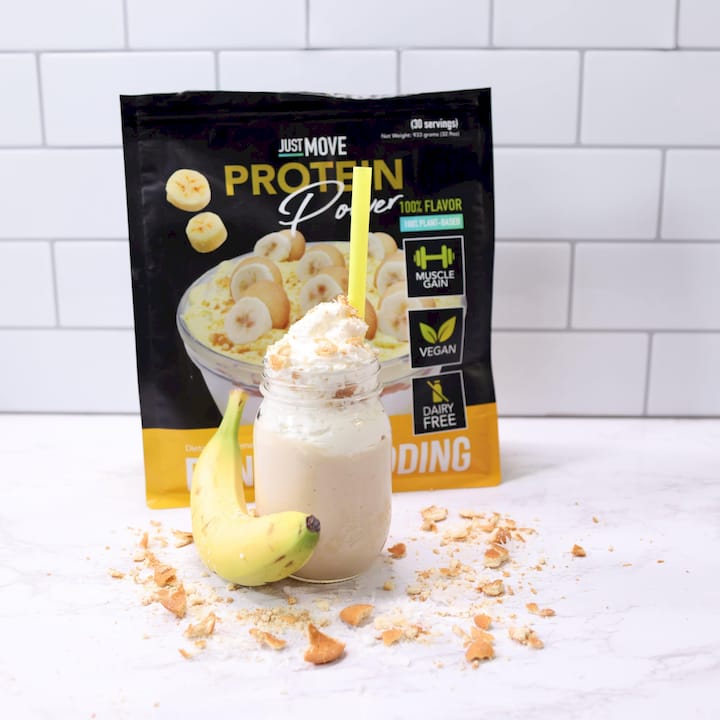
Pro Tip: If you’re not sure which protein flavor will hold up in banana bread, start with something naturally complementary. Banana pudding, vanilla, or an unflavored base all tend to blend in rather than fight the cinnamon and banana notes.
Why Did My Protein Banana Bread Turn Out Dry or Dense?
Every failure mode has a fingerprint, and once you know what to look for, fixing it takes one bake instead of five.
-
Dry or chalky texture: Usually means the protein powder absorbed too much liquid. Cut the powder by 10 to 20 percent on your next attempt, or add 1 to 2 tablespoons of yogurt or mashed banana for every 20 grams of powder you removed.
-
Sunken center: Points to underbaking, too much leavening, or overmixing the batter after adding the dry ingredients. Extend your bake time by 5 to 10 minutes at the same temperature, and double check your oven’s actual temperature with an oven thermometer.
-
Gummy or wet crumb: Almost always underbaked, even if the outside looks done. Bake longer and confirm with a toothpick or thermometer before pulling it, then let it cool fully before cutting.
-
Already baked and imperfect? Toast slightly dense slices to add crunch, turn drier slices into French toast, or spread a thin layer of nut butter over a chalky slice to mask texture issues while you dial in the next batch.
How Long Does Protein Banana Bread Last?
A well-wrapped loaf holds up at room temperature for a short time. Move it to the refrigerator and it will last longer, since the added protein and yogurt content make it slightly more perishable than a standard banana bread.
For longer storage, the freezer is your best friend. This loaf freezes well for several weeks when handled correctly:
- Slice the loaf completely before freezing, not after.
- Place a piece of parchment paper between each slice so they don’t fuse together.
- Store in a freezer-safe bag or airtight container with the air pressed out.
- Thaw individual slices at room temperature or reheat directly from frozen in a toaster or oven, which restores the crumb texture far better than a microwave does.
If you’re meal-prepping breakfasts or post-workout snacks, portion the loaf into individual slices right after it cools. Grab-and-go slices make it far more likely you’ll actually eat the protein-forward version instead of reaching for something less useful on a busy morning.
What Are the Best Flavor Variations for Protein Banana Bread?
Once you’ve got the base formula down, it’s easy to riff on it without breaking the texture you worked to dial in.
-
Chocolate or cocoa swirl: Add 2 to 3 tablespoons of cocoa powder, but compensate with an extra tablespoon of yogurt or milk since cocoa also absorbs moisture.
-
Peanut butter swirl: Drop spoonfuls of peanut butter on top of the batter and swirl gently with a knife right before baking. Overmixing here flattens the marbled look and can toughen the crumb.
-
Muffin conversion: Divide the batter into a lined muffin tin, filling each cup about two thirds full, and reduce bake time to 18 to 22 minutes.
-
Gluten-free swap: Substitute a 1:1 gluten-free flour blend or oat flour for the all-purpose flour, and check for doneness a few minutes early since gluten-free batters often bake slightly faster.
If you’re baking for someone avoiding gluten and want chocolate chips that fit, gluten-free chocolate options are worth checking before you shop.
Does Adding Protein to Banana Bread Actually Help?
Protein slows digestion and increases satiety, which is why a protein-boosted slice tends to hold you over longer than a plain one. It can also help moderate the blood sugar spike that comes from a carbohydrate-heavy snack eaten on its own.
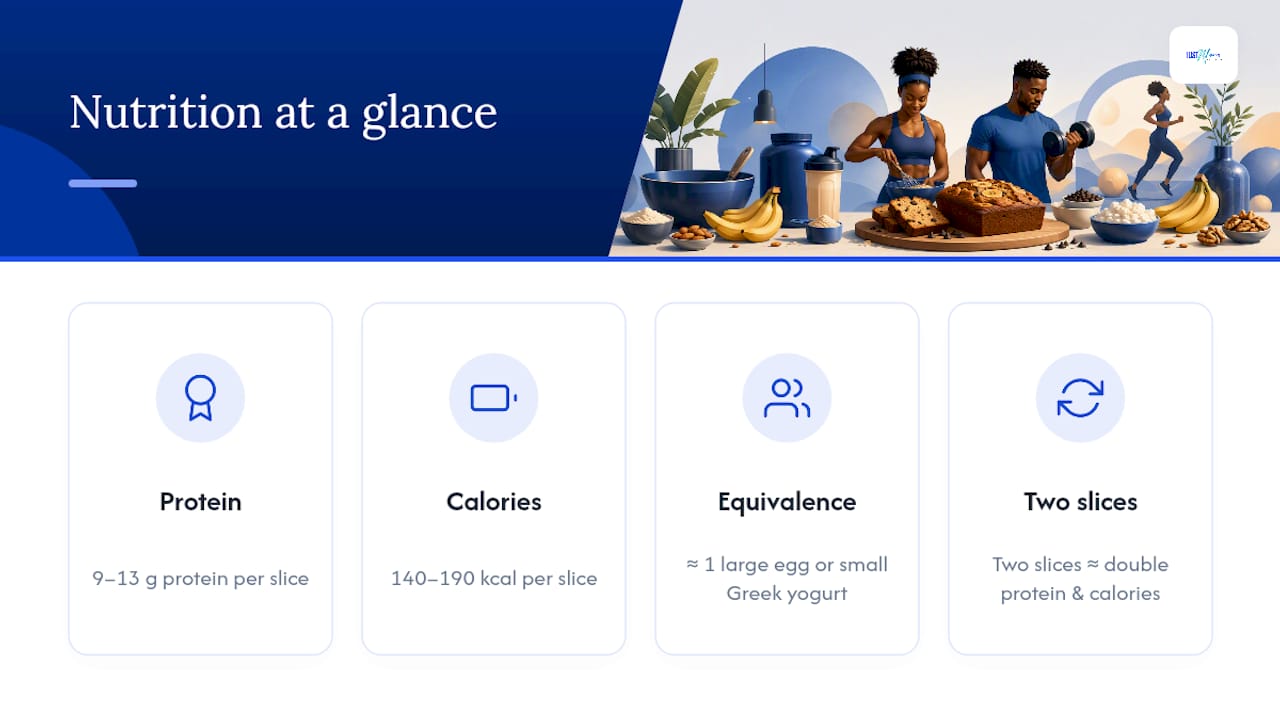
For context, a slice delivering 10 grams of protein sits roughly in line with a large egg or a small cup of Greek yogurt, which makes it easy to slot into a balanced breakfast alongside fruit or coffee. At 150 to 190 calories a slice, it’s a reasonable trade if you’re mindful of portions, though two slices will roughly double both numbers, so plan accordingly if you’re tracking intake closely.
What We Learned After Testing Dozens of Loaves
The biggest surprise in testing wasn’t the protein powder. It was how much the yogurt or cottage cheese mattered. Loaves built around a hybrid approach, a modest scoop of powder plus a real dairy or yogurt component, consistently outperformed recipes that leaned on powder alone to hit a protein number.
Flavor matching made a bigger difference than expected too. A banana pudding or vanilla protein blended into the batter almost disappeared into the finished loaf, while a heavily flavored powder built for shakes sometimes fought the cinnamon.
If you’re testing your own version, bake a single loaf first before committing to a large batch, and consider trying a few flavors through a sample pack so you’re not stuck with a full tub of a powder that clashes with banana and cinnamon.
— Just
Which Just Move Supplements Protein Works Best in This Recipe?
If you’d rather skip the trial and error, two options solve most of the guesswork. Plain And Simple - Unflavored Protein is built for exactly this kind of baking. It adds protein without competing against banana, cinnamon, or any add-ins you fold in, which makes it the safer starting point if you’ve never baked with powder before.
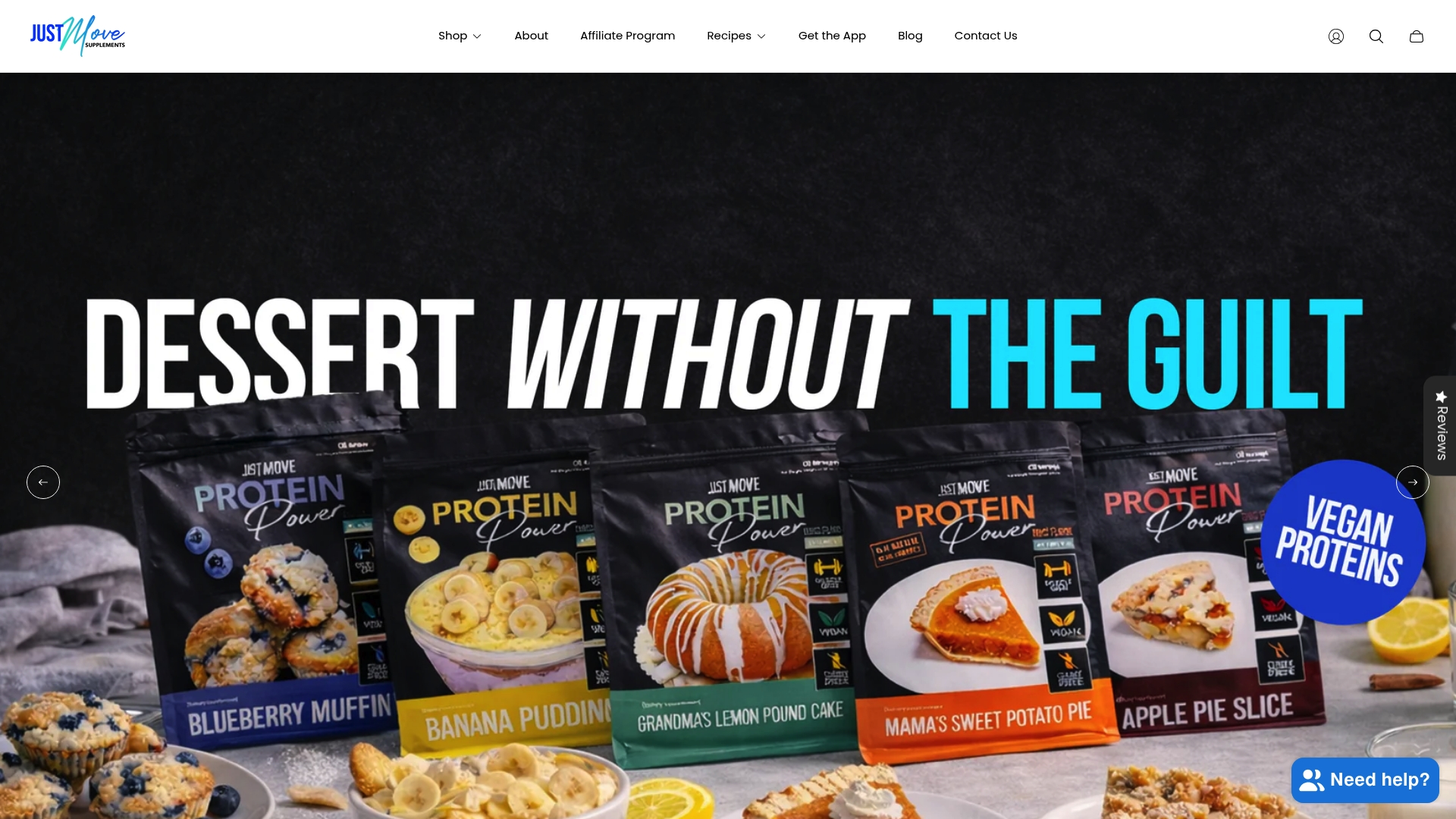
If you want the powder itself to carry more of the dessert flavor, Banana Pudding Protein leans into the recipe rather than staying neutral, giving the loaf a deeper banana profile without extra sugar. Not sure which one fits your taste? The Just MOVE Protein Sample Variety Pack lets you test seven flavors in small batches before you commit to a full tub, so you can bake a couple of test loaves and pick a winner instead of guessing. Whichever you choose, start with the standard 1/2 cup measurement in the recipe above, then adjust up or down by a tablespoon based on how thick your batter looks once mixed. Grab a bag and get your next loaf in the oven this week.
Sources
Recommended


