Four ingredients carry real evidence behind them: caffeine, beta-alanine, citrulline (or citrulline malate), and creatine monohydrate. Everything else riding along in a typical tub is either a supporting player or filler. The catch isn’t which ingredients matter, it’s whether your product actually contains them at doses that work. Many blends under-dose key actives or hide amounts entirely, and stimulant totals deserve a close look before you scoop anything into a shaker.
TL;DR:
Most effective pre-workout ingredients, including caffeine, beta-alanine, citrulline, and creatine monohydrate, are proven at specific doses, not just their presence.
Proper dosing for caffeine is 3 to 6 milligrams per kilogram of body weight, typically 200 to 400 milligrams, taken 30 to 60 minutes before training.
Beta-alanine requires daily intake of 3.2 to 6.4 grams over several weeks to build muscle carnosine, which buffers muscle acidity during effort.
Creatine monohydrate should be taken daily at 3 to 5 grams, regardless of workout timing, to support strength and power over time.
Avoid proprietary blends and risky stimulants like DMAA or high-dose synephrine; choose products with transparent labeling and confirmed sport certification if needed.
Justmovesupplements
Find Supplements That Fit Your Training
Explore protein powders, fat burners, and energy supplements designed for fitness enthusiasts who value taste and effectiveness.
What Is in Pre-Workout: The Core Ingredients That Have Evidence
Ask what is in pre workout and you’ll usually get a label with ten or more names on it. Strip away the marketing and only a handful of those ingredients have research behind them at the doses companies actually use. An analysis of the top 100 commercial multi-ingredient pre-workout supplements in the United States found beta-alanine in 87% of products, caffeine in 86%, citrulline in 71%, tyrosine in 63%, taurine in 51%, creatine in 49%, and niacin in 48%, with nearly half of all listed ingredients buried inside proprietary blends where exact amounts go undisclosed.
Caffeine: the reliable energy driver
Caffeine works by blocking adenosine receptors in your central nervous system, which delays the sense of fatigue and sharpens alertness. It is the single most consistent ingredient for boosting energy, endurance, and short-term power output. Effective dosing runs 3 to 6 milligrams per kilogram of body weight, which lands most adults somewhere between 200 and 400 milligrams, taken 30 to 60 minutes before training. Push past your personal tolerance and you’re trading performance for jitteriness, disrupted sleep, or an unwelcome bump in heart rate and blood pressure; for more on caffeine’s effects, see Caffeine and Bone Density: What the Evidence Shows.
Beta-alanine: the ingredient that needs patience
Beta-alanine raises muscle carnosine levels, which buffers the acid buildup that makes your muscles burn during hard efforts lasting one to four minutes. Here’s what most labels don’t tell you: a single pre-workout dose does almost nothing. Beta-alanine only works with chronic daily dosing of 3.2 to 6.4 grams over several weeks, building up carnosine stores over time. The tingling sensation people feel shortly after taking it, known as paresthesia, is harmless and not a sign the ingredient is “kicking in.” It’s just a side effect of the dose, not a performance signal.
Citrulline and citrulline malate: the pump ingredient
Citrulline converts to arginine in your body, which raises nitric oxide production and improves blood flow to working muscles. That translates into the “pump” feeling lifters chase, plus measurable reductions in fatigue during longer sets. Citrulline outperforms arginine taken directly, because oral arginine gets broken down before it can do much good. Effective pre-workout dosing sits at 3 to 6 grams of L-citrulline or 6 to 8 grams of citrulline malate, since the malate form is only about half citrulline by weight.
Creatine monohydrate: the strength builder that doesn’t need to be “pre” anything
Creatine monohydrate speeds up ATP resynthesis, giving your muscles more immediate energy for repeated bursts of power. It has some of the most robust supplement research behind it for building strength, power, and lean mass. Maintenance dosing runs 3 to 5 grams daily, and timing relative to your workout barely matters. One quirk worth knowing: creatine use raises serum creatinine on bloodwork, which can look like a kidney marker problem to a clinician unfamiliar with the supplement. Mention it at your next physical so nobody misreads a healthy lab result.
The supporting cast: taurine, tyrosine, and B vitamins
Taurine shows up in roughly half of commercial blends, often marketed for endurance and cell hydration, though its standalone evidence in pre-workout contexts is thinner than caffeine or creatine.
Tyrosine gets included for mental focus under stress, with modest support in some cognitive-performance research.
B vitamins (particularly niacin) rarely do much for exercise performance directly. Niacin can also trigger a temporary flushing sensation at higher doses, which some users mistake for the product “working.”
None of these three are wasted ingredients, but none of them will make or break a workout the way caffeine, beta-alanine, citrulline, or creatine can.
Pre Workout for Energy: Dosing and Timing That Actually Match the Research
Knowing an ingredient works is only half the equation. The dose and the timing decide whether you feel anything at all.
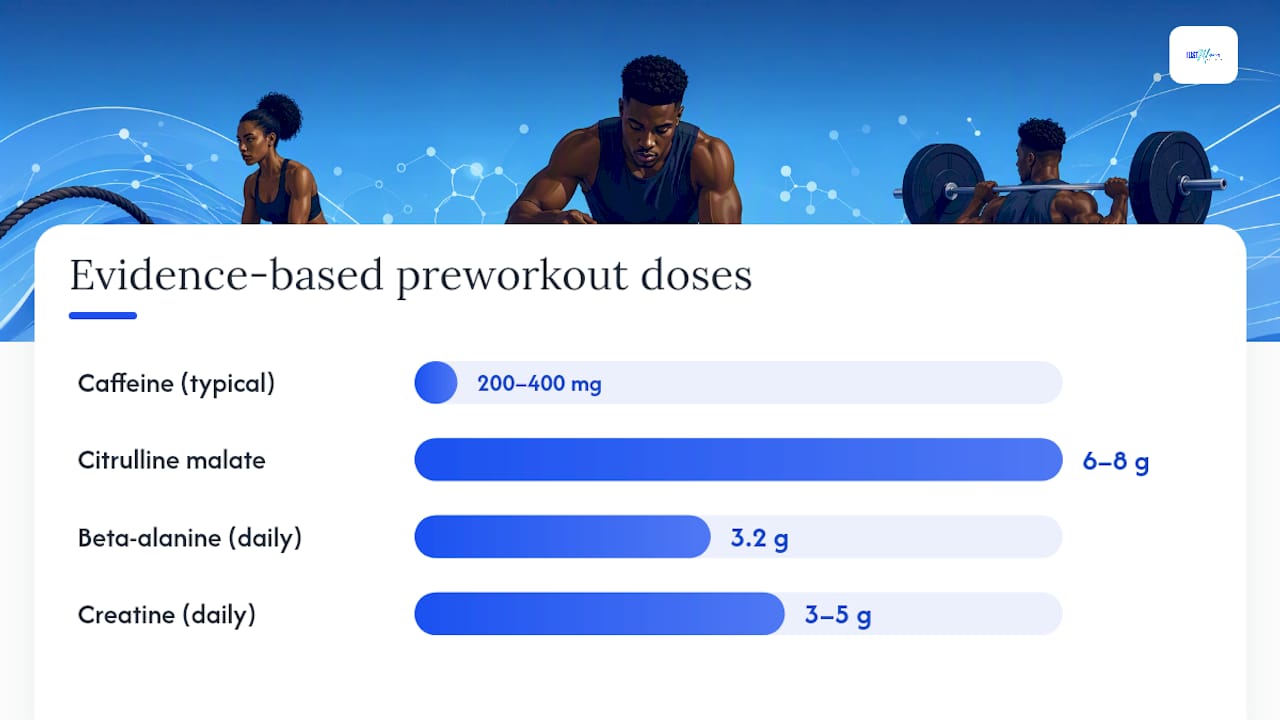
Caffeine: 3 to 6 mg/kg body weight, generally 200 to 400 mg, taken 30 to 60 minutes before training.
Citrulline malate: 6 to 8 grams, also 30 to 60 minutes pre-workout, or 3 to 6 grams if using straight L-citrulline.
Beta-alanine: 3.2 grams daily, split into smaller doses to ease paresthesia, taken consistently regardless of training day.
Creatine monohydrate: 3 to 5 grams daily, any time of day, with no need to time it around your session.
A few sample stacks illustrate how these pieces fit together. A minimal effective stack pairs 200 mg of caffeine with 6 grams of citrulline malate, covering energy and pump with nothing extra. A low-stimulant stack swaps some caffeine intensity for smoothness: 100 mg of caffeine, 200 mg of L-theanine to soften the edge, and 6 grams of citrulline. A strength-focused stack runs daily creatine and a beta-alanine loading protocol in the background, with a caffeine dose added only on session days.
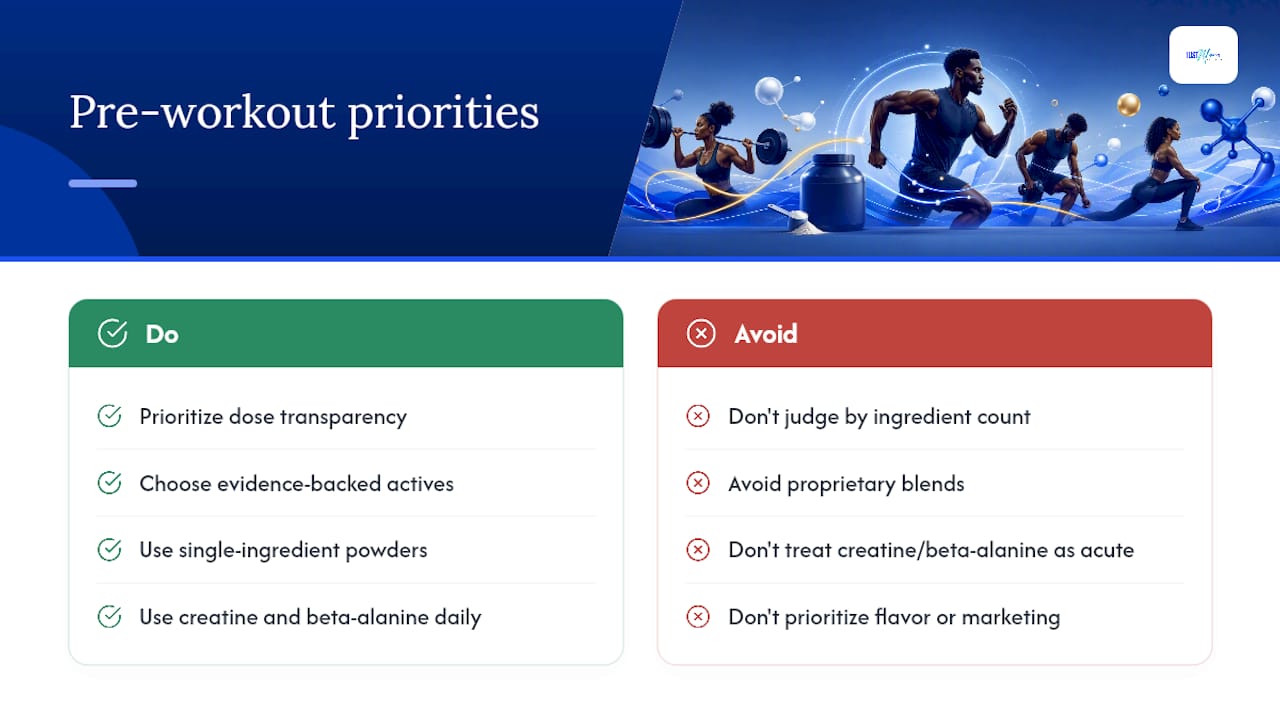
One detail that trips people up: beta-alanine and creatine are daily supplements, not “pre-workout” ingredients in the acute sense. A simple stack built around evidence-backed doses often beats an opaque 15-ingredient blend, simply because you know exactly how much of each active you’re getting.
Pre-Workout Safety: Interactions and Red Flags
Total stimulant load matters more than any single product’s label suggests. If you drink coffee earlier in the day and then take a caffeine-loaded pre-workout, you can easily cross 400 to 500 milligrams without realizing it. Stimulants can raise blood pressure and produce other hemodynamic effects, so people managing blood pressure or heart conditions need to track their full daily intake, not just what’s on one label. Timing matters too: caffeine taken late in the day disrupts sleep for many people, which undercuts recovery even if the workout itself went well.
Proprietary blends are the biggest hidden risk on a supplement shelf. When a label lists a blend by total weight instead of individual amounts, you have no way to know if you’re getting an effective dose of beta-alanine or a token sprinkle meant mostly for the ingredient list. That opacity also makes it easy to unknowingly stack multiple stimulants from different products.
Watch for banned or high-risk stimulants entirely: DMAA, DMHA, and high-dose synephrine have all drawn safety warnings and, in DMAA’s case, regulatory bans in various markets. These don’t belong in a training supplement regardless of what the marketing promises.
Beta-alanine tingling is harmless; it does not indicate a dangerous reaction.
Creatine raises serum creatinine on bloodwork; mention supplement use to your doctor.
Pregnancy, heart disease, high blood pressure, and medications like MAOIs, other stimulants, or nitrates all warrant a conversation with a clinician before adding a stimulant-based product.
Pro Tip:Keep a running mental tally of every caffeine source in your day, coffee, tea, energy drinks, pre-workout, and even some fat burners, before you assume your pre-workout dose is the only one counting toward your total.
How to Read a Pre-Workout Label Before You Buy
A good label makes your decision easy. A vague one should make you suspicious. Run through this checklist before you commit to a tub:
Full disclosure of amounts. Every active ingredient should list an exact gram or milligram figure, not a blend total.
Effective doses of the ingredients that matter. Compare what’s listed against the ranges covered above, caffeine, beta-alanine, citrulline, and creatine.
No proprietary blends. If you can’t see the individual amounts, you can’t verify the dose.
No risky stimulants. Scan for DMAA, DMHA, or high-dose synephrine and skip anything that includes them.
Third-party sport certification for athletes who face drug testing, since contamination and undisclosed banned substances remain a real risk in some formulations.
If a product under-doses something you specifically want, like citrulline or creatine, buying a single-ingredient powder to stack alongside it is often cheaper and more precise than switching products entirely. Comparing a nutrition panel against known dosing benchmarks is the same skill used for reading a protein supplement label, and it transfers directly here.
Where Justmovesupplements Fits Into the Evidence
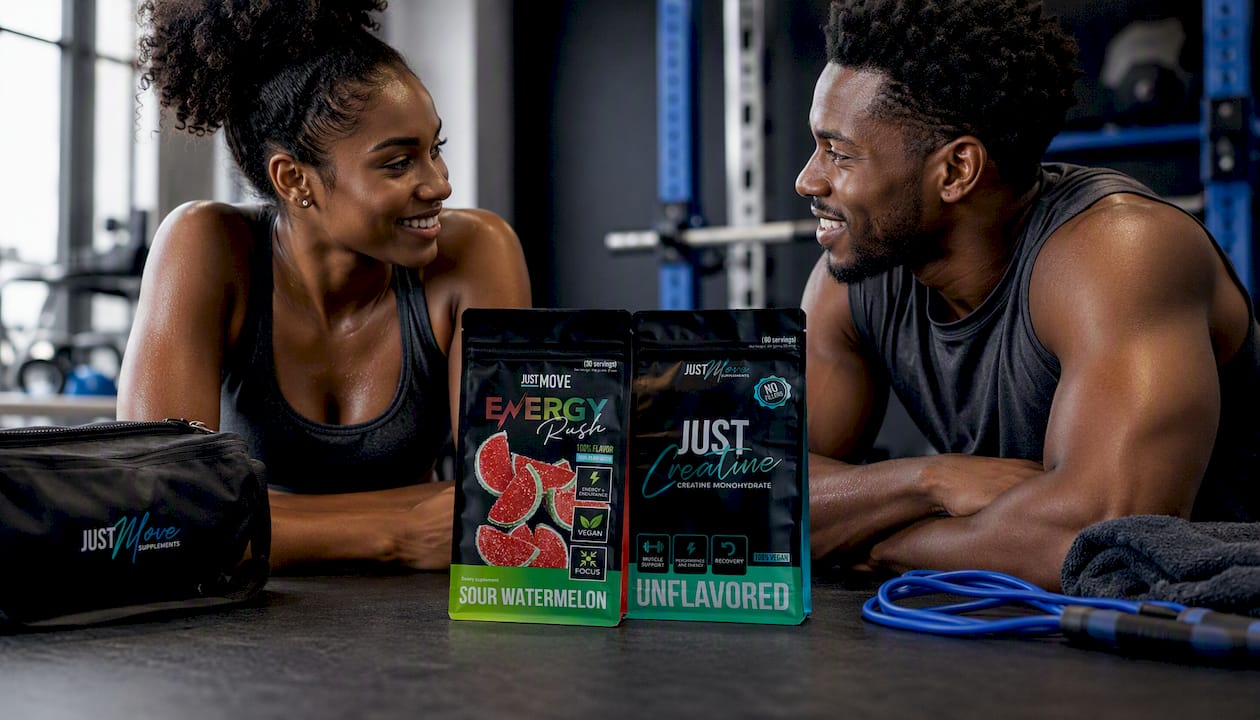
Some supplements build their formulas around the same dosing logic covered in this guide rather than chasing a long ingredient list for its own sake. For readers who want acute energy on training days, Sour Watermelon Energy Rush - Pre Workout is formulated around the caffeine range shown effective above. For readers who want the daily strength and power benefits that come from consistent supplementation, Just Creatine - Creatine Monohydrate covers the maintenance dosing that creatine research actually supports.
Whichever product you choose, check the label against the dosing ranges outlined earlier in this guide. Athletes subject to testing should also confirm sport-certification status before adding anything new to their routine.
Why the Pre-Workout Industry Oversells the Wrong Things
The supplement industry has trained people to judge a pre-workout by its ingredient count instead of its dosing accuracy. That’s backwards. A 20-ingredient blend with proprietary amounts tells you less than a 4-ingredient product with every gram disclosed on the label.
The evidence doesn’t support the idea that more ingredients means more results. Caffeine, beta-alanine, citrulline, and creatine cover nearly every performance benefit a stimulant-based product can offer, and stacking single-ingredient powders around those four often beats a flashy blend at a fraction of the guesswork. Where conventional advice really falls short is timing confusion: treating creatine and beta-alanine like acute “pre-workout” ingredients when they’re daily supplements that build their effect over weeks.
Readers should prioritize dose transparency first, evidence-backed actives second, and flavor or marketing claims dead last. Get those first two right and the workout results follow on their own.
— Just
Get the Ingredients That Are Actually Dosed to Work
Skip the guesswork that comes with vague blend labels. Some supplement brands list exact amounts on their products, so you can know what you’re putting into your body before your next session.
Sour Watermelon Energy Rush - Pre Workout delivers caffeine dosed in the effective range covered in this guide, built for training days that need real energy, not a proprietary mystery blend. For the daily side of the equation, Just Creatine - Creatine Monohydrate gives you straightforward creatine monohydrate at maintenance dosing, no filler, no flashy blend name standing in for a real number.
Before you buy anything, pull up the label and compare it against the dosing ranges from this guide, then pick the product that matches. If you compete and face drug testing, confirm sport-certification status first. Ready to stack your routine with ingredients you can actually verify? Check out both product pages and see exactly what’s inside.
What Are the Most Important Pre-Workout Ingredients?
Caffeine, beta-alanine, citrulline (or citrulline malate), and creatine monohydrate carry the strongest evidence for improving energy, endurance, pump, and strength.
How Much Caffeine Should Be in a Pre-Workout?
Effective dosing runs 3 to 6 mg/kg body weight, which works out to roughly 200 to 400 mg for most adults, taken 30 to 60 minutes before training.
Does Beta-Alanine Work if Taken Right Before a Workout?
Not on its own. Beta-alanine needs chronic daily dosing of 3.2 to 6.4 grams over several weeks to raise muscle carnosine and produce a real performance benefit.
Is Creatine Necessary in a Pre-Workout Formula?
No. Creatine’s benefits come from consistent daily dosing of 3 to 5 grams, regardless of when you take it relative to training, so it works just as well as a separate daily supplement.
What Should I Avoid on a Pre-Workout Label?
Avoid proprietary blends that hide individual ingredient amounts, and steer clear of risky stimulants like DMAA, DMHA, or high-dose synephrine.
Does Justmovesupplements Offer Transparent Dosing?
Yes. Both Sour Watermelon Energy Rush - Pre Workout and Just Creatine - Creatine Monohydrate list exact ingredient amounts rather than relying on undisclosed blends.
Find the right pre workout timing: 30 to 60 minutes for caffeine, 2 to 3 hours for nitrates. Use the three session test (20, 40, 60 minutes) to find your...
Consuming this product can expose you to chemicals including
Lead, which is known to the State of California
to cause cancer and birth defects or other reproductive harm.