Pre-workout is optional. Nothing about progress in the gym requires it, and beginners often do better skipping it in favor of consistent training and sleep. If you do want to try one, pick a transparent-label formula with a modest, clearly stated caffeine amount, or a stim-free version, and start with a quarter to half serving while you watch how your body responds.
TL;DR:
If you are already training with good energy, sleep, and diet, using pre-workout offers little benefit and is best reserved for low-energy or mentally demanding sessions.
Beginners should start with a quarter to half of the labeled serving, monitor their response, and only increase gradually based on tolerance and effects.
Choose stimulant pre-workouts if training early in the day, but opt for stim-free if training in the evening or sensitive to caffeine; always track total daily intake to stay below 400 mg.
Caffeine remains the most evidence-backed ingredient for short-term performance enhancement, while other ingredients like beta-alanine and citrulline show inconsistent results for beginners.
Always check for transparent labeling, no proprietary blends, and test a small dose before full use, especially if combining with other caffeine sources or medications.
Justmovesupplements
justmovesupplements.com
Find Your Preferred Pre-Workout Flavor
Just Move Supplements offers varied supplement flavors, including a protein sample pack for trying options before committing to a purchase.
A pre-workout’s job is short-term: more energy, less perceived effort, sharper focus, and a fuller “pump” during the session itself. That is the whole contract. It does not build the habit of showing up three or four times a week, and it does not fix a diet that is short on protein or sleep that keeps getting cut to five hours.
Caffeine is the ingredient doing most of the real work. It reduces how hard a workout feels, which is different from making you objectively stronger, but that feeling matters when you’re dragging through a 6 a.m. session or a lift after a ten-hour shift. The NIH’s fact sheet on exercise supplements confirms caffeine has the most consistent research support of any common pre-workout ingredient, while effects from pump and endurance ingredients are far less predictable.
Long-term results still come from the boring fundamentals: training consistency, eating enough, staying hydrated, and sleeping enough to recover. A pre-workout can support one workout. It cannot substitute for the dozens of workouts that actually change your body over months.
Where a pre-workout genuinely earns its place for a new lifter:
Low-energy days when you’d otherwise skip the gym entirely
Early-morning sessions before your body is fully awake
Occasional stretches of fatigue from work, stress, or poor sleep the night before
Workouts where mental focus matters as much as physical output, like learning new lift technique
Where it’s unnecessary: if you’re already training with decent energy, eating regularly, and sleeping well, you don’t need a supplement to close a gap that doesn’t exist. Save it for the days you actually need the boost, and it will keep working better than if you take it every single session out of habit.
Stimulant vs. Stim-Free: Which One Fits You?
Choose a stimulant formula if you train earlier in the day and want a caffeine-driven energy lift. Choose stim-free if you train in the evening, are sensitive to caffeine, or you’re already drinking coffee and don’t want to stack more stimulants on top of it. Neither option is “better” outright. They solve different problems.
Stimulant formulas lean on caffeine as the primary active ingredient, typically alongside beta-alanine and citrulline. A beginner-friendly serving usually lands in the 100 to 200 mg caffeine range, roughly what you’d get from one to two cups of coffee. That’s enough to feel a lift without tipping into jitteriness, racing heart, or a wired 2 a.m. staring at the ceiling.
Stim-free formulas swap caffeine for ingredients aimed at blood flow and endurance, like citrulline malate or nitrates. You won’t get the same jolt of alertness, but you also won’t disrupt sleep if you’re training after dinner, and you avoid adding to whatever caffeine you’ve already had earlier in the day.
Here’s a simple way to decide which lane fits your situation:
Check your caffeine math first. If you’ve already had coffee or tea that day, a stimulant pre-workout stacks on top of it, not in isolation.
Consider your training time. Anything after early evening and a stim formula risks cutting into sleep quality.
Rate your caffeine sensitivity honestly. If a single cup of coffee makes your heart race, start stim-free or use a fraction of a stimulant serving.
Match the formula to the goal. Energy and alertness point toward stimulant; pump and endurance for longer sessions point toward stim-free or a blend.
Whichever you choose, treat the label’s serving size as a ceiling, not a floor. Practical first-timer guides consistently recommend a quarter to half serving on your first attempt, regardless of formula type.
Pro Tip:Keep a running mental tally of caffeine sources on training days, coffee, energy drinks, pre-workout, even chocolate. It’s easy to clear 300 mg before you’ve even hit the gym without realizing it.
What the Science Actually Says About Common Ingredients
Not every ingredient on a pre-workout label deserves equal trust. Caffeine has the strongest track record. Everything else ranges from “promising in trained athletes” to “genuinely mixed,” and beginners should weigh that distinction before assuming a longer ingredient list means a more effective product.
Caffeine reduces how hard exercise feels and can support performance in some measures, according to the NIH’s review of exercise supplements. This is the one ingredient where the evidence is genuinely solid, not just marketing language dressed up as science.
By the numbers: The FDA cites 400 mg of caffeine per day as an amount not generally linked to negative effects in most healthy adults. That’s a population-level reference point, not a target to hit. If you’re new to caffeine or sensitive to it, a fraction of that number is the smarter starting line.
Beta-alanine is the ingredient responsible for that tingling, prickly sensation on your skin, especially at doses at or above roughly 800 mg. That sensation, called paresthesia, is common and generally considered benign. It’s also not proof the product is working better. Beta-alanine’s performance evidence is inconsistent, and much of the research showing benefit comes from trained athletes doing high-repetition, fatigue-focused work, not someone doing their first month of structured lifting.
Citrulline and nitric-oxide precursors (the ingredients responsible for that “pump” feeling) sit in a similar spot. Some studies show modest gains in blood flow and endurance; others show little difference. The NIH fact sheet notes evidence here is limited or conflicting, and results often don’t generalize cleanly from conditioned athletes to recreational exercisers just getting started.
A few practical takeaways from that evidence hierarchy:
Caffeine is the ingredient worth prioritizing if you’re choosing based on research strength alone.
Beta-alanine’s tingle is a sensory side effect, not a performance guarantee.
Citrulline and nitrate-based pump ingredients may help some people, but don’t expect dramatic, consistent gains as a beginner.
Much of the underlying research uses trained subjects, so results for someone new to structured exercise may look different in practice.
One more note worth knowing: creatine monohydrate and HMB aren’t pre-workout ingredients in the traditional sense, but they’re two of the most evidence-backed supplements available for beginners building strength over time. Creatine in particular has decades of research behind it for supporting strength and lean mass gains when paired with consistent training. If you’re building a supplement routine from scratch, creatine deserves a look before most pump or focus ingredients do. Our breakdown of proven pre-workout ingredients covers exact dosing for each one in more detail.
How to Choose a Pre-Workout for Your First Try
Start with the Supplement Facts panel, not the marketing copy on the front of the tub. The back label tells you what you’re actually getting; the front label tells you what the brand wants you to feel about it.
Here’s what actually matters when you’re comparing options:
Total caffeine per serving, stated in milligrams. If a label just says “energy blend” without a number, that’s a red flag, not a selling point.
A transparent Supplement Facts panel with no proprietary blend. Proprietary blends hide exact amounts behind a single combined weight, which means you can’t tell if you’re getting 50 mg of caffeine or 300.
Third-party certification where it matters to you.NSF Certified for Sport reduces uncertainty about what’s actually in the container and screens for banned substances, though it doesn’t guarantee the product will work better for your specific body.
Serving format. Single-serve packets or sample sizes let you test taste and tolerance before committing to a full tub you might not finish.
Whether the flavor and mix quality match your expectations. A pre-workout you dread drinking is one you’ll stop using, regardless of the formula inside it.
Certification is worth a closer look for anyone who competes in a tested sport, but even outside that context, it’s a reasonable trust signal for a beginner who has no way to verify a label’s accuracy on their own. Just remember: certification confirms what’s in the tub matches the label. It doesn’t confirm the product is right for you personally.
Pro Tip:If a product’s Supplement Facts panel lists a “proprietary energy matrix” or similar vague phrase, skip it. You genuinely cannot make an informed decision about a product that won’t tell you its own ingredient amounts.
Comparing formula types side by side makes the decision easier:
Our comparison of pre-workout versus energy drinks walks through how to keep your total daily caffeine in check when you’re stacking multiple sources across a training day.
Your First Dose: A Simple Testing Protocol
Treat your first pre-workout experience like an experiment, not a workout day you’re trying to maximize. The goal isn’t peak performance. It’s information about how your body handles the product.
Start at a quarter to half of the labeled serving. This is the single most repeated piece of advice from practical first-timer guides, and for good reason. It’s far easier to take more next time than to undo a bad reaction the first time.
Use a sample pack or single-serve packet if one is available. Testing a small amount before buying a full tub saves money and avoids a cabinet full of unused powder if the flavor or formula doesn’t agree with you.
Take it roughly 30 to 45 minutes before training. Absorption speed varies by individual and by formula, so adjust slightly in future sessions based on when you actually felt the effects kick in.
Pick a normal, low-stakes workout for the test. Not a max-effort day, not a new program’s first session. You want a baseline you already understand so you can isolate what the supplement changed.
Track four things afterward: focus during the session, how hard the workout felt relative to normal, any stomach discomfort, and any noticeable heart sensations like pounding or racing.
Check your sleep that night. Caffeine’s half-life means a dose taken in the afternoon can still affect sleep quality hours later.
Only increase the serving gradually, and only if everything above came back clean. There’s no prize for reaching a full serving quickly.
This kind of self-tracking sounds tedious for one workout, but it’s the difference between guessing and actually knowing how a product affects you specifically. Two people can take the same 200 mg serving and have completely different experiences based on body size, caffeine tolerance, and how much sleep they got the night before.
Safety First: Side Effects and Red Flags to Know
Most side effects from a reasonable pre-workout serving are mild and manageable. A few are not, and knowing the difference matters more than any performance benefit the product might offer.
The FDA’s guidance puts 400 mg of caffeine per day as the threshold not generally associated with negative effects in most healthy adults. That number covers every caffeine source in a day combined, not just your pre-workout serving. Highly concentrated caffeine powders and liquids are a separate and more dangerous category. They’re difficult to measure accurately with household tools, and the FDA has flagged them as potentially toxic or life-threatening when misused, which is a major reason to stick with a labeled, pre-dosed product instead of raw powder.
Beta-alanine’s tingling sensation, discussed earlier, is common and typically benign on its own. It becomes a concern only if it’s accompanied by other symptoms, not as a standalone reaction.
Watch for these clear warning signs:
Dry scooping (taking powder without mixing it in liquid) increases choking risk and speeds up absorption in a way that can spike heart rate dangerously. Skip it entirely.
Stacking multiple stimulant sources (coffee, energy drinks, pre-workout, fat burners) in the same day without tracking total caffeine.
Chest pain, fainting, or trouble breathing during or after use. Stop immediately and seek medical attention.
Persistent heart palpitations beyond a brief, mild flutter.
Noticeably disrupted sleep on days you use a stimulant formula, especially with evening training.
Anyone who is pregnant, taking medications that interact with stimulants, or managing a heart condition should talk to a doctor before adding any caffeine-containing supplement to a routine. This isn’t a formality. Caffeine’s effects on heart rate and blood pressure can compound with certain medications and health conditions in ways a label can’t account for.
Where Justmovesupplements’ Starter Options Fit In
If you’re ready to try a stimulant formula for the first time, look for products built around transparency principles: a clear Supplement Facts panel with caffeine amounts stated plainly, not buried behind a proprietary blend. That’s the first thing to check on any pre-workout, and it applies just as much to what Justmovesupplements sells as to any other product you’re considering.
Such flavors can work as approachable entry points for someone testing tolerance for the first time. Following the testing protocol above, that means starting with a quarter to half serving, taking it 30 to 45 minutes before a normal training session, and tracking how you feel through the workout and into that night’s sleep.
For beginners building a longer-term supplement routine, creatine monohydrate pairs naturally with pre-workout use. Unlike most pump or focus ingredients, creatine’s evidence base for supporting strength and lean mass over time is well established, and timing is flexible, before or after training, since its benefit comes from consistent daily use rather than a pre-workout window.
A few practical starting points:
Try a single-serve packet or sample size before committing to a full tub of either Energy Rush flavor.
Start at half a serving on your first attempt, even if the label suggests a full scoop.
Add Just Creatine on a consistent daily schedule, independent of whether you’re training that day.
Reassess after two or three sessions before deciding whether to increase your pre-workout serving.
Hydration Matters More Than the Pre-Workout Itself
Caffeine has a mild diuretic effect, which means it can slightly increase fluid loss through urination, especially at higher doses or if you’re not used to it. For most beginner-sized servings, this effect is small, but it’s still worth accounting for, especially if you’re training in heat or sweating heavily.
The simplest approach: drink water before, during, and after your workout regardless of whether you’re using a pre-workout. Don’t treat the supplement as a substitute for water intake, and don’t assume feeling “energized” from caffeine means you’re adequately hydrated. Those are two completely separate signals from your body.
A practical baseline is drinking water steadily throughout the day leading up to a workout, rather than trying to chug a large amount right before training. If you notice a headache, unusual fatigue, or dizziness after using a stimulant pre-workout, dehydration is one of the first things worth ruling out, since its symptoms can overlap with mild caffeine sensitivity.
Pump ingredients like citrulline are sometimes marketed alongside hydration claims, but there’s no substitute for actually drinking enough water. No ingredient increases blood flow enough to compensate for being underhydrated going into a session. If you train early in the morning, that’s an especially important window to check, since most people wake up mildly dehydrated after a night’s sleep before they’ve had anything to drink.
Mixing Pre-Workout With Other Supplements and Medications
Pre-workout’s biggest interaction risk isn’t with other supplements. It’s with other sources of caffeine you may not be counting. Coffee, tea, energy drinks, and even some over-the-counter medications contain caffeine, and each one adds to your daily total. Someone who has a large coffee, then an energy drink at lunch, then a full pre-workout serving before the gym can clear 400 mg without realizing it.
Combining pre-workout with fat burners deserves particular caution, since many fat burners also contain stimulants. Stacking two stimulant-based products multiplies the risk of jitteriness, elevated heart rate, and sleep disruption far more than either product alone.
Creatine, protein powder, and most vitamins don’t carry the same stimulant-interaction concern and can generally be used alongside a pre-workout without issue. The interactions that matter most involve prescription medications, particularly certain blood pressure medications, stimulant medications, and some antidepressants, which can interact with caffeine in ways that aren’t always predictable. If you take any prescription medication regularly, a quick conversation with a pharmacist or doctor before adding a caffeine-containing supplement is a reasonable step, not an overreaction.
Natural Alternatives to Pre-Workout
A cup of coffee is the most obvious substitute, and for many beginners, it’s genuinely sufficient. It delivers the same core ingredient, caffeine, without added stimulant blends, and it’s easy to control the dose precisely by how much you drink.
Beyond caffeine, a few food-based strategies cover similar ground. A small carbohydrate snack, like a banana or a slice of toast with honey, 30 to 60 minutes before training can support energy levels for a workout without any stimulant at all. Beetroot juice contains natural nitrates, the same compound behind some “pump” ingredients in stim-free formulas, and has research behind it for supporting blood flow during exercise.
For focus and alertness without caffeine, adequate sleep the night before does more than any supplement can. It sounds almost too simple to state, but a well-rested beginner walking into the gym will often outperform a sleep-deprived one who took a full pre-workout serving. Supplements amplify what’s already there. They don’t create energy your body doesn’t have.
Author Perspective: Start Slow, Trust the Process
The instinct with any new supplement is to chase the strongest sensation, more tingling, more energy, more pump, as proof it’s working. That instinct is backwards. The ingredient with the best evidence, caffeine, doesn’t need to feel overwhelming to be effective, and a beginner who starts at half a serving and pays attention learns more about their own tolerance than someone who maxes out the scoop on day one.
Supplements are a tool that supports a workout you were already going to do well. They don’t replace the training consistency, sleep, and food intake that actually drive results over months. A pre-workout can make Tuesday’s session feel better. It can’t make up for six missed Tuesdays.
If you’re curious, start with a sample pack, test a small amount, and pay attention to how your body responds. That feedback is worth more than any ingredient list.
— Just
Try a Sample Pack Before You Commit to a Full Tub
Some starter lineups follow exactly the caution this guide recommends: transparent labels, clearly stated caffeine, and formats that let you test before you buy a full tub.
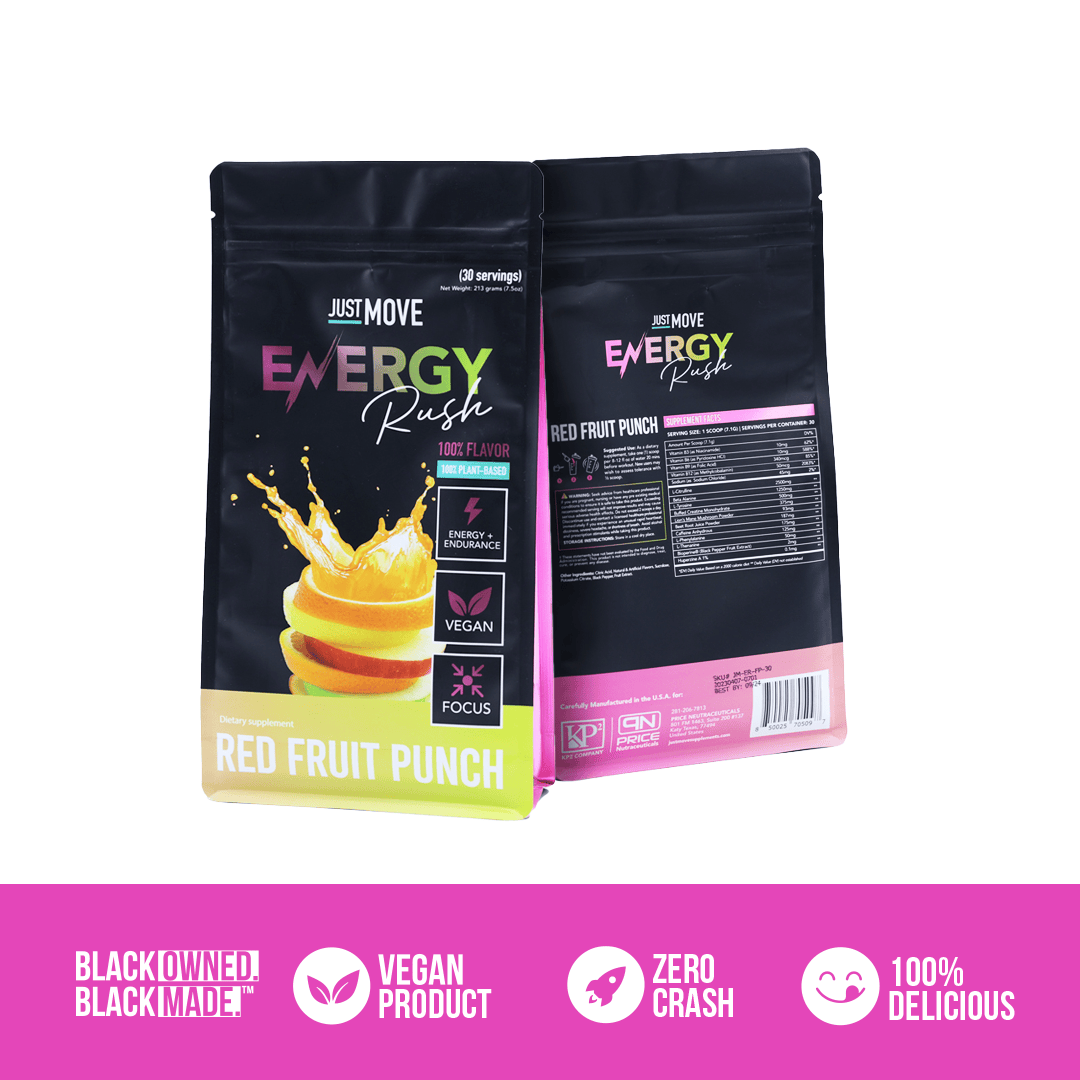
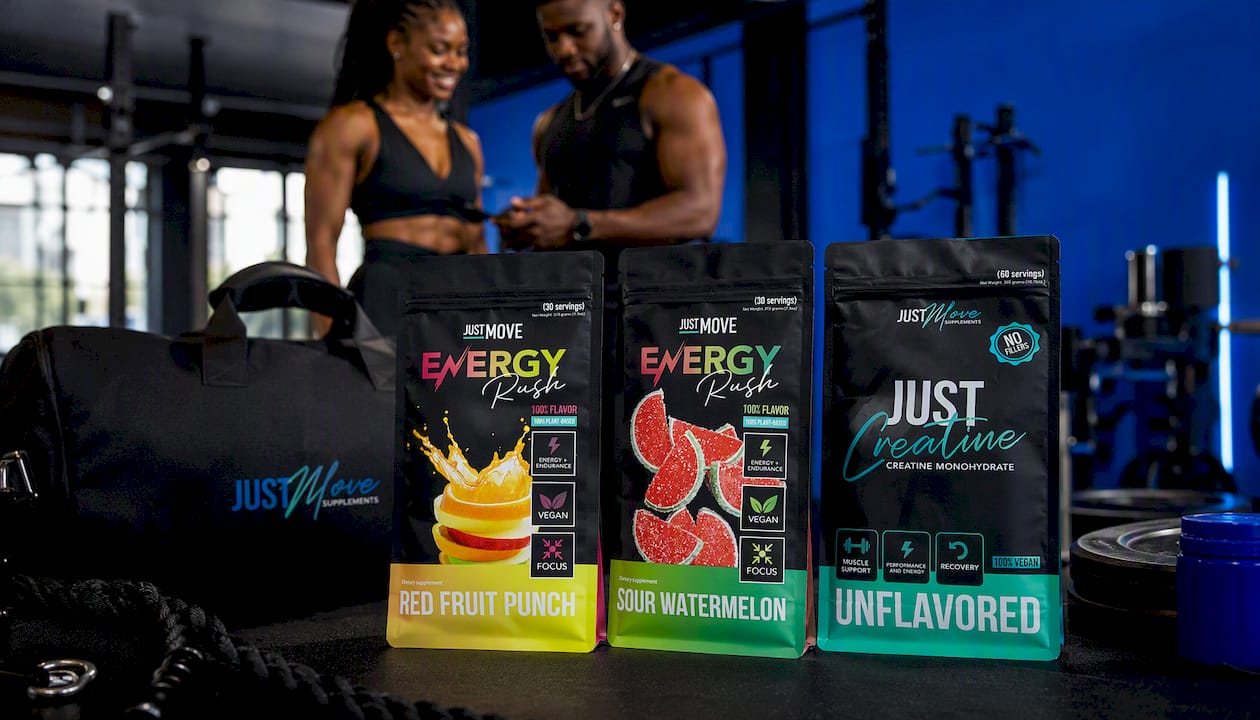
If you’re ready to try your first stimulant pre-workout, Fruit Punch Energy Rush and Sour Watermelon Energy Rush both give you a clearly labeled caffeine amount to work with, no guessing, no proprietary blend hiding the real number. Start with half a serving on your first attempt, track how you feel through the workout and into that night’s sleep, and adjust from there. Pairing either flavor with Just Creatine on a consistent daily schedule adds a well-researched, complementary supplement to your routine without the same stimulant considerations. Browse the full Energy Rush and supplement lineup to compare flavors and find the format that fits how you train.
Sources
The guidance in this article draws on established regulatory and research sources rather than marketing claims:
This article is general information, not a substitute for advice from a qualified doctor. Consult a qualified healthcare professional about your own circumstances before acting on anything here.
FAQ
Do Beginners Really Need Pre-Workout?
No. Pre-workout is optional, and consistent training, food, hydration, and sleep matter far more for progress than any supplement. If low energy or early sessions are a real obstacle, a transparent-label, modest-caffeine product can help, but it’s not required to see results.
How Much Pre-Workout Should a First-Timer Take?
Start with a quarter to half of the labeled serving, not a full scoop. This lets you gauge tolerance before committing to more, and it’s the approach practical first-timer guides consistently recommend.
How Much Caffeine Is Too Much in a Pre-Workout?
The FDA cites 400 mg per day as an amount not generally linked to negative effects in most healthy adults, counting every caffeine source combined. Beginners and caffeine-sensitive people should aim well below that, often starting in the 100 to 200 mg range per serving.
Is Tingling From Beta-Alanine Dangerous?
No, the tingling sensation (paresthesia) from beta-alanine is common and considered benign on its own. It’s a sensory side effect, not proof the product is working better, and it’s distinct from warning signs like chest pain or breathing trouble.
What Pre-Workout Should a Beginner Try First?
Look for a transparent Supplement Facts panel with a clearly stated caffeine amount and no proprietary blend. Justmovesupplements’ Fruit Punch Energy Rush and Sour Watermelon Energy Rush are built around that transparency, and starting with half a serving lets you test tolerance safely before committing further.
Learn the TSA 12 ounce powder rule and packing steps that prevent checkpoint delays. Use single-serve packets and an empty shaker to pass U.S. security fast.
Safety-first protein powder buying guide: run a two week trial, aim for 20–30g per serving, cap sugar, and confirm third party testing before you commit.
Consuming this product can expose you to chemicals including
Lead, which is known to the State of California
to cause cancer and birth defects or other reproductive harm.