Most zero-calorie, stimulant-only pre-workouts do not break a fast for weight loss or metabolic goals, but caloric formulas, BCAAs, and added carbs do. The rule of thumb: check the label for calories and amino acids first, caffeine content second. If you’re fasting strictly for autophagy or gut rest, even a small amount of BCAAs or sweeteners can matter more than it does for simple calorie counting.
TL;DR:
Zero-calorie, stimulant-only pre-workouts with no amino acids or carbs keep most fasters within their protocols, especially for weight loss and metabolic goals.
BCAAs, EAAs, and added sugars typically break a fast due to their insulin-raising effects or caloric content, making these ingredients unsuitable during fasted training.
Caffeine, creatine, electrolytes, citrulline, and beta-alanine are generally safe and effective for fasted workouts; timing caffeine 30 to 60 minutes before training maximizes benefits.
The strictness of your fast, whether calorie-focused or autophagy-oriented, determines how cautious you should be with pre-workout ingredients, especially amino acids.
Simple, fast-compatible alternatives like black coffee or stim-free blends with electrolytes offer reliable options for maintaining energy without disrupting fasting goals.
Justmovesupplements
Find Your Next Training Supplement
Explore Just Move Supplements for varied protein, energy, and performance-focused options suited to your fitness routine.
What Does It Mean to “Break a Fast” During a Workout?
“Breaking a fast” means three different things depending on why you’re fasting, and confusing them is where most gym-goers go wrong. Someone fasting for weight loss cares mostly about calories. Someone chasing metabolic benefits cares about insulin. Someone fasting for autophagy or digestive rest cares about both, plus anything that signals your gut to start working.
Here’s how the three definitions break down:
Caloric fast: You’ve technically broken it the moment you consume calories, even 10. This is the strictest and simplest definition, and it’s what most weight-loss-focused intermittent fasters actually mean when they ask if pre-workout is allowed.
Insulin/metabolic fast: This one is about blood sugar and insulin response, not just calories. A zero-calorie ingredient can still trigger a measurable insulin release in some people, which matters if your fasting protocol targets insulin sensitivity specifically.
Autophagy/gut-rest fast: This is the strictest interpretation, tied to cellular cleanup processes and full digestive rest. Even amino acids in tiny amounts are thought to interrupt this state for some practitioners, though the exact threshold isn’t settled science.
For most people doing time-restricted eating or standard 16:8 intermittent fasting, the caloric definition is what actually matters. If your goal is weight management or simply extending your eating window, a truly zero-calorie pre-workout with no amino acids keeps you within the spirit of the fast. If you’re chasing deeper autophagy benefits, you’ll want to be far more conservative, and that’s a personal call worth making before you shop for a pre-workout, not after.
Which Pre-Workout Ingredients Are Fast-Compatible?
Not every ingredient on a pre-workout label behaves the same way in your bloodstream, and treating them as one category is the biggest mistake fasting exercisers make. Some compounds pass through your system without triggering an insulin response or contributing calories. Others do the opposite, even in small doses.
Caffeine is the most fast-friendly stimulant available. It carries zero calories and doesn’t meaningfully raise blood glucose on its own, which is why it’s the backbone of nearly every “fasted cardio” recommendation you’ll find. Caffeine reaches peak blood concentration about 30 to 60 minutes after ingestion, which is also the window where you’ll feel the strongest performance boost.
Creatine is another green light. It’s not caloric, and research shows creatine supplementation does not acutely raise insulin. Timing matters far less than daily consistency, so taking it fasted or fed makes little practical difference to its effectiveness.
Electrolytes (sodium, potassium, magnesium) are fine in non-caloric form and are genuinely useful during fasted training, since electrolyte support helps offset dehydration risk when you’re not getting fluids from food.
Citrulline and beta-alanine, the pump and endurance compounds in most pre-workout blends, also tend to be fast-compatible. Evidence indicates these amino acids and stimulants don’t meaningfully raise blood glucose, so a pre-workout built around this combo plus caffeine is about as clean as it gets.
Now the ingredients that break things:
BCAAs and EAAs: These are the biggest red flag on a label if you’re strict about fasting. Research confirms branched-chain amino acids can elicit an insulin response, and many practitioners treat any BCAA content as fast-breaking regardless of the calorie count.
Protein or collagen additions: Some “recovery” pre-workouts blend in a small protein dose. Any protein content ends a caloric fast immediately.
Carbs and maltodextrin: Common in performance-focused pre-workouts meant for fed-state training. These spike blood sugar and calories both, no gray area here.
Sugars (dextrose, cane sugar): Same issue as maltodextrin, just under a different name on the label.
Statistic Callout: Caffeine’s performance window lands 30 to 60 minutes post-ingestion, which is exactly why timing your dose before a fasted session matters more than the dose itself.
Artificial sweeteners are the murkiest category. Non-nutritive sweeteners like sucralose and aspartame generally don’t raise blood glucose in most research, but evidence on their metabolic effects remains mixed, and some fasting purists avoid them out of caution rather than hard proof. If you’re following a strict fasting protocol for medical reasons, this is worth discussing with a doctor rather than guessing.
When Should You Take Pre-Workout While Fasting?
Timing your dose right does more for your results than almost anything else you’ll read here. Since caffeine peaks in your blood 30 to 60 minutes after you take it, that’s your target window before you start lifting or running.
Take your dose 30 to 45 minutes pre-training. This gets you into the peak effect window right as you start your warm-up, rather than mid-workout when it’s less useful.
Start with a half serving on an empty stomach. Absorption speeds up significantly when there’s no food buffering it, so a full scoop that felt fine after breakfast can feel like too much fasted.
Dilute with extra water and sip slowly. A concentrated dose hitting an empty stomach is the most common cause of nausea and jitters. More water, taken over 10 to 15 minutes, smooths this out considerably.
Move caloric products into your eating window. If a formula contains BCAAs, carbs, or protein, save it for after your fast ends rather than trying to make it “fasting-friendly” through smaller portions.
Pro Tip:If you’re new to fasted training, test your pre-workout tolerance on a rest day first. You’ll learn your caffeine sensitivity without the added stress of a heavy lifting session riding on it.
A simple comparison worth trying: black coffee plus a pinch of electrolytes on your easier training days, and a clean, zero-calorie pre-workout reserved for the one or two sessions per week where you genuinely need the extra push. This approach keeps your fast intact most of the week while giving your hardest sessions real support. Our breakdown on coffee versus pre-workout walks through exactly when each makes sense.
Is It Safe to Take Pre-Workout on an Empty Stomach?
Taking pre-workout fasted intensifies its effects, for better and worse. Faster absorption means quicker energy, but it also means a rougher ride if you’re sensitive to stimulants.
The most common complaints from fasted pre-workout use are jitters, mild nausea, acid reflux, and a racing heartbeat. These happen because caffeine hits your system faster and harder without food to slow absorption. High doses of caffeine can raise heart rate and blood pressure, and that sensitivity is amplified on an empty stomach, which is exactly why half-servings are the smarter starting point rather than a full scoop from day one.
Certain groups need to be more careful:
Anyone with a heart condition or high blood pressure should talk to a doctor before combining fasted training with stimulant pre-workouts.
Pregnant or breastfeeding individuals should avoid high-dose stimulants and check with a healthcare provider on any supplement, fasted or not.
People taking other stimulant medications (certain ADHD medications, some decongestants) risk compounding effects and should get medical guidance first.
Anyone who feels lightheaded, has heart palpitations, or gets genuinely sick should stop, eat something, and rehydrate immediately rather than pushing through the session.
If stimulants consistently disagree with you fasted, a stim-free pre-workout built around citrulline and beta-alanine gets you pump and endurance benefits without the cardiovascular load. Food-first is always the fallback: there’s no rule that says every session has to be fasted.
How Do You Read a Pre-Workout Label for Fasting?
A 60-second label check settles most of the guesswork here. Look at five things in this order:
Calories per serving. Anything above zero technically ends a caloric fast.
BCAA or EAA content. These are the single biggest source of confusion on labels, since they’re marketed as “recovery support” but still trigger an insulin response.
Added carbs or sugars. Maltodextrin, dextrose, and cane sugar all count against you.
Sweetener type. Non-nutritive sweeteners are generally lower risk, but read this line if you’re being strict.
Caffeine milligrams. Not a fasting issue directly, but critical for judging your dose relative to tolerance.
The decision flow is simple: zero calories, no BCAAs, no added sugar means the product is likely fine for a metabolic or weight-loss fast. If a label has any of those three flags, save the product for your eating window instead.
Zero-calorie, BCAA-free, stimulant-based formulas: generally fast-compatible.
Anything listing amino acids, protein, or carbs: treat as a feeding-window product.
When unsure, black coffee with electrolytes is the simplest fallback for a morning fasted session.
How Justmovesupplements Approaches Fasted Training
Certain energy formulas are built around the same fast-compatible ingredients covered above: caffeine, citrulline, beta-alanine, and electrolytes, without added sugars or protein muddying the picture. That transparency matters if you’re trying to make a quick label call before a fasted morning session.
A few things worth knowing about how the brand fits into this conversation:
Product pages list full ingredient panels, so customers can check calorie counts or amino acid content before purchase.
Sample pack options may let customers test flavors and tolerance in small amounts before committing to full-sized products, useful for dialing in fasted-training doses for the first time.
Customer reviews often mention flavor variety and consistent energy without a hard crash, which matters more when training on an empty stomach.
Does Fasting Type Change What Counts as Breaking It?
The style of fasting you follow changes how strict you need to be about pre-workout ingredients, and this gets glossed over in most generic advice. Standard intermittent fasting (16:8, 18:6) is mostly about calorie timing, so the caloric definition applies and a zero-calorie pre-workout fits cleanly within the rules.
Time-restricted eating follows the same logic but often has a shorter fasting window, meaning your pre-workout timing has less room to drift. If your eating window opens at noon and you train at 11 a.m., a zero-calorie stimulant keeps your window intact, while anything caloric effectively opens your window an hour early.
Prolonged fasting (24 hours or more) is where the stricter definitions start to matter more. At this length, some people are fasting specifically for autophagy or deeper metabolic reset, not just calorie management. In that case, even trace amino acids or artificial sweeteners might work against your actual goal, even though they wouldn’t matter for a simple 16-hour intermittent fast focused on weight management.
The practical takeaway: match your pre-workout strictness to your fasting goal, not just your fasting window length. A 16:8 faster training for body composition has far more flexibility than someone doing a 24-hour fast specifically to trigger autophagy. Know which one you’re actually doing before you decide how picky to be about labels.
What Does the Research Say About Insulin and Autophagy During Fasted Training?
The science here is more nuanced than most fitness content admits. Insulin response is the clearest, most measurable metric: BCAAs are documented to trigger insulin release even without accompanying carbohydrates, which is why they’re singled out repeatedly as a fast-breaking ingredient regardless of their zero-carb, low-calorie profile.
Autophagy is murkier territory. It’s a cellular cleanup process that ramps up during extended fasting, and while animal studies show it can be sensitive to amino acid intake, direct human research on how a small pre-workout dose affects autophagy specifically is limited. This is an area where a lot of confident-sounding claims outrun what’s actually been tested in people.
The honest summary: if insulin control is your main goal, avoid BCAAs and sugars strictly. If autophagy is your goal, be more conservative than the evidence technically requires, since the human data doesn’t give you a precise cutoff point.
Do You Need Electrolytes When Training Fasted?
Hydration becomes more important, not less, when you train without food in your system. You’re not getting the water content or sodium from a meal, and fasted sessions, especially in the morning, often follow seven or more hours without fluid intake overnight.
Non-caloric electrolytes and plain water don’t break a fast and are specifically recommended to offset dehydration risk during fasted exercise. Sodium, potassium, and magnesium all play a role in muscle function and cramp prevention, and a fasted session without adequate electrolyte support is a common reason people feel unusually flat or lightheaded partway through a workout.
A practical approach: add a sugar-free electrolyte mix to your water bottle alongside your pre-workout, especially for morning sessions or anything longer than 45 minutes. This costs you nothing on the caloric fasting front and meaningfully reduces your risk of cramping, headaches, or the dizzy feeling that sometimes gets mistaken for “just how fasted training feels.” If you’re sweating heavily, in a hot climate, or doing longer cardio sessions, electrolyte needs go up accordingly, and plain water alone may not be enough to keep you feeling steady.
What Are the Best Alternatives to Standard Pre-Workout While Fasting?
Black coffee remains the simplest, most fast-proven option available. It’s zero calories, delivers the same caffeine mechanism as most pre-workouts, and has centuries of casual use behind it as a fasting-safe stimulant. Our comparison of coffee for regular training days versus pre-workout for tougher sessions breaks down exactly when each makes more sense.
Green tea extract is another natural stimulant option, offering a milder caffeine dose alongside some antioxidant compounds, though the energy boost is noticeably gentler than coffee or a dedicated pre-workout.
Yerba mate is worth trying if you find coffee too harsh on an empty stomach. It provides caffeine plus a smoother energy curve for many people, without the acidity that sometimes triggers reflux during fasted training.
For readers who want the pump and endurance support without any stimulant at all, a stim-free blend built around citrulline and beta-alanine covers that need without touching your fast in any definition. And if you’re simply not a coffee person, plain water with electrolytes plus a short dynamic warmup can be enough for lighter training days where you don’t need a major energy boost to perform well.
The right alternative depends on what you’re actually chasing: raw energy, pump, or just enough alertness to get through a session without disrupting your fast.
Should You Adjust Your Workout Based on Whether You Took Pre-Workout?
Training fasted without any pre-workout support calls for a different intensity approach than training with one. Without stimulants, your body is running on stored glycogen and fat oxidation alone, so it makes sense to scale back on the heaviest compound lifts or the longest high-intensity intervals, especially early in your fasting adaptation period.
A practical adjustment: on fully fasted, no-pre-workout days, favor moderate-intensity strength work or steady-state cardio over max-effort lifts or sprint intervals. Your nervous system typically has less immediate fuel available, and pushing for a personal record fasted and unsupplemented is when form breaks down fastest.
On days you do take a fast-compatible pre-workout, caffeine’s stimulant effect can support higher-intensity work, so that’s a reasonable day to schedule your heavier compound lifts or your toughest interval session. This is exactly the “coffee most days, pre-workout for the hard sessions” logic worth building into a weekly training split.
Listen to how your body actually responds rather than forcing every session to match your original plan. If you skipped your usual pre-workout and you’re feeling flat 15 minutes in, that’s a signal to drop the weight slightly or shorten the session, not push through on willpower alone. Matching your training intensity to your fuel and stimulant status, rather than your schedule, is what keeps fasted training sustainable over months instead of just one motivated week.
Balancing Strict Fasting Goals With Real Performance Needs
Strict fasting purity and strong training performance don’t always pull in the same direction, and pretending otherwise does readers a disservice. If your goal is deep autophagy or gut rest, skip the pre-workout entirely and lean on black coffee or plain water. If your goal is weight management or general fitness, a genuinely zero-calorie, BCAA-free pre-workout fits your fast without meaningfully undermining it.
The pragmatic move is picking your strictness level before you shop, not after you’ve already bought a product with amino acids in it. For readers who want a fast-compatible option built with that label transparency in mind, our product lineup is worth a look.
— Just
Fast-Compatible Pre-Workout Options for Fasted Training
If you’re training fasted and want stimulant support without derailing your calorie or insulin goals, Justmovesupplements built two flavor options specifically around that zero-calorie, BCAA-free formula covered throughout this guide.
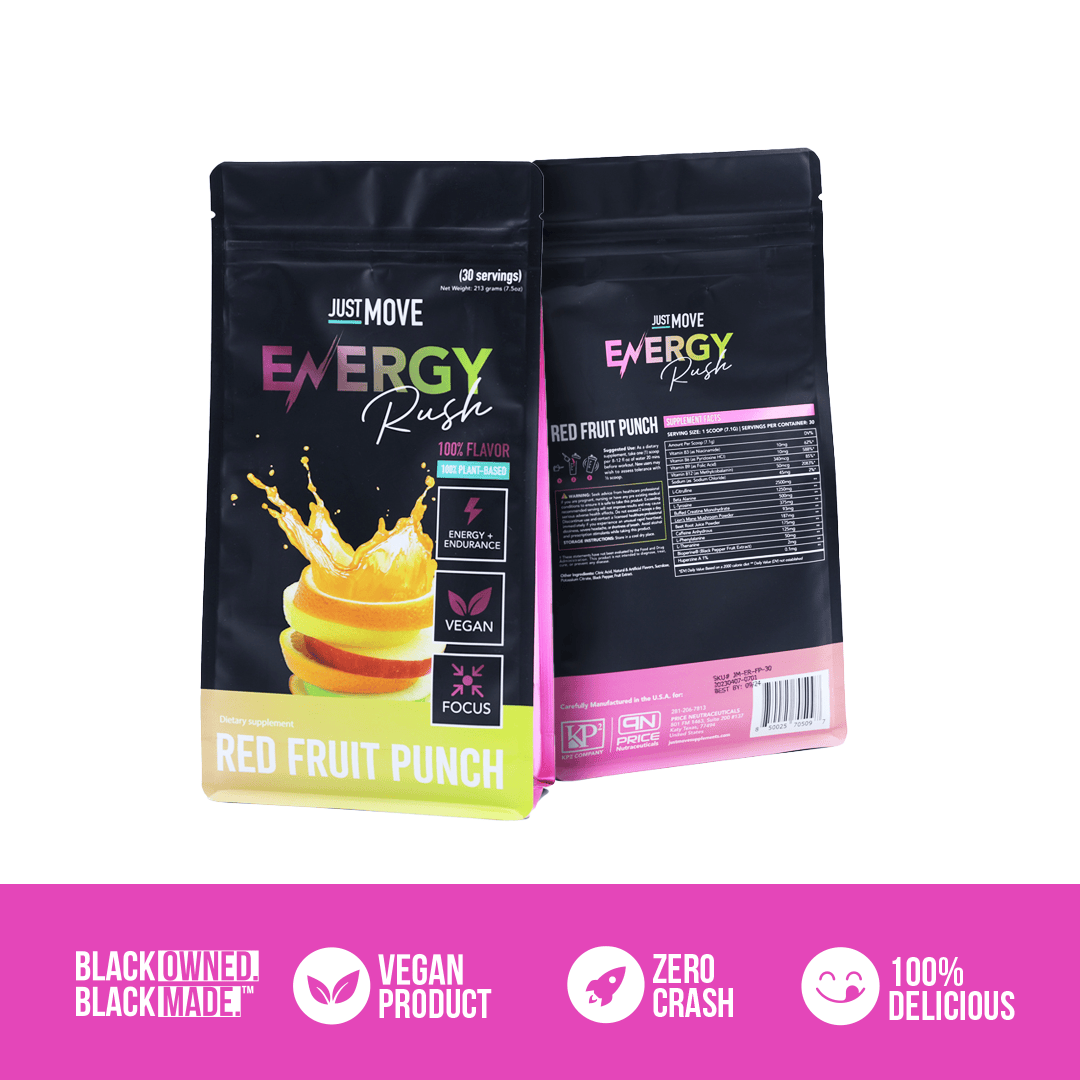
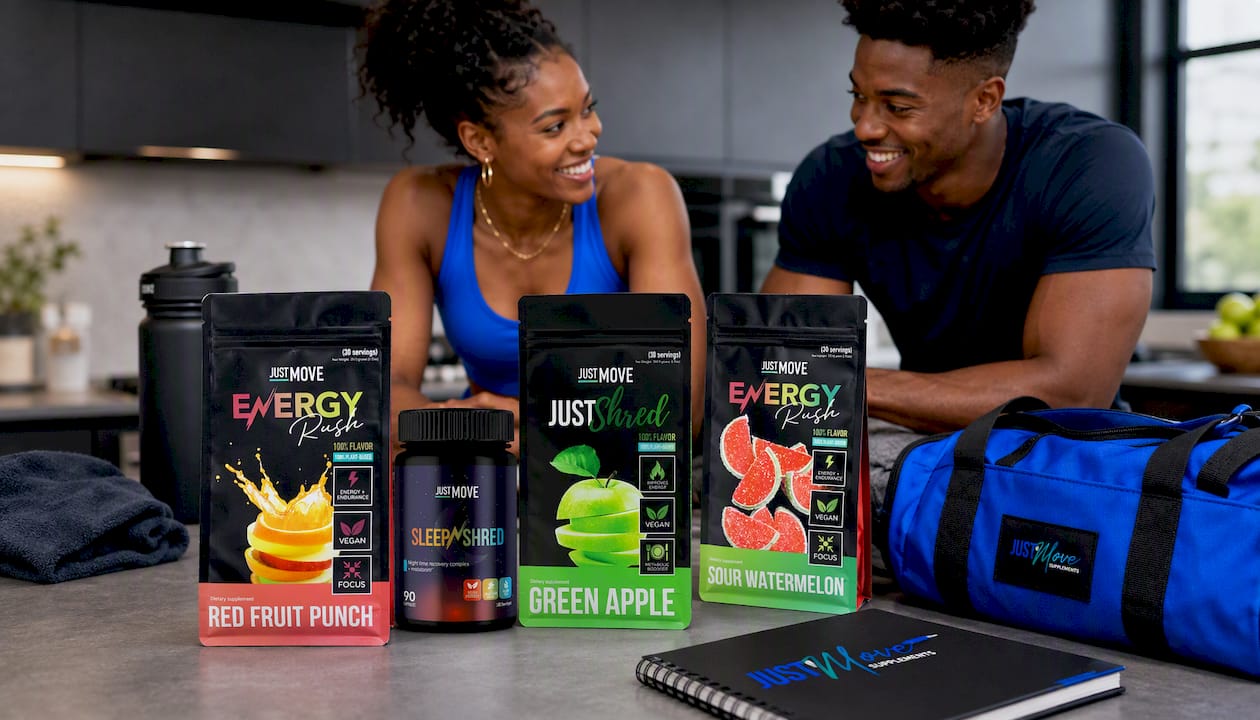
The Fruit Punch Energy Rush Pre Workout is a clean caffeine-and-citrulline formula with no added sugar or amino acid blend to worry about. Start with a half scoop mixed into extra water for your first fasted session, then adjust based on tolerance. The Sour Watermelon Energy Rush follows the same fast-compatible profile in a different flavor, useful if you rotate flavors to avoid palate fatigue during a long training block. Both work best diluted and sipped slowly rather than taken as a quick shot on an empty stomach.
If your training goals lean toward fat loss alongside your fasting protocol, the AM/PM Shred Bundle pairs a daytime and nighttime formula for readers stacking fasted training with a broader fat-loss approach. Whichever option you choose, always check the total caffeine across everything you’re taking that day before adding a full serving on top of your morning coffee.
This article is general information, not a substitute for advice from a qualified doctor. Consult a qualified healthcare professional about your own circumstances before acting on anything here.
A zero-calorie, stimulant-based formula with no BCAAs, added sugar, or protein is the safest bet for staying within a metabolic or weight-loss fast. Check the label for caffeine, citrulline, and beta-alanine without amino acid blends listed alongside them.
Will C4 Pre-Workout Break a Fast?
It depends entirely on the specific formula and flavor, since some C4 products contain BCAAs or added sugars while others are closer to zero-calorie stimulant blends. Always check that specific product’s label for calories and amino acid content rather than assuming based on the brand name alone.
Will I Lose Muscle if I Fast for 24 Hours?
Research indicates short-term fasting around 24 hours does not cause significant muscle protein loss in healthy adults as long as protein intake is adequate during your eating windows. Muscle loss concerns become more relevant with much longer, extended fasting periods.
Do Pre-Workouts Spike Insulin?
It depends on the ingredients: caffeine, creatine, citrulline, and beta-alanine generally don’t raise insulin, but BCAAs are documented to trigger an insulin response even without carbohydrates present. Check for amino acid content specifically if insulin response is your main concern.
Can I Drink Black Coffee Instead of Pre-Workout While Fasting?
Yes, black coffee is one of the most reliable fast-compatible stimulant options, delivering the same caffeine mechanism as most pre-workouts without any calories or amino acids. It works especially well for lighter training days when you don’t need the added pump ingredients found in a full pre-workout formula.
Find the right pre workout timing: 30 to 60 minutes for caffeine, 2 to 3 hours for nitrates. Use the three session test (20, 40, 60 minutes) to find your...
Consuming this product can expose you to chemicals including
Lead, which is known to the State of California
to cause cancer and birth defects or other reproductive harm.