Protein shakes and whole food meals both deliver the protein your body needs, but they serve distinct roles in a well-built diet. A protein shake is a concentrated source of isolated protein, typically providing 15–30g per serving with minimal fiber, fat, or micronutrients. Whole food meals, by contrast, deliver complete macronutrient balance, fiber, vitamins, minerals, and phytonutrients in one package. The protein shake vs whole food meals debate does not have a single winner. The most effective strategy uses whole foods as your nutritional foundation and protein shakes as a targeted, convenient complement.
What differentiates protein shakes from whole food meals nutritionally?
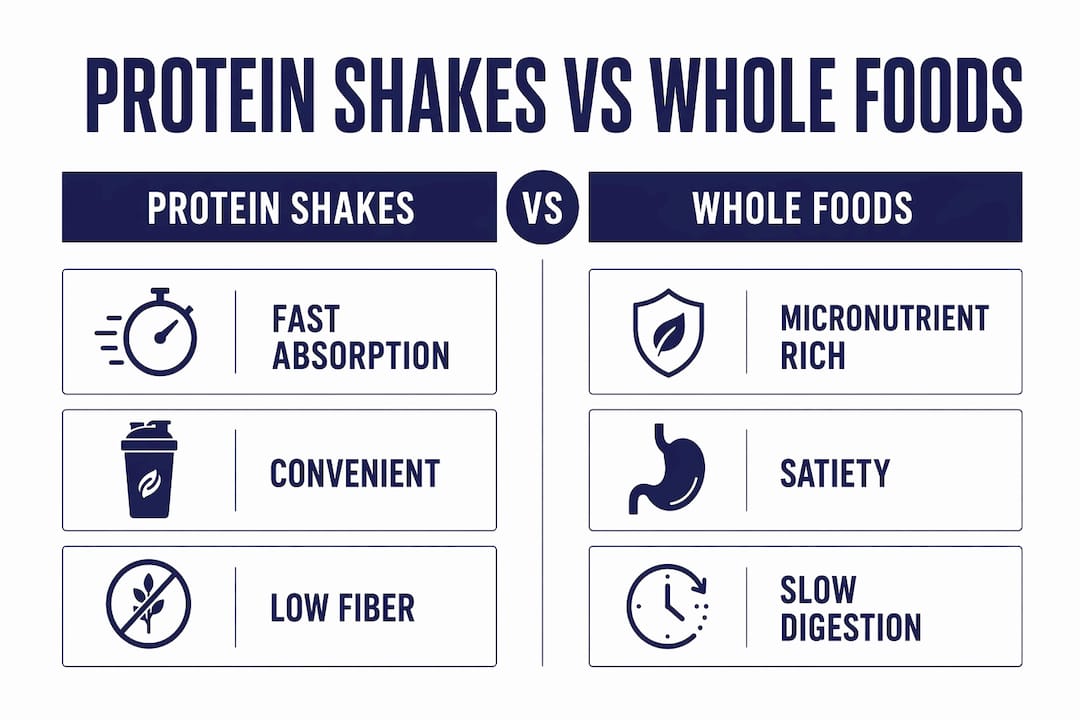
The core difference is nutritional completeness. Standard protein shakes provide primarily protein with minimal other nutrients, while quality meal replacements deliver carbohydrates, healthy fats, fiber, vitamins, and minerals in a single serving of 200–400 calories. That gap matters when you are evaluating long-term dietary quality, not just hitting a daily protein number.
Whole foods win on micronutrient depth. Chicken, eggs, legumes, and Greek yogurt all carry protein alongside zinc, B vitamins, iron, and bioactive compounds that no powder currently replicates. Whole food meals remain superior for long-term health due to their phytonutrient, prebiotic fiber, and bioactive compound content. That superiority is not marginal. It compounds over months and years of consistent eating.

Satiety is another clear dividing line. Chewing whole foods triggers hormonal fullness signals that liquid shakes simply cannot replicate. Whey protein shakes digest quickly and clear the stomach faster than casein-rich whole foods, which means hunger returns sooner after a shake. Foods like chicken and eggs provide 4+ hours of gut satiety, while shakes clear the stomach much faster. That difference directly affects how much you eat later in the day.
Digestion speed also separates the two. Whey protein absorbs rapidly, which is useful in specific recovery windows. Whole foods digest slowly, sustaining amino acid delivery over several hours. Neither is universally better. Each has a context where it performs best.
| Factor |
Protein shakes |
Whole food meals |
| Protein per serving |
15–30g (concentrated) |
Varies; 20–40g in a full meal |
| Fiber content |
Low to none |
High (especially legumes, vegetables) |
| Micronutrients |
Limited unless fortified |
Broad and naturally occurring |
| Satiety duration |
Short (1–2 hours) |
Long (3–5 hours) |
| Preparation time |
Under 60 seconds |
15–45 minutes |
| Phytonutrients |
Absent |
Present and varied |
Pro Tip: Add a tablespoon of ground flaxseed or a handful of spinach to your protein shake. You will not taste the difference, but you will add fiber and micronutrients that close the gap with whole foods.
When and why should you use protein shakes vs whole food meals?
The right choice depends on timing, context, and your specific goal. Protein shakes earn their place in three clear situations: immediately after training, during travel, and on days when meal prep is not realistic. Whole foods belong at the center of every other eating occasion.
Situations where protein shakes make sense:
- Post-workout recovery when you need protein fast and appetite is low
- Travel or commuting when carrying whole food is impractical
- Busy mornings when a full meal is not possible before work or training
- Calorie-controlled phases where precise protein tracking matters
The anabolic window for protein intake is now considered up to two hours post-exercise, not the narrow 30-minute window that was once standard advice. That means you have time to eat a whole food meal after training if you prefer. A shake is convenient, not mandatory.
Over-relying on shakes creates real problems. Overuse of protein shakes reduces dietary fiber and phytonutrient intake, which impairs gut microbiome diversity and overall dietary quality. Some shakes also contain added sugars and artificial ingredients that offer no recovery benefit. Replacing two or three whole food meals daily with shakes is a pattern that degrades nutrition quality over time.
The hybrid approach is what successful athletes actually use. A shake immediately post-workout followed by a nutrient-dense whole food meal one to two hours later maximizes recovery from both sources. The shake handles the speed requirement. The whole food meal handles everything else.
Pro Tip: If you use a shake post-workout, plan a whole food meal within two hours that includes vegetables, a complex carbohydrate, and a lean protein. That combination covers the micronutrient gaps the shake leaves behind.
How to choose and use meal replacement shakes and protein powders effectively
Understanding what is a meal replacement shake versus a protein shake is the first step to choosing correctly. A protein shake delivers isolated protein with little else. A meal replacement shake provides a full macronutrient profile, including carbohydrates, fats, fiber, and a range of vitamins and minerals, designed to stand in for a complete meal. They are not interchangeable.
Key criteria for selecting a quality shake
When evaluating any shake, check these four factors in order:
-
Protein source and quality. Whey concentrate, whey isolate, casein, and plant-based blends (pea, rice, hemp) each have different absorption rates and amino acid profiles. Whey isolate digests fastest. Casein digests slowest. Plant blends vary by formulation. Match the source to your goal and dietary preference.
-
Ingredient list length. Shorter is better. A quality protein powder lists protein source, flavoring, and minimal additives. Long ingredient lists with multiple artificial sweeteners or fillers signal lower quality.
-
Fiber and calorie content. A true meal replacement should contain at least 3g of fiber per serving and 200–400 calories. A protein shake used as a supplement should be lower in calories, around 100–150 per serving.
-
Third-party testing. Look for products tested by NSF International, Informed Sport, or USP. These certifications confirm label accuracy and screen for banned substances.
Combining shakes with whole foods for balanced nutrition
The most effective integration treats shakes as supplements to whole food meals, not replacements for them. Add a protein shake to a breakfast of oats and fruit to hit a higher protein target without cooking extra food. Blend a shake with frozen berries, spinach, and almond butter to create a nutrient-dense option that approaches whole food nutrition in density. Use shakes to fill protein gaps, not to replace the variety that whole foods provide.
Quality meal replacements do meet regulatory nutritional standards. EU Regulation 609/2013 sets minimum nutrient requirements for meal replacements sold in regulated markets. That standard provides a useful benchmark even when shopping in the US, where labeling rules differ.
Cost, convenience, and lifestyle factors in the protein shake vs whole food debate
Cost is where protein powders often win outright. Standard whey concentrate is frequently cheaper per gram of protein than chicken breast or eggs when purchased in bulk. Ready-to-drink shakes cost 3–4 times more per gram of protein than tub powders. That price gap makes ready-to-drink options a poor everyday choice for budget-conscious people.
Whole food protein sources carry hidden costs beyond price. Preparation time for a whole food meal runs 15–45 minutes on average. For people working long hours or managing family schedules, that time cost is real. Meal planning, grocery shopping, and cooking all require consistent effort that shakes simply do not.
Lifestyle factors that favor each option:
-
Protein shakes suit: early morning training sessions, office workers with no kitchen access, frequent travelers, people in calorie deficits who need precise tracking
-
Whole food meals suit: rest days, social eating occasions, people prioritizing gut health, anyone with time to cook and a preference for satiety
Sustainability is a consideration worth noting. Whole food production, particularly plant-based sources like lentils, chickpeas, and tofu, carries a lower environmental footprint than most animal-derived protein powders. If environmental impact matters to your choices, whole food protein sources from plant-based meal providers offer both nutritional and ecological advantages.
Studies find no significant difference in muscle gains when total daily protein requirements are met, regardless of whether protein comes from shakes or whole foods. That finding removes the pressure to choose one exclusively. Hit your protein target, prioritize whole foods, and use shakes where they genuinely help.
Key Takeaways
Whole foods form the nutritional foundation of any effective diet, with protein shakes serving as a targeted, convenient tool for specific situations like post-workout recovery or time-constrained days.
| Point |
Details |
| Nutritional completeness |
Whole foods provide fiber, phytonutrients, and micronutrients that protein shakes cannot match. |
| Satiety advantage |
Whole foods trigger fullness hormones through chewing; shakes digest fast and hunger returns sooner. |
| Hybrid approach works |
Use a shake post-workout, then eat a whole food meal within two hours for full recovery. |
| Cost efficiency |
Tub protein powders cost less per gram than ready-to-drink shakes and often less than whole food sources. |
| Muscle gains are equal |
Total daily protein intake determines muscle growth, not whether it comes from shakes or food. |
What I have learned from using both every day
Honestly, the debate between shakes and whole foods used to feel more important to me than it actually is. After years of working with nutrition and fitness, the clearest pattern I see is this: people who treat protein shakes as a replacement for cooking tend to feel hungrier, eat more later, and miss out on the gut health benefits that come from dietary variety. People who use shakes as a deliberate tool, one specific shake at one specific moment, do just fine.
The uncomfortable truth is that whole food meals are harder to replace than the supplement industry suggests. The fiber, the chewing, the variety of nutrients, and the satiety they provide are not optional extras. They are the foundation. A shake is a useful addition to that foundation, not a substitute for it.
My practical advice: build your meals around whole foods first. Then identify the one or two moments in your week where a shake genuinely solves a problem, whether that is a 6:00 AM training session or a travel day with no good food options. Use the vegan protein vs whey comparison to find the right powder type for your body and goals. Keep the rest of your diet real, varied, and food-based.
— Just
Quality protein options from Justmovesupplements
Justmovesupplements makes it straightforward to add quality protein to your diet without sacrificing taste or nutritional integrity. Whether you are supplementing whole food meals or need a reliable post-workout option, their product range covers both.
The Plain and Simple Unflavored Protein mixes into anything without altering flavor, making it easy to add to oatmeal, smoothies, or soups alongside whole food ingredients. For those who want to find a flavor they love before committing, the 7-flavor protein sample pack lets you try the full range first. Justmovesupplements formulates for both taste and effectiveness, so you get a product that fits your lifestyle and your nutrition goals.
FAQ
What is the main difference between a protein shake and a meal replacement?
A protein shake delivers isolated protein (15–30g) with minimal other nutrients. A meal replacement provides a full macronutrient profile including carbohydrates, fats, fiber, and vitamins, designed to substitute a complete meal at 200–400 calories per serving.
Does it matter whether protein comes from shakes or whole foods for muscle building?
Research finds no significant difference in muscle gains when total daily protein requirements are met, regardless of the source. What matters is hitting your protein target consistently, not the specific form it comes in.
Are protein shakes as filling as whole food meals?
No. Whole foods trigger satiety hormones through the act of chewing, and foods like chicken and eggs sustain fullness for 4+ hours. Protein shakes digest rapidly and clear the stomach much faster, which can lead to increased hunger later.
When is the best time to use a protein shake instead of a whole food meal?
Protein shakes work best immediately post-workout, during travel, or on days when preparing a full meal is not practical. The anabolic window for post-exercise protein extends up to two hours, so a whole food meal within that window is equally effective if timing allows.
How do I choose a quality protein powder?
Look for a short ingredient list, a verified protein source (whey isolate, casein, or a complete plant blend), at least 15g of protein per serving, and third-party testing certification from organizations like NSF International or Informed Sport.
Recommended


