Carbohydrates after exercise refill muscle and liver glycogen, reduce muscle protein breakdown, and support repair when paired with protein. That is the core of what sports nutrition research consistently shows. For most active people, the practical takeaway is straightforward: eat a carbohydrate-rich meal or snack within 60 minutes of finishing an intense session, and pair it with protein for the best recovery outcome.
Immediate effects of post-workout carbohydrate intake:
- Restores muscle and liver glycogen depleted during exercise
- Triggers an insulin response that reduces muscle protein breakdown
- Stabilizes blood glucose and reduces post-exercise fatigue
If your next session is less than 8 hours away, aim for roughly 1.0–1.2 g of carbohydrate per kilogram of body weight in the first hour of recovery. For a single daily session with normal recovery time, total daily carbohydrate intake matters more than the exact timing.
Pro Tip: Try a glass of low-fat chocolate milk immediately after training. It delivers a natural 3:1 to 4:1 carb-to-protein ratio, is easy to digest, and takes about 30 seconds to prepare.
Key Takeaways
Carbohydrates after exercise are the primary driver of glycogen resynthesis, and pairing them with protein produces a stronger recovery response than carbohydrates alone.
| Point |
Details |
| Rapid refueling target |
Aim for 1.0–1.2 g carbohydrate per kg of body weight per hour when recovery time is under 8 hours. |
| Pair carbs with protein |
A 3:1 to 4:1 carb-to-protein ratio reduces protein breakdown and accelerates glycogen synthesis. |
| Timing vs. daily total |
For single daily sessions, total daily carbohydrate intake matters more than strict post-workout timing. |
| Hourly feeding for short turnarounds |
Frequent carbohydrate ingestion at least every hour is needed when sessions are less than 8–12 hours apart. |
| Justmovesupplements protein samples |
The protein sample variety pack pairs with any carb source to hit evidence-based recovery ratios. |
This article is general information, not a substitute for advice from a qualified doctor. Consult a qualified healthcare professional about your own circumstances before acting on anything here.
Table of Contents
How do carbohydrates physiologically support post-workout recovery?
Exercise depletes glycogen stored in your muscles and liver. When you eat carbohydrates afterward, blood glucose rises, insulin is released, and glycogen synthesis begins. That insulin response does more than refuel your muscles. Insulin also reduces muscle protein breakdown and helps amino acids from dietary protein reach muscle tissue, shifting your body from a catabolic state toward repair and growth.
The mechanism chain looks like this:
- Exercise depletes muscle and liver glycogen
- Carbohydrate intake raises blood glucose
- Insulin is released from the pancreas
- Insulin activates glycogen synthase in muscle and liver
- Insulin suppresses muscle protein breakdown and promotes amino-acid uptake
- Glycogen stores are rebuilt; muscle repair begins
Muscle glycogen is the primary fuel for moderate-to-high-intensity work. Liver glycogen maintains blood glucose between meals and during lower-intensity activity. Both need replenishing after a hard session, and they respond to slightly different carbohydrate sources.
Systematic reviews confirm that immediate post-exercise carbohydrate feeding increases the rate of muscle glycogen resynthesis compared with delayed feeding across a wide range of exercise conditions. The evidence for this mechanism is among the strongest in applied sports nutrition.
How much carbohydrate should you eat after a workout, and when?
The right amount depends on how quickly you need to recover. A PubMed review on carbohydrate intake and recovery recommends at least 1.2 g of carbohydrate per kilogram of body mass per hour during the first hours of recovery when you need rapid glycogen repletion. For routine single-session training, lower amounts spread across the day are sufficient.

| Recovery scenario |
Recommended carb intake |
Sample serving (70 kg person) |
| Short turnaround (<8 hours) |
1.0–1.2 g/kg/h for first 4 hours |
70–84 g/hour (e.g., 1 large bagel + banana) |
| Same-day repeat sessions |
1.2 g/kg/h; frequent feeding |
84 g/hour split into 2–3 snacks |
| Single daily session, normal recovery |
Total daily carbohydrate intake is the main focus; no strict timing needed |
Balanced meals across the day |
Pairing carbohydrates with protein within about 60 minutes of intense exercise is a practical habit for athletes doing intense or multi-session training, according to Verywell Fit’s practical guidance.
Pro Tip: Quick mental math: multiply your body weight in pounds by 0.45 to get your weight in kilograms, then multiply by 1.0–1.2 to find your hourly carb target in grams. For a 154 lb (70 kg) person, that is 70–84 g per hour, roughly equivalent to one medium bagel or two cups of low-fat chocolate milk.
- 45–60 g carbs: 1 medium banana + 1 cup cooked oatmeal
- 60–80 g carbs: 1 large bagel or 2 cups low-fat chocolate milk
- 80–100 g carbs: 1 cup white rice + 1 medium banana
Why combining carbohydrates with protein speeds up recovery
Carbohydrates alone refuel glycogen, but adding protein to the mix produces a stronger recovery response. A meta-analysis on carbohydrate and protein coingestion found that combining the two after exercise enhances muscle glycogen repletion and reduces protein breakdown more than carbohydrate alone across many studies. The reason is partly mechanical: protein provides amino acids for muscle repair, while the additional insulin response from the combined meal accelerates glycogen synthesis and amino-acid uptake simultaneously.
Practical ratio guidance for most recovery needs is a 3:1 to 4:1 carbohydrate-to-protein ratio. Higher-intensity or longer sessions may benefit from the higher end; lighter strength sessions can use a 2:1 ratio without issue.
Real-food options that naturally hit these ratios:
-
Chocolate milk (low-fat): ~26 g carbs / 8 g protein per cup, easy to digest, portable
-
Greek yogurt + banana: ~40 g carbs / 17 g protein, good for a 30-minute post-workout window
-
Rice cakes + cottage cheese: ~30 g carbs / 14 g protein, low fiber for quick digestion
-
Protein shake + fruit: customizable; add 1 medium banana (27 g carbs) to a 25 g protein shake for a clean 1:1 to 4:1 ratio depending on fruit quantity
Healthline’s post-workout nutrition guidance cites ISSN-aligned recommendations of 20–40 g protein every 3–4 hours alongside adequate carbohydrates as a practical framework for supporting recovery.
Which carbohydrates work best after a workout?
Fast-digesting, simple carbohydrates favor immediate refueling; complex, fiber-rich carbohydrates are better suited to later meals when sustained glycogen restoration and satiety matter more.
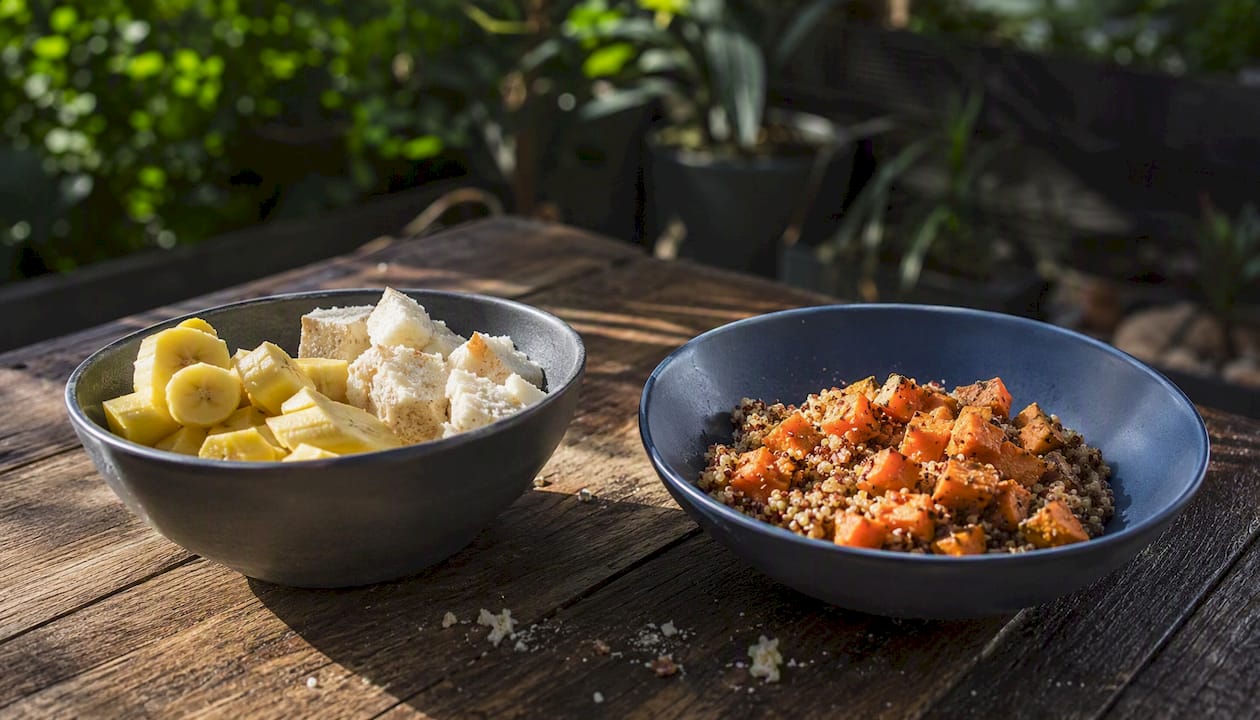
Glucose-based carbohydrates (white rice, sports drinks, bananas) replenish muscle glycogen most directly. Fructose-based sources (fruit, fruit juice) preferentially restore liver glycogen. Mixing both types speeds whole-body replenishment, which is especially useful for endurance athletes who need both stores refilled quickly.
Immediate refueling (0–30 minutes):
- White rice, white bread, or a plain bagel
- Banana or other ripe fruit
- Sports drinks or fruit juice
- Low-fat chocolate milk
- Rice cakes
Later recovery meals (1–3 hours post-workout):
- Sweet potatoes, oats, or quinoa
- Whole-grain pasta or brown rice
- Starchy vegetables (corn, peas, squash)
Pro Tip: If you experience GI distress after hard sessions, liquid carbohydrates (sports drinks, chocolate milk, fruit juice) are absorbed faster and are gentler on the stomach than solid, high-fiber foods. Save the oats and sweet potato for your next full meal.
For readers exploring plant-based recovery options, this plant-based diet guide for athletes covers how to plan carbohydrate and protein intake effectively on a vegan diet.
When does carbohydrate timing actually matter?
Timing matters most when your recovery window is short. For a single daily session followed by a full night’s rest, total daily carbohydrate intake is the dominant variable for most people. But when you train twice in a day or have less than 8–12 hours between sessions, immediate refueling changes what you can do in the next session.
Research on carbohydrate administration intervals shows that for limited recovery time, frequent carbohydrate ingestion at least every hour is needed because the interval of administration directly determines the rate of glycogen resynthesis.
| Strategy |
When to use it |
Key action |
| Immediate refuel (hourly feeding) |
<8–12 h recovery, 2-a-day sessions |
1.0–1.2 g/kg/h starting within 30 min |
| Prioritize daily total |
Single session, >24 h recovery |
Hit daily carb target across meals |
| Carb periodization |
Deliberate training adaptation |
Consult a sports dietitian |
A randomized crossover trial found that delaying post-exercise carbohydrates reduced next-day high-intensity interval capacity and increased perceived exertion, even when 24-hour muscle glycogen concentrations were similar. Recent trials and reviews reinforce this: timing manipulations can affect next-session performance even when total intake is matched over 24 hours.
Carbohydrate periodization, which involves deliberately restricting carbs around certain sessions to enhance fat oxidation, is a legitimate strategy but requires careful planning. A registered sports dietitian should oversee any formal periodization program, particularly for athletes managing body composition or medical conditions.
Practical post-workout meal and snack ideas by goal
A well-timed carbohydrate and protein pairing does not need to be complicated. The options below cover the most common goals and dietary preferences, with approximate macros to help you match the targets from earlier sections.
0–30 minutes post-workout (quick options):
- Low-fat chocolate milk (2 cups): ~52 g carbs / 16 g protein — endurance and strength
- Banana + protein shake (25 g protein): ~27 g carbs / 25 g protein — strength focus
- Rice cakes (4) + 2 tbsp peanut butter: ~40 g carbs / 8 g protein — light session
- Fruit smoothie with vegan protein powder: ~35 g carbs / 20 g protein — dairy-free option
0–2 hours post-workout (full meals):
- Grilled chicken + 1 cup white rice + steamed broccoli: ~45 g carbs / 35 g protein — strength and muscle
- Salmon + sweet potato + green beans: ~40 g carbs / 30 g protein — endurance recovery
- Greek yogurt parfait with granola and berries: ~55 g carbs / 20 g protein — weight management
- Tofu stir-fry with brown rice: ~50 g carbs / 22 g protein — vegan, endurance
Pro Tip: For dairy-free athletes, a banana blended with a scoop of plant-based protein powder and a cup of oat milk delivers roughly 45–55 g carbs and 20 g protein in under two minutes. It is one of the fastest whole-food recovery options available without dairy.
For a step-by-step recovery nutrition plan with additional meal timing guidance, the recovery nutrition plan for athletes from Justmovesupplements covers the full picture.
What the evidence actually says about carbs and recovery
The evidence for carbohydrates supporting glycogen repletion and short-term performance is strong. The evidence for long-term adaptations and periodization strategies is more nuanced.
Key sources underpinning these recommendations:
Certainty levels at a glance:
-
High certainty: Immediate carb feeding accelerates glycogen resynthesis vs. delayed feeding
-
High certainty: Carb+protein coingestion reduces protein breakdown vs. carbs alone
-
Moderate certainty: Timing effects on next-session performance (short recovery windows)
-
Moderate certainty: Carb periodization benefits for metabolic adaptation in trained athletes
-
Lower certainty: Optimal carb type for all training contexts and individual variation
This article provides general educational information, not personalized medical or dietary advice. Consult a registered dietitian or sports medicine professional for individualized plans, especially if you are managing a medical condition, significant weight loss, or competitive athletic performance.
Just’s perspective on carbs, recovery, and what actually moves the needle
The most common mistake active people make with post-workout nutrition is not eating too few carbohydrates. It is treating the immediate post-workout window as the only thing that matters and ignoring what they eat for the rest of the day. The research is clear: for a single daily session with a full night’s recovery, total daily carbohydrate intake drives glycogen restoration more than any single meal timing decision. The 60-minute window matters most when you are training twice a day or heading back into a hard session within 8 hours.
The second underappreciated point is that carbohydrate periodization, which sounds advanced and appealing, is genuinely useful for trained athletes but requires careful execution. Restricting carbs around sessions to boost fat adaptation can reduce short-term performance and should not be applied casually. Most recreational gym-goers will see better results from simply eating enough carbohydrates consistently than from any periodization protocol.
Protein supplements and recovery shakes are genuinely useful tools, but they work best when they complement adequate carbohydrate intake, not replace it. A protein shake with no carbs after a depleting session addresses only half the recovery equation.
Justmovesupplements supports your post-workout nutrition
Getting the carb-to-protein ratio right after training is straightforward when you have quality options ready to go. Justmovesupplements makes that easier with a protein sample variety pack that lets you try seven flavors before committing to a full tub. Pair any flavor with a banana or a cup of oats and you have a practical, evidence-aligned recovery meal in minutes.

For those managing body composition alongside recovery, Justmovesupplements also offers the Just Shred Green Apple Fat Burner as part of its broader supplement lineup. The brand’s full range is built for fitness enthusiasts who want quality, variety, and real results without the guesswork of sourcing multiple products from different places. Browse the protein samples collection and find the flavor that fits your recovery routine.
Sources
Recommended


