Recovery nutrition timing is defined as the deliberate scheduling of protein, carbohydrates, and supplements around training to maximize muscle repair, glycogen restoration, and performance readiness. The science behind this practice, anchored by the International Society of Sports Nutrition (ISSN) 2017 position stand and updated chrononutrition research, shows that when you eat is nearly as important as what you eat. The traditional belief in a rigid 30-minute anabolic window has given way to a more flexible model. Still, timing remains a real performance variable, especially when you train multiple times per day, train fasted, or want to align your eating with your body’s biological clock. Getting this right accelerates recovery and keeps you performing at your best.
Why recovery nutrition timing matters for muscle repair
Muscle protein synthesis (MPS) is the process by which your body rebuilds muscle fibers damaged during training. The good news is that muscles stay sensitized to protein intake for at least 24 hours after resistance training. That window is far wider than the old “eat within 30 minutes or lose your gains” rule suggested.
The practical implication is clear. You do not need to sprint to your gym bag the second you rack the bar. What matters more is that you consume 20–40 grams of protein every 3–4 hours across the day to keep MPS elevated consistently. Spreading intake this way outperforms front-loading or back-loading protein into one or two large meals.
Pre-workout nutrition plays an underrated role here. Pre-exercise protein extends amino acid availability throughout your session, which reduces the urgency of immediate post-workout intake. Think of it as nutritional insurance. If you trained after a balanced meal, your muscles already have circulating amino acids to work with.
The exception is fasted training. When you train without eating beforehand, post-workout protein timing becomes significantly more critical. In that scenario, getting protein in promptly after your session is the right call.
-
Distribute protein evenly: aim for 20–40g per meal, 3–4 times per day
-
Prioritize total daily protein intake over any single post-workout window
-
Eat a protein-containing meal before training when possible
-
After fasted training, prioritize your post-workout protein meal
-
Use protein intake frequency as your primary lever for muscle growth
Pro Tip: If your schedule makes pre-workout meals difficult, a fast-digesting protein source consumed 30–60 minutes before training gives your muscles a head start without causing discomfort during exercise.
Glycogen is your muscles’ primary fuel source during high-intensity training. After a typical resistance session, muscle glycogen drops by about 39%, leaving 61% intact. That number surprises most athletes who assume their tanks are nearly empty after every workout.

This finding reshapes how you should think about post-workout carbohydrates. Immediate carb intake after training only becomes critical when your next session is fewer than 4–8 hours away. If you train once per day and have a full evening and night to recover, a normal balanced meal restores glycogen well within that window.
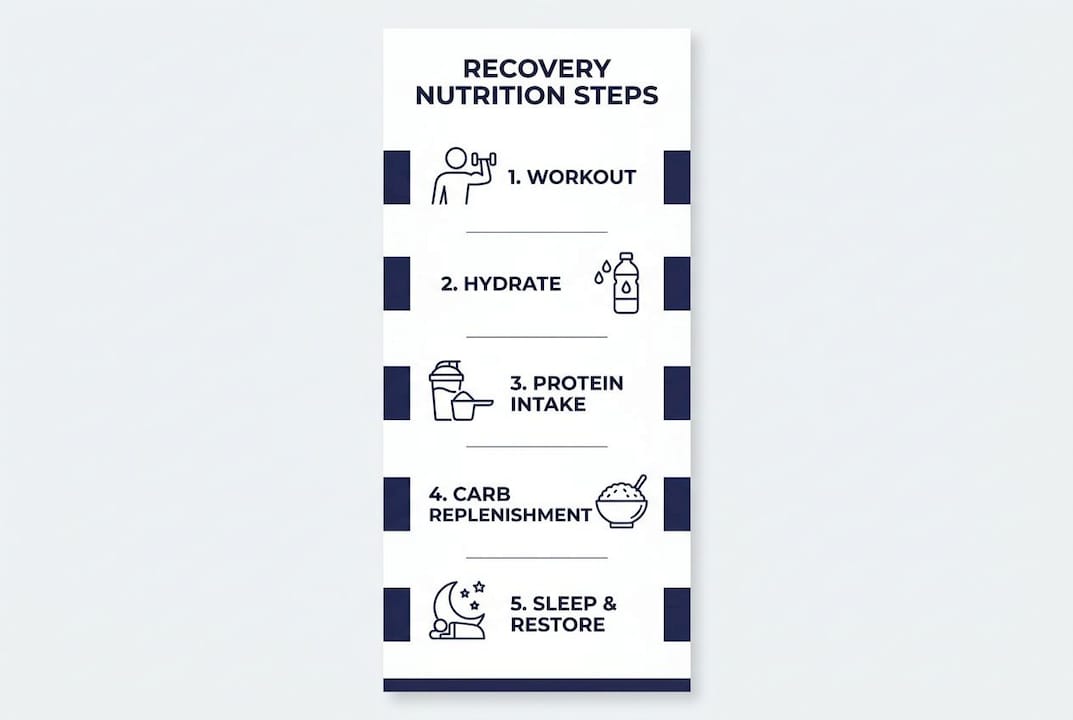
For athletes with back-to-back sessions or two-a-day training blocks, rapid glycogen replenishment is a real priority. In those cases, consuming carbohydrates at a rate of approximately 1.2 grams per kilogram of body weight per hour accelerates restoration. Pairing carbs with protein during this window also supports MPS simultaneously.
| Scenario |
Carb timing priority |
Recommended approach |
| Single daily session |
Low |
Normal balanced meals within 2 hours post-workout |
| Two sessions within 4–8 hours |
High |
1.2g/kg/hour carb intake immediately post-workout |
| Fasted training |
Moderate |
Carb and protein meal as soon as practical after training |
| Endurance training over 90 minutes |
High |
Intra-workout carbs plus immediate post-workout refueling |
The common myth is that every athlete needs a carb-heavy shake the moment they finish training. The evidence says otherwise. For most recreational athletes training once per day, the timing of your next full meal matters far more than the speed of your post-workout snack.
Does your circadian rhythm affect recovery nutrition?
Chrononutrition is the study of how meal timing interacts with your body’s internal biological clock. Research published in 2026 confirms that aligning nutrition with circadian rhythms improves metabolic health outcomes and recovery efficiency. This is not a fringe concept. It has direct, practical implications for athletes.
Your body processes nutrients differently depending on the time of day. Insulin sensitivity is highest in the morning and declines through the evening. Eating earlier in the biological day is associated with better insulin sensitivity and healthier lipid profiles. Late-night eating disrupts glucose regulation and correlates with poorer recovery markers.
For athletes, this translates into a few clear priorities:
-
Front-load your calories: eat your largest, most nutrient-dense meals earlier in the day
-
Schedule your highest-carbohydrate meals around morning and midday training sessions
-
Avoid large, heavy meals within 2–3 hours of sleep to protect sleep quality and overnight recovery
-
Take fat-soluble vitamins (A, D, E, K) with your largest meal, which typically contains the most dietary fat
-
Consider colostrum for recovery as an evening option to support overnight muscle repair and immune function
Sleep quality is the most undervalued recovery variable. Late-night eating directly undermines it. Protecting your sleep window by finishing your last substantial meal 2–3 hours before bed is one of the highest-return habits you can build.
What are the best practices for timing recovery supplements?
Supplement timing is where most athletes leave real results on the table. The principle is straightforward: splitting supplement intake into three daily windows, morning, post-workout, and evening, reduces absorption conflicts and improves recovery outcomes.
Morning window
Take your multivitamin and any fat-soluble vitamins with breakfast. This meal typically contains dietary fat, which is required for fat-soluble vitamin absorption. Fat-soluble vitamins lose up to 50% of their absorption efficacy when taken without dietary fat. Calcium also fits well in the morning window.
Post-workout window
Protein and creatine are your two highest-priority post-workout supplements. Creatine timing is flexible, but consuming it post-workout with a carbohydrate source improves uptake. Protein consumed here supports MPS during the sensitization period that follows training.
Evening window
Magnesium and zinc support sleep quality and overnight recovery. Do not combine them with calcium. Calcium, iron, and zinc compete for the same absorption pathways and should be spaced at least 2 hours apart.
-
Morning: Multivitamin, fat-soluble vitamins (A, D, E, K), calcium. Take with a meal containing dietary fat.
-
Post-workout: Protein (20–40g), creatine (3–5g), carbohydrates if needed for rapid glycogen replenishment.
-
Evening: Magnesium, zinc, any sleep-support supplements. Keep at least 2 hours from calcium intake.
-
Adjust for training time: If you train in the evening, shift your post-workout window accordingly and keep your evening supplement window consistent.
-
Individualize: Bicarbonate supplementation is one example where individual timing varies widely, with peak blood levels occurring anywhere from 45 minutes to 3 hours after ingestion. Test your own response rather than following a generic schedule.
Pro Tip: Set three phone reminders for your supplement windows. Consistency in timing matters more than perfection in any single dose. A missed morning vitamin taken at noon is still better than skipping it entirely.
For athletes who use high-protein meal replacements, these fit naturally into the post-workout or morning window depending on your training schedule.
Key Takeaways
Recovery nutrition timing matters most when total daily intake is consistent, training is frequent, and supplement spacing prevents absorption conflicts.
| Point |
Details |
| Protein window is wide |
Muscles stay sensitized to protein for 24 hours, so total daily intake outweighs post-workout urgency. |
| Carb timing is conditional |
Immediate post-workout carbs only matter when your next session is fewer than 4–8 hours away. |
| Circadian alignment improves recovery |
Eating earlier in the day improves insulin sensitivity and supports better overnight repair. |
| Space your supplements |
Calcium, iron, and zinc compete for absorption and should be taken at least 2 hours apart. |
| Fasted training changes the rules |
Without a pre-workout meal, post-workout protein timing becomes significantly more critical. |
The anabolic window myth cost me years of unnecessary stress
I spent the better part of three years eating dry protein bars in gym parking lots because I believed missing the 30-minute post-workout window would erase my session. That belief is not just wrong. It actively made training less enjoyable and added stress that undermined recovery.
The window of opportunity concept was always more nuanced than fitness culture made it sound. Timing effects vary based on training frequency, individual physiology, and whether you trained fasted. For most athletes training once per day with a pre-workout meal, the post-workout window is measured in hours, not minutes.
What I have found actually works is this: eat consistently, distribute protein across 3–4 meals, align your biggest meals with your most active hours, and protect your sleep. Those four habits deliver more measurable recovery improvement than any supplement timing trick I have tested.
The athletes who obsess over minute-by-minute timing while skimping on sleep or eating inconsistently are optimizing the wrong variable. Consistency and sleep quality outweigh precise timing for the vast majority of training outcomes. Get the big things right first, then fine-tune timing as a secondary layer.
— Just
Justmovesupplements products built for your recovery windows
Putting recovery nutrition timing into practice requires protein you can actually use at the right moments, without fighting with flavors you do not enjoy.

Justmovesupplements offers an unflavored protein option that fits any timing window without adding unwanted sweetness to morning oatmeal or evening recovery shakes. For athletes who want variety across their three daily supplement windows, the protein sample variety pack lets you test seven flavors before committing to a full tub. Quality protein at the right time, in a flavor you actually want, is the practical foundation of every recovery plan. Visit Justmovesupplements to find the right fit for your schedule.
FAQ
How long does the post-workout anabolic window last?
Muscles remain sensitized to protein for at least 24 hours after resistance training, making the window far wider than the traditional 30-minute rule. Total daily protein intake matters more than the speed of your post-workout meal.
How much protein should I eat after a workout?
Consuming 20–40 grams of protein every 3–4 hours across the day is the most effective approach for sustaining muscle protein synthesis. A single post-workout dose within that range is a solid target.
Does carbohydrate timing matter for every athlete?
Immediate post-workout carbohydrate intake is only critical when your next training session occurs within 4–8 hours. For athletes training once per day, a normal balanced meal restores glycogen adequately.
Can I take all my supplements at once?
Calcium, iron, and zinc compete for absorption and should not be taken together. Spacing minerals at least 2 hours apart and taking fat-soluble vitamins with a fat-containing meal maximizes their effectiveness.
Does eating late at night hurt recovery?
Late-night eating disrupts glucose regulation and undermines sleep quality, both of which reduce recovery efficiency. Finishing your last substantial meal 2–3 hours before sleep protects overnight muscle repair and metabolic health.
Recommended


