Portion control science is the study of how the amount of food served, its energy density, and environmental cues work together to determine how much you eat and how satisfied you feel. The practical takeaway is direct: changing portion size and food composition reliably shifts calorie intake without demanding constant willpower. The Dietary Guidelines Advisory Committee rates the evidence that larger portions increase food and energy intake in adults as strong, and systematic reviews in the British Journal of Nutrition confirm that reducing served sizes produces a net reduction in daily energy intake. Mayo Clinic translates that evidence into practical tools anyone can use at home.
Three core mechanisms explain most of what portion control science covers:
-
The portion-size effect (PSE): Larger servings increase intake, often well beyond what hunger alone would drive.
-
Energy density: Foods with more calories per gram amplify the PSE; lower-density foods let you eat a satisfying volume for fewer calories.
-
Compensation: The body partially adjusts intake at later meals after a large portion, but the adjustment is incomplete, so a net surplus remains.
Key Takeaways
Portion control science gives you a reliable, evidence-backed framework for reducing calorie intake by changing what you serve, not just what you intend to eat.
| Point |
Details |
| Portion-size effect is strong |
Doubling a portion increases consumption by ~35% on average, per meta-analytic review. |
| Energy density multiplies the effect |
High-density foods amplify intake; swapping to lower-density options reduces calories without reducing volume. |
| Compensation is partial, not complete |
Reducing portions lowers daily energy intake; the body compensates only partially at later meals. |
| Combine strategies for best results |
Smaller plates, pre-portioned snacks, and high-protein plate composition work better together than any single tactic alone. |
| Justmovesupplements protein samples |
Pre-measured single-serve packets remove portion guesswork and support consistent protein intake. |
Table of Contents
Why larger servings make you eat more than you realize
Served portion size causally increases intake in both adults and children. That is not a correlation; controlled experiments consistently show that when researchers increase the amount placed in front of people, consumption rises even when participants report no additional hunger.
A meta-analytic review quantified this: doubling portion size produces roughly a 35% average increase in consumption, and the relationship is curvilinear. Very large portions still drive more eating, but the incremental effect shrinks as size grows extreme. The practical implication is that the biggest gains from downsizing come from moderate reductions, not dramatic ones.
Why does this happen? Two forces work together. First, people use the amount served as a consumption norm, a mental signal for how much is “right” to eat. Second, environmental cues like plate size, packaging, and serving-bowl depth all anchor expectations before the first bite. A restaurant entree that has grown from 6 oz to 12 oz over two decades does not feel oversized because the new size has become the norm.
- Larger packages and bowls increase intake independent of hunger level.
- Social settings amplify the effect; people eat more in groups.
- Children show the PSE as early as age 3, suggesting it is learned quickly.
Controlled studies also show that the intake increase from larger portions is sustained, not just a one-meal anomaly, which is why population-level portion growth tracks closely with rising obesity rates.
The core science: energy density, satiety, and how your body compensates
Understanding the science of portion sizes means knowing four terms that researchers use constantly.
-
Portion vs. serving: A serving is a standardized reference amount defined on a nutrition label (e.g., 1 cup of cereal). A portion is what you actually put on your plate. They are rarely the same.
-
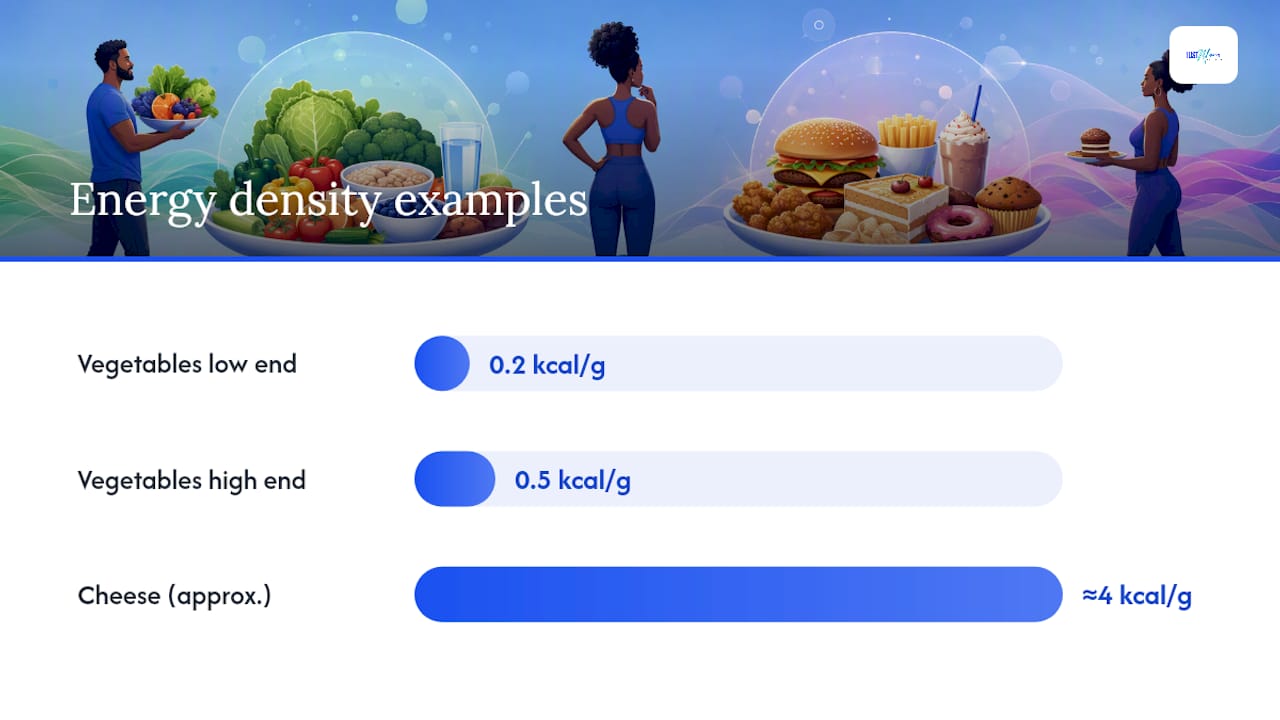
Energy density: Calories per gram of food. Vegetables average roughly 0.2–0.5 kcal/g; cheese averages around 4 kcal/g. High-density foods pack far more calories into the same visual volume.
-
Satiety: The feeling of fullness that signals you to stop eating, driven by stomach stretch, hormonal signals (GLP-1, PYY, leptin), and cognitive cues.
-
Compensation: The partial reduction in intake at a later meal after eating more at an earlier one. Research shows compensation is real but incomplete, typically covering only a fraction of the surplus.
The Dietary Guidelines Advisory Committee synthesis makes a critical point: portion size and energy density have independent and additive effects on intake. That means a large portion of a high-density food is doubly problematic, while a large portion of a low-density food (like salad greens) has a much smaller caloric impact. Physiologically, stomach stretch and gastric emptying rate both influence satiety signals, but cognitive factors matter too. Episodic memory of what you ate, visual cues from an empty plate, and social context all shape how full you feel.
Pro Tip: To use this science immediately, keep your portion size the same but swap half the energy-dense component (rice, pasta, cheese) for a low-density alternative (roasted vegetables, leafy greens). You preserve meal volume, which satisfies satiety signals, while cutting calories.
What the research actually shows about portion control
The evidence is not uniform across all claims, and knowing where science is confident versus cautious helps you set realistic expectations.
Where the evidence is strong: The Dietary Guidelines Advisory Committee explicitly grades the relationship between larger portions and increased intake as strong in adults. Multiple meta-analyses replicate the PSE across food types, settings, and populations. The British Journal of Nutrition meta-analysis found that reducing served portion sizes produced a moderate-sized reduction in daily energy intake, with only partial compensation at later meals.
Where the evidence is mixed: Randomized controlled trials testing portion-control plates and pre-portioned foods show short-term benefits, but long-term weight outcomes are less consistently demonstrated. Most trials run weeks to months, not years, so sustained behavior change is harder to confirm.
Tool-specific findings: The Dietary Guidelines evidence synthesis notes that portion-control tools show stronger evidence for bowls and spoons than for plates. Tool design matters; a calibrated bowl with measurement markers outperforms a generic smaller plate in controlled settings.
Key takeaways from the research landscape:
- Strong evidence: larger portions increase intake in adults.
- Moderate evidence: reducing portions reduces daily energy intake with partial compensation.
- Limited evidence: long-term weight loss from portion tools alone.
- Practical implication: combine portion tools with lower-energy-density food choices for the best results.
Research limits worth noting: most trials are short, conducted in controlled settings, and rely on self-reported intake. Real-world adherence is harder to measure, and individual differences in compensation mean results vary.
Evidence-based portion-control strategies you can apply today
The most effective approach is to layer two or three strategies rather than rely on a single tactic. Here are six ranked by evidence strength and ease of implementation.
1. Use smaller plates, bowls, and serving spoons
Calibrated dinnerware reduces intake by anchoring consumption norms at a lower level. The Dietary Guidelines synthesis shows stronger effects for bowls and spoons than plates, so start with your cereal bowl and serving utensils. Switch to a smaller dinner plate to make your visual “full plate” appear smaller and help reduce food intake.
2. Pre-portion snacks before eating
Eating directly from a bag or bulk container removes the visual cue that signals “enough.” Pre-portioning into a small bowl or bag before sitting down is one of the simplest, most consistent intake-reduction strategies supported by Mayo Clinic guidance. It also reduces decision fatigue by removing the repeated choice of when to stop.
3. Increase low-energy-density foods first
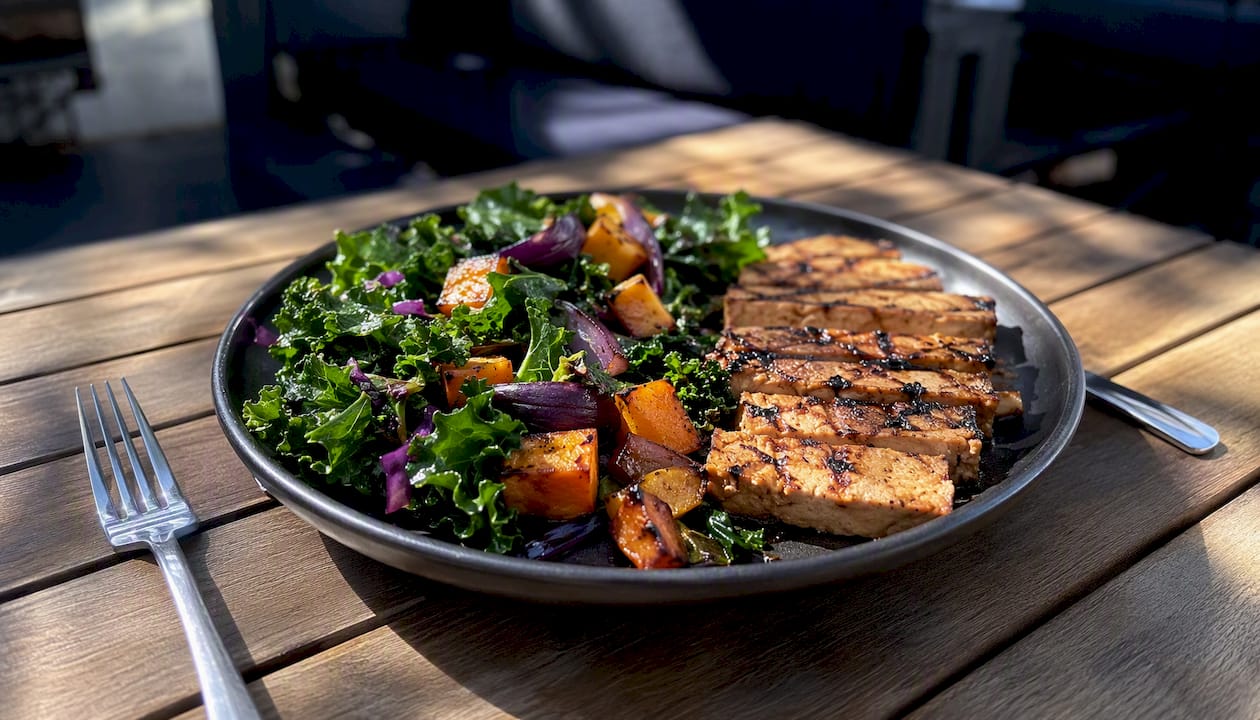
Fill half your plate with non-starchy vegetables before adding anything else. This strategy uses volume to trigger satiety signals while keeping calories low, a principle backed by the Dietary Guidelines Advisory Committee. You are not eating less food by volume; you are eating less energy.
4. Use visual reference cues instead of scales
Measuring every meal is not sustainable. Visual cues work well for estimation: a protein portion the size of a deck of cards, a fat portion the size of your thumb, a carbohydrate portion the size of a cupped handful. MedlinePlus patient guidance recommends this approach for daily use.
5. Choose pre-portioned foods for high-risk items
Energy-dense foods like nuts, cheese, and trail mix are easy to overeat because their caloric density is high and their volume is low. Pre-portioned packaging or single-serve containers remove the guesswork. Ask IFAS public-health guidance specifically recommends pre-portioned options for energy-dense foods as part of a weight-management strategy.
6. Restructure your environment, not just your intentions
Keep fruit and pre-cut vegetables at eye level in the refrigerator. Store energy-dense snacks out of sight or out of the house. These environmental changes reduce the frequency of impulsive large portions without requiring active decision-making each time.
Pro Tip: Pick just one of these strategies this week and make it the default. Research on habit formation consistently shows that one well-anchored change outperforms six half-hearted ones. Once it feels automatic, add a second.
How protein and fiber make portion control easier to sustain
Food quality changes how hard portion control feels. High-protein, high-fiber, low-energy-density foods raise satiety per calorie, so you can eat a satisfying amount while staying within your targets. This is not a minor effect. Research on how protein controls appetite shows that protein is the most satiating macronutrient, reducing subsequent intake more reliably than carbohydrates or fat at equivalent calorie levels.
Fiber works through a different pathway. Soluble fiber slows gastric emptying, which extends the satiety signal and reduces the speed at which hunger returns after a meal. Together, protein and fiber create a physiological environment where smaller portions feel more satisfying.
Practical plate composition that reflects this science:
-
Half the plate: non-starchy vegetables (broccoli, spinach, peppers, cucumber).
-
Quarter of the plate: lean protein (chicken breast, fish, eggs, Greek yogurt, or a measured protein shake).
-
Quarter of the plate: whole grains or other complex carbohydrates (brown rice, oats, sweet potato).
For busy days when cooking a balanced meal is not realistic, pre-measured protein options can fill the protein quarter of that plate with a consistent, known serving, and knowing exactly how much protein you are getting removes one variable from the portion equation entirely.
Pro Tip: Use a shaker bottle with measurement markers to prepare your protein serving before a meal. The act of measuring creates a concrete portion anchor, and the protein itself reduces how hungry you feel when the main meal arrives.
Quick visual rules and sample portions you can use right now
You do not need a food scale for every meal. These four visual rules cover the most common portion decisions:
-
Protein (chicken, fish, beef): roughly the size and thickness of a deck of cards, approximately 3–4 oz cooked.
-
Fats (nut butter, oil, butter): about the size of your thumb tip, approximately 1 tablespoon.
-
Carbohydrates (cooked rice, pasta): a cupped handful, approximately ½ cup cooked.
-
Non-starchy vegetables: fill at least half the plate with no upper limit.
| Food |
Visual cue |
Approximate portion |
Lower-density swap |
| Chicken breast |
Deck of cards |
3–4 oz cooked |
Same size, remove skin |
| Cooked white rice |
Cupped handful |
½ cup |
Cauliflower rice (same volume, fewer calories) |
| Cooked pasta |
Tennis ball |
½ cup |
Zucchini noodles or halve pasta, double vegetables |
| Salad greens |
Two cupped hands |
2 cups |
No swap needed; increase freely |
| Cheddar cheese |
Two dice |
1 oz |
Reduced-fat cheese or smaller amount of a sharper variety |
| Mixed nuts |
Golf ball |
1 oz |
Air-popped popcorn for volume snacking |
Eating out: MedlinePlus guidance recommends asking for a to-go box at the start of the meal and boxing half before you begin eating. Ordering a lunch-size portion or sharing an entree are equally effective. For holiday meals and travel, pre-planning your plate composition before you sit down prevents the “everything looks good” effect that leads to oversized portions.
Snacks: Pre-portion into small containers before the snack occasion, not during. Eating from the original package consistently leads to larger portions.
When portion control alone is not enough
Portion control helps most people reduce intake, but it is not a substitute for clinical care when underlying medical or psychological issues are present. Recognizing the limits of self-managed strategies is part of using them well.
Seek professional guidance in these situations:
-
Rapid or unexplained weight change that does not respond to dietary adjustments, which may signal a metabolic or hormonal condition requiring medical evaluation.
-
Suspected binge-eating disorder or emotional eating patterns that make consistent portion management feel impossible. Cognitive behavioral therapy (CBT) has strong evidence for these presentations and addresses the psychological drivers that portion tools cannot reach.
-
Metabolic disease (type 2 diabetes, thyroid disorders, polycystic ovary syndrome) where energy regulation is physiologically altered and dietary changes alone may be insufficient.
-
Medications that affect appetite, weight, or metabolism, where a registered dietitian can help calibrate intake targets appropriately.
A registered dietitian (RD) is the most appropriate first referral for anyone whose portion adjustments are not producing expected results after 8–12 weeks of consistent effort. RDs can assess whether energy targets are correctly set, identify nutrient gaps, and provide behavioral support that goes beyond general guidance.
Pro Tip: If you find yourself consistently “failing” at portion control despite genuine effort, the problem is rarely willpower. Ask your primary care provider for a referral to an RD or a behavioral health specialist who works with eating patterns. The science supports combined approaches far more than solo dietary changes.
Why small, consistent changes beat dramatic short-term cuts
The research on portion control points to a clear pattern: people who make one or two modest, sustainable changes to their default environment outperform those who attempt a complete dietary overhaul. Drastic cuts in portion size tend to increase hunger, reduce adherence, and often trigger compensatory overeating within days.
The more durable approach is to preserve meal volume while reducing energy density, keep protein high to sustain satiety, and use environmental defaults (smaller plates, pre-portioned snacks, visible vegetables) so that the right choice is also the easy choice. Portion control science does not ask you to eat less and feel worse. It asks you to eat smarter, using what research knows about how environment, food composition, and serving size interact to shape intake without requiring constant conscious effort.
Pre-measured supplements reduce decision fatigue and serve as an evidence-aligned pre-portioned option for a meal or snack. When you know exactly what a serving contains, you remove one of the most common sources of portion error: estimating a scoop of a calorie-dense food by eye.
Justmovesupplements makes this straightforward with two products that fit directly into a portion-aware nutrition plan.
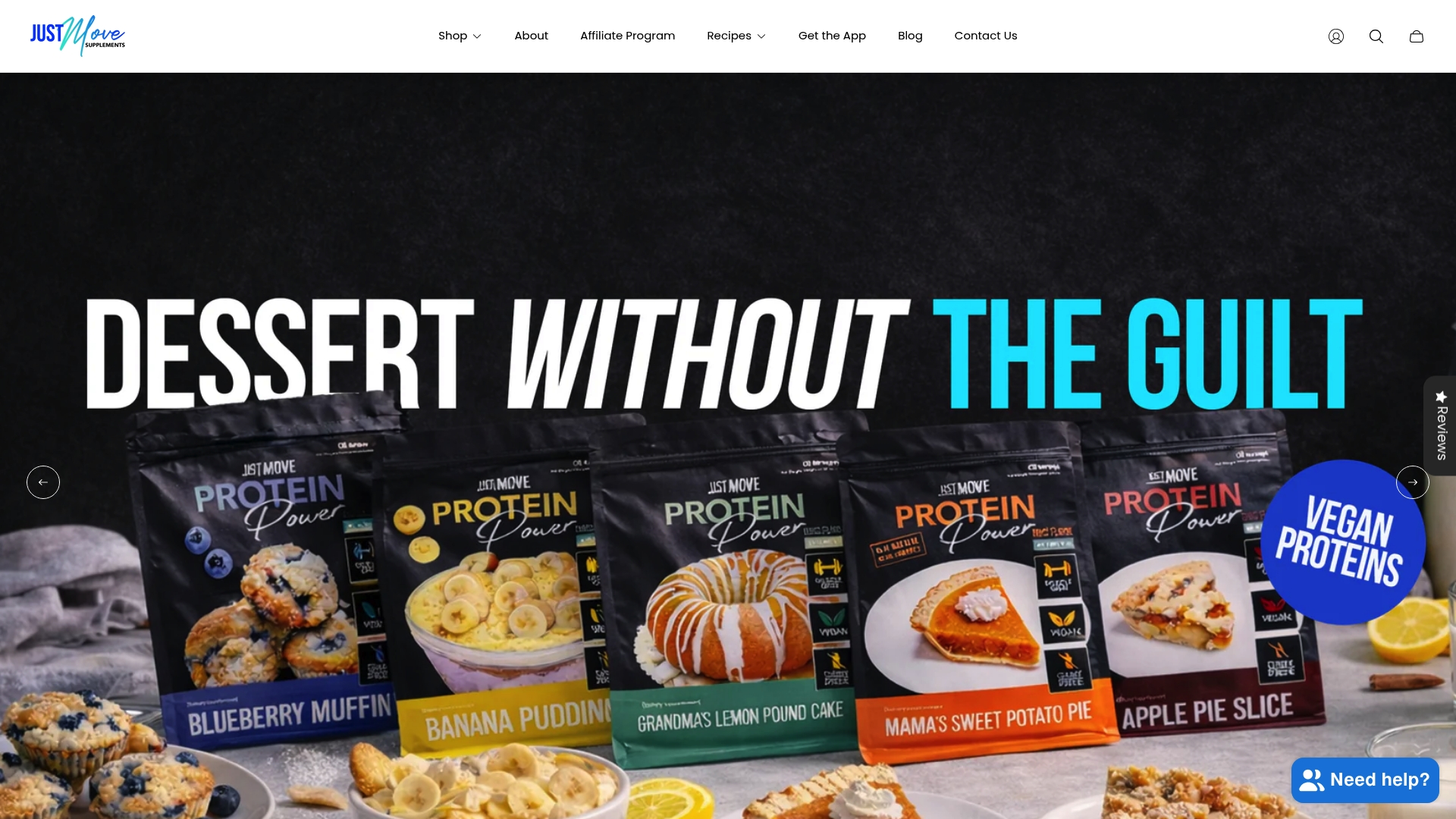
The Just MOVE Protein Sample Variety Pack (7 Flavors) gives you pre-measured single-serve protein packets across seven flavors, so every serving is already portioned. It is a practical way to add the protein quarter of your plate without measuring or guessing, and the variety format lets you find your preferred flavor before committing to a full tub. The Just Shred Green Apple Fat Burner is designed as a complement to a structured nutrition plan, supporting your weight-management goals alongside the portion strategies covered in this article.
Browse the full protein sample collection to find the right starting point for your routine.
Sources
The sources below are the primary references used in this article. Each is linked directly to the original publication or guidance document.
Recommended


