How protein controls appetite and why it matters for weight management
Protein is the most satiating macronutrient. It suppresses hunger, raises fullness, and reduces the desire to eat through a combination of hormonal signals, metabolic activity, and central nervous system pathways that carbohydrates and fats simply cannot replicate. For anyone serious about weight management, understanding the role of protein in appetite control is not a nice academic exercise. It is the foundation of a smarter eating strategy.
Here is what the science confirms:
- Protein lowers circulating ghrelin (the hormone that drives hunger) and raises GLP-1 and cholecystokinin (CCK), two gut hormones that signal fullness to the brain.
- Acute protein ingestion reduces hunger scores by 7 mm and increases fullness by 10 mm on a 100 mm visual analogue scale, with changes statistically significant at p<0.001.
- Sufficient protein intake per meal is needed to produce measurable hormonal effects on appetite.
- High-protein diets sustain appetite suppression over weeks and months, contributing to clinically meaningful reductions in body weight and fat mass.
- Protein’s appetite-regulating effects include modulation of brain reward pathways and reduction of hedonic eating.
- Clinical guidelines support 1.2–1.6 g per kilogram of body weight daily, with at least 35 g per meal, for effective appetite control and lean mass preservation.
What happens to your hunger hormones right after eating protein
The appetite-suppressing effects of protein begin within minutes of eating. Enteroendocrine cells lining the gut detect incoming amino acids and peptides, triggering the release of GLP-1, CCK, and peptide YY (PYY). These hormones travel through the bloodstream and activate satiety circuits in the brain, slowing gastric emptying and reducing the urge to eat again.

A systematic review of 49 acute studies found that protein consumption decreases ghrelin by 20 pg/ml and increases CCK by 30 pg/ml and GLP-1 by 21 ng/ml, with effects reaching significance only at doses of 35 g or more. That dose threshold is critical. Eating 10–15 g of protein with a meal may feel adequate, but the hormonal response is blunted. You need to clear the 35 g bar to move the needle on appetite hormones.
Clinical studies show acute reductions in hunger signals and increases in fullness and satiety hormones after sufficient protein intake.
Key finding: A dose of at least 35 g of protein per meal is required to produce statistically significant changes in appetite-regulating hormones, including a 20 pg/ml drop in ghrelin and a 30 pg/ml rise in CCK.
Ghrelin suppression is particularly meaningful. Ghrelin is the only known circulating hormone that actively stimulates hunger before meals. When protein blunts its release, the drive to eat diminishes before you even reach for a snack. Liquid protein preloads, such as a high-protein shake consumed before a meal, have been shown to suppress ghrelin more effectively than glucose-based preloads, which makes pre-meal protein timing a practical tool for controlling caloric intake.
How sustained high-protein eating keeps appetite in check over time
The acute hormonal response to protein is compelling, but the long-term picture is where the real weight management benefits emerge. Randomized controlled trials show that high-protein diets reduce spontaneous caloric intake by 441 kcal per day and produce approximately 5 kg of weight loss over 12 weeks, even without explicit calorie restriction.
What makes this sustained suppression possible? Several mechanisms work together:
-
Leptin sensitivity: Protein intake enhances the central nervous system’s sensitivity to leptin, the hormone that signals long-term energy sufficiency. During weight loss, leptin levels typically fall, which usually triggers increased hunger. Higher protein intake blunts this rebound by maintaining leptin signaling in the hypothalamus, keeping satiety intact even as body weight drops.
-
Preserved lean mass: High-protein diets protect fat-free mass during caloric restriction. Because muscle tissue is metabolically active, preserving it keeps resting energy expenditure elevated, which supports continued weight loss without the metabolic slowdown that often derails lower-protein diets.
-
Sustained anorexigenic hormone elevation: Clinical trials consistently show that GLP-1, CCK, and PYY remain elevated with ongoing high-protein intake, maintaining the satiety signal over weeks rather than fading after the initial adaptation.
-
Reduced spontaneous intake: People on high-protein diets tend to eat less at subsequent meals without consciously counting calories. The protein-driven satiety signal carries forward, reducing the frequency and size of eating occasions.
-
Body composition improvements: Clinical trials of 6–12 months report that high-protein diets reduce fat mass while preserving fat-free mass, a combination that supports long-term weight maintenance rather than just short-term loss.
The protein leverage hypothesis adds another layer to this picture. When dietary protein is diluted by excess fats and carbohydrates, the body continues eating to meet its protein target, driving total caloric intake upward. Ecological and experimental data show an inverse relationship between the percentage of protein in the diet and total energy consumed. Low-protein, high-calorie food environments may be a structural driver of overeating, not just a matter of willpower.
The biochemical and neural pathways behind protein’s appetite-reducing effects
Protein’s satiating power comes from multiple overlapping mechanisms, not a single pathway. Understanding them helps explain why protein outperforms carbohydrates and fats at controlling hunger, and why the effect is so consistent across different populations and study designs.

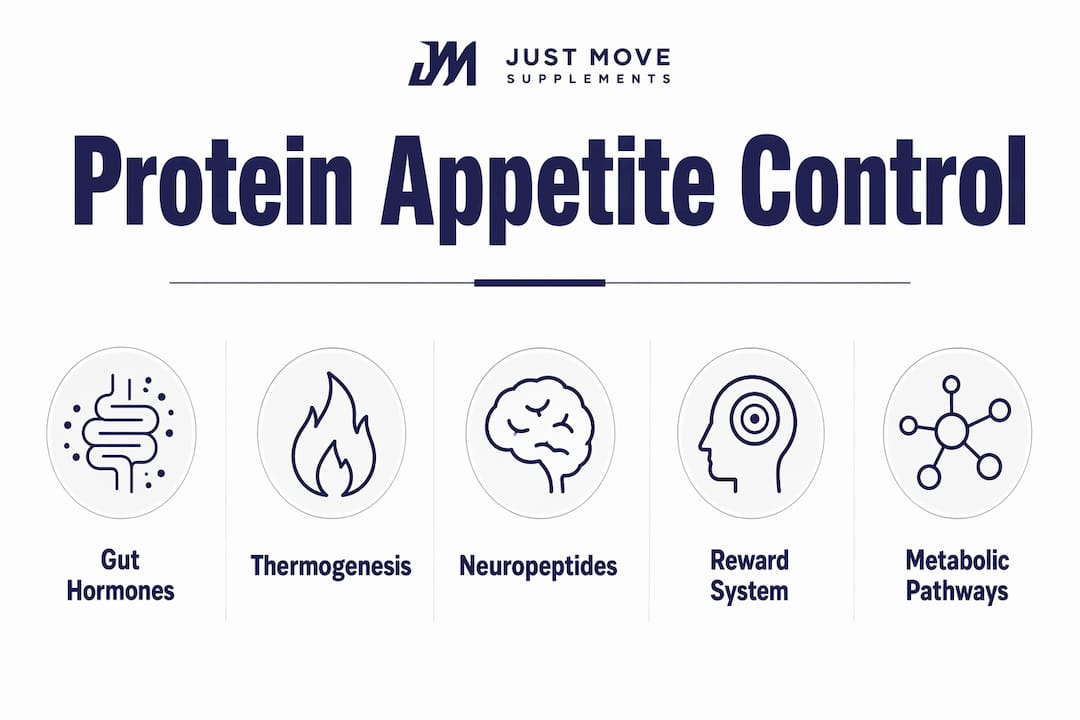
Diet-induced thermogenesis
Protein carries a thermogenic cost of 20–30% of its caloric value, compared to 5–10% for carbohydrates and 0–3% for fat. That means the body burns a substantial portion of protein’s calories just processing it. This elevated metabolic demand increases oxygen consumption, raises core temperature slightly, and generates satiety signals independent of gut hormones. The energy cost of digestion itself becomes a hunger-suppressing mechanism.
Gut hormone signaling
GLP-1, CCK, and PYY are released from enteroendocrine cells in the small intestine in direct response to protein and its digestion products. These hormones activate the vagus nerve, which carries satiety signals from the gut to the brainstem and hypothalamus. CCK also slows gastric emptying, extending the physical sensation of fullness. The gut-brain axis is the primary highway for protein’s appetite signal, and protein is one of its strongest activators.
Hypothalamic neuropeptide modulation
At the level of the hypothalamus, protein intake shifts the balance between orexigenic and anorexigenic neuropeptides. Elevated plasma amino acids, particularly leucine, activate mTOR and suppress AMPK signaling in hypothalamic neurons. This reduces the expression of NPY and AgRP (hunger-promoting neuropeptides) and increases POMC expression, which drives satiety. The result is a centrally mediated reduction in hunger that operates independently of gut hormone signaling.
Reward system modulation
Protein also acts on the nucleus accumbens, the brain’s reward center. By inhibiting opioid and GABAergic neurons in this region, protein intake reduces the hedonic drive to eat, meaning it lowers food reward and the desire to eat for pleasure rather than hunger. This is why high-protein meals tend to reduce cravings for palatable, energy-dense foods even when those foods are available. The effect is particularly relevant for people who struggle with emotional or reward-driven eating.
Gluconeogenesis and ketogenesis
Amino acids not used for protein synthesis enter gluconeogenesis, a metabolic pathway that produces glucose from non-carbohydrate sources. The increased energy expenditure required for gluconeogenesis contributes to weight loss, and the resulting elevation in hepatic glycogen intensifies satiety signals in the brain. High-protein, low-carbohydrate diets also elevate beta-hydroxybutyrate, a ketone body that directly increases satiety through central mechanisms.
Pro Tip: Replace refined carbohydrates and fats with protein rather than simply adding protein on top of your existing diet. Adding protein without adjusting other macronutrients often leads to excess calorie intake, which cancels out the appetite-suppressing benefits.
Complete vs. incomplete proteins
Not all protein sources produce the same appetite response. Complete proteins containing all essential amino acids are more effective at inducing satiety and supporting the metabolic functions tied to appetite regulation, including gluconeogenesis and nitrogen balance. Animal proteins (whey, casein, eggs, meat) are complete by default. Plant proteins often require combining sources (rice and pea, for example) to achieve a comparable amino acid profile and a similar satiety response.
How much protein do you actually need to control appetite?
Getting the dose right is where most people fall short. Eating some protein is not the same as eating enough protein to activate the hormonal and metabolic pathways that actually suppress hunger.
Clinical feeding studies support 1.2 to 1.6 g per kilogram of body weight daily as the optimal range for appetite control and lean mass preservation during weight loss. For a 180-pound (82 kg) adult, that translates to roughly 98–131 g of protein per day. Spreading that across three or four meals, with at least 25–30 g per sitting, keeps satiety hormones elevated throughout the day rather than spiking and crashing.
Here are the evidence-based recommendations that make the biggest practical difference:
-
Hit 25–30 g per meal minimum. Smaller amounts produce a weaker hormonal response. Aim for 35 g if appetite control is the primary goal, based on the dose-response data from acute studies.
-
Distribute protein across meals, not just dinner. Many adults eat most of their protein at the evening meal. Spreading intake across breakfast, lunch, and dinner keeps GLP-1 and CCK elevated across the full day, reducing between-meal hunger.
-
Prioritize protein at breakfast. A high-protein breakfast reduces ghrelin more effectively than a high-carbohydrate one and lowers total caloric intake across the rest of the day. This is one of the most consistent findings in meal-timing research. For practical guidance on protein intake frequency, the distribution principle applies to appetite regulation just as much as it does to muscle protein synthesis.
-
Choose complete protein sources. Whey, casein, eggs, Greek yogurt, chicken, fish, and beef all provide the full essential amino acid profile needed for maximum satiety signaling. For plant-based eaters, combining pea protein with rice protein achieves a comparable profile.
-
Consider protein quality alongside quantity. Animal proteins tend to produce a faster and stronger acute satiety response due to their amino acid composition and digestibility. Plant proteins can be equally effective when consumed in sufficient amounts and from varied sources.
-
Use protein strategically around hunger windows. If late-afternoon cravings are a consistent problem, a mid-afternoon protein-rich snack (Greek yogurt, cottage cheese, or a quality protein shake) can blunt the pre-dinner hunger spike more effectively than willpower alone.
Individual variability in protein’s appetite effects
Age, sex, and metabolic health all influence how strongly protein suppresses appetite. Older adults tend to show a blunted anabolic and satiety response to lower protein doses, a phenomenon called anabolic resistance, which means they may need to aim toward the higher end of the 1.2–1.6 g/kg range. People with obesity or insulin resistance often have altered gut hormone profiles, with lower baseline GLP-1 and PYY responses, making adequate protein intake even more critical for appetite regulation. Sex differences are also documented: women tend to show stronger satiety responses to protein-rich breakfasts, while men may show greater appetite suppression from protein consumed later in the day.
For people managing obesity or type 2 diabetes, protein’s appetite-regulating effects carry direct clinical weight. High-protein diets improve glycemic control, reduce insulin secretion, and lower body fat while preserving lean mass, all without adverse effects on bone density or kidney function in otherwise healthy adults. The high-protein diet evidence base from trials of 6–12 months consistently supports its safety and effectiveness as a dietary intervention for weight reduction and metabolic improvement. For those using protein-rich meal replacements as part of a structured weight loss plan, the benefits of high-protein meal replacements align directly with these clinical outcomes.
Make your protein work harder with Justmovesupplements
Getting enough high-quality protein every day is the single most effective dietary change you can make for appetite control and weight management. Justmovesupplements makes that easier with products built specifically for people who take their nutrition seriously.
The Plain and Simple Unflavored Protein delivers clean, complete protein with no fillers, no artificial flavors, and no guesswork. It mixes into anything, making it easy to hit your daily protein targets without overhauling your entire diet. For those who want to explore options before committing, the Just Move Protein Sample Pack lets you try seven flavors so you find what you actually enjoy drinking every day. Consistency matters, and enjoying your protein source is what makes consistency possible.
Key Takeaways
Protein suppresses appetite through a combination of gut hormone signaling, thermogenesis, and central nervous system modulation, making it the most effective macronutrient for hunger regulation and weight control.
| Point |
Details |
| Dose threshold for hormones |
At least 35 g of protein per meal is required to produce significant changes in ghrelin, CCK, and GLP-1. |
| Acute appetite suppression |
Protein reduces hunger by 7 mm and increases fullness by 10 mm on a 100 mm visual analogue scale (p<0.001). |
| Long-term caloric reduction |
High-protein diets reduce spontaneous caloric intake by 441 kcal per day and produce approximately 5 kg of weight loss over 12 weeks. |
| Daily intake target |
Clinical evidence supports 1.2–1.6 g per kilogram of body weight daily, with at least 35 g per meal. |
| Complete proteins outperform incomplete ones |
Animal and combined plant proteins with all essential amino acids produce stronger satiety and metabolic responses than incomplete sources. |
Recommended


