Yes, protein ends a strict fast, but if muscle preservation is your priority, you should plan most of your protein inside your eating window and aim for about 1.2 to 1.6 grams per kilogram of body weight each day. For strict autophagy or ketosis goals, keep your fasting hours protein-free and concentrate your intake into fewer, larger meals once you start eating.
TL;DR:
Trials found similar muscle protein synthesis with eating windows of eight hours and twelve hours when daily protein intake matched between groups.
During calorie restriction, aim for 1.2 to 1.6 grams per kilogram of body weight each day; heavy lifters may need up to 2.0.
Aim for roughly 20 to 40 grams of protein per meal, adjusting servings to body size, to stimulate muscle protein synthesis.
If autophagy is your priority, keep fasting hours protein free; if recovery matters more, place the largest serving after training.
Justmovesupplements
Plan Protein Around Your Training
Explore protein powders and recovery supplements from Just Move Supplements to support your muscle-focused eating goals.
How Protein Affects Fasting Biology: Insulin, mTOR, and Muscle Repair
Amino acids, especially leucine, activate a cellular growth pathway called mTOR and trigger insulin release independent of carbohydrate intake. That combination is exactly what ends a strict fasting state and dials down autophagy, the cellular cleanup process many people fast specifically to trigger. Even a small protein serving sends that signal, which is why there is no such thing as a truly “fasting-friendly” protein shake if autophagy is the goal.
The encouraging part is what this means for muscle. A 10-day randomized controlled trial found that eight-hour time-restricted eating did not lower daily myofibrillar protein synthesis rates compared with a 12-hour eating window, as long as total protein intake was matched between groups. In that randomized trial, integrated muscle protein synthesis rates were essentially identical between the restricted group and the control, essentially identical. A separate 10-day controlled dietary intervention reached a similar conclusion: short-term intermittent fasting and alternate-day fasting did not impair muscle protein synthesis rates when protein intake was matched across groups.
The takeaway is straightforward. Compressing your eating window does not sabotage muscle repair by itself, as explained in this beginner’s guide to intermittent fasting. What matters is whether you still hit your daily protein number inside that shorter window.
How Much Protein to Aim for When Fasting
Your daily target matters more than the clock. A systematic review of protein intake during weight loss concluded that total daily protein, often in a moderate range around 1.2 to 1.6 grams per kilogram of body weight, is more critical for preserving lean mass than meal timing alone. If you are in a calorie deficit while fasting, that range becomes your anchor number.
Here is how to translate that into practice:
Active adults in a deficit: target 1.2 to 1.6 grams per kilogram per day, leaning toward the higher end if you train regularly.
Competitive athletes or heavy lifters: some may benefit from intakes closer to 1.6 to 2.0 grams per kilogram, particularly during aggressive cuts.
Per-meal threshold: aim for roughly 20 to 40 grams of high-quality protein per sitting to meaningfully stimulate muscle protein synthesis, with the exact number scaling to your body size.
Older adults: a 24-hour protein kinetics study found that higher protein intake, around twice the standard RDA, improved whole-body net protein balance regardless of whether participants followed time-restricted eating or a traditional meal pattern. Pushing toward 1.6 grams per kilogram appears to help this group specifically.
Controlled feeding data show that doubling standard RDA protein improved whole-body net protein balance in middle-aged and older adults no matter which eating pattern they followed. If you are cutting calories aggressively, err toward the top of your range rather than the bottom.
When to Eat Protein Inside Your Eating Window
Timing within your window still matters, even though total intake carries the most weight. If appetite control is your priority, loading protein toward the end of your eating window tends to carry fullness further into the next fasting stretch. If training performance and recovery are your priority, protein shortly after a workout supports repair when it matters most.
Here is how that looks for common schedules:
16:8 with an evening workout: split protein across two meals, with the larger dose following your training session.
8-hour time-restricted eating with a midday workout: eat a moderate protein meal before training and a larger one immediately after, then a final smaller dose before your window closes.
Non-training days: distribute protein evenly across two or three meals rather than front-loading or back-loading it.
Pro Tip:If you only train three or four times a week, build your eating window around those sessions rather than a fixed clock time, protein timing follows training better than it follows the hour.
Sample Meal Plans to Hit Your Protein Target
Building a day around two or three protein-forward meals removes most of the guesswork. Here are three starting templates:
16:8 with a PM workout: lunch with 30 grams of protein, a post-workout shake with 30 grams, dinner with 25 to 30 grams, landing around 85 to 90 grams total.
8-hour TRE with a midday workout: a pre-workout meal with 20 grams, a post-workout shake with 35 grams, and a final meal with 30 grams.
Non-workout day: three evenly spaced meals of roughly 25 to 30 grams each.
If a meal falls short, a quick shake or bar can close the gap without adding a full meal’s worth of calories, our guide to meal-replacement shakes walks through when that swap makes sense. For tracking, a phone alarm at your usual meal times, a measured scoop instead of eyeballing powder, and a simple food-logging app all reduce the chance of drifting under your number by the end of the day.
Evidence-Backed Tactics for Hitting Your Numbers
The research pattern across multiple trials is consistent: when protein intake is matched, shorter eating windows and intermittent fasting protocols do not appear to impair muscle protein synthesis over the short term. That finding shifts the real work from worrying about the clock to actually hitting your gram target every day.
Where this gets practical:
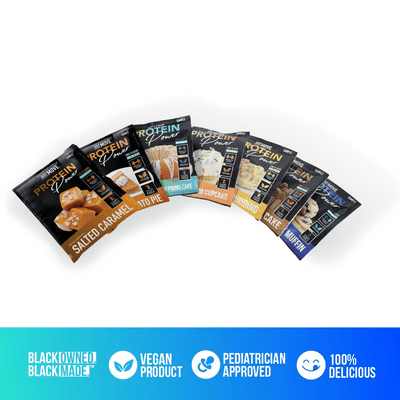
Sample packs let you test multiple protein flavors before committing to a full tub, useful if taste fatigue is what usually derails a fasting protocol.
Measured scoops remove the guesswork of estimating grams by eye, which matters when your entire day’s protein is compressed into two or three meals.
Recipe-based planning, like the approach in our 12-week trial and 7-day plan, turns an abstract gram target into an actual grocery list and meal rotation.
How I Decide Between Strict Fasting and Muscle-Focused Fasting
Ask yourself three questions: what is the actual goal, how often do you train, and are you over 50. If you train heavy more than three times a week, favor higher protein and time your largest dose around training rather than protecting a strict fasting window. If autophagy is the real priority, protein-free fasting hours matter more than hitting a gram target during them. Anyone managing a medical condition should check with a clinician before changing eating patterns.
— Just
Meet Your Protein Targets Without the Guesswork
Hitting 1.2 to 1.6 grams per kilogram inside a shortened eating window gets easier with a plan instead of a running mental tally. Our Protein Shake Recipes Downloadable PDF gives you a rotation of recipes sized to common per-meal targets, so you are not reinventing a shake every day.
This article is general information, not a substitute for advice from a qualified doctor. Consult a qualified healthcare professional about your own circumstances before acting on anything here.
FAQ
How do I eat enough protein when fasting?
Concentrate your protein into fewer, larger meals inside your eating window, aiming for 20 to 40 grams per sitting depending on your body size. Shakes, eggs, and lean meats make it easier to hit a daily total of 1.2 to 1.6 grams per kilogram without extending your eating hours.
How often should I do a 3-day fast for autophagy?
There is no single supported frequency for extended fasts, and individual response varies widely based on health status and goals. Anyone considering a multi-day fast should talk with a clinician first, since the metabolic demands differ significantly from a daily time-restricted pattern.
What are the highest protein foods?
Common high-protein choices include chicken breast, Greek yogurt, eggs, cottage cheese, lean beef, fish, and whey or plant-based protein powders. Exact protein content varies by preparation and serving size, so checking a nutrition label or food database gives you the most accurate number for your meal.
Does protein help burn belly fat?
Protein itself does not target fat in a specific area, but adequate intake supports satiety and muscle retention during a calorie deficit, which is what drives fat loss overall. A systematic review on weight loss found that higher protein intake during energy restriction helps preserve lean mass rather than burning fat from one location.
Does a protein shake break intermittent fasting?
Yes, a protein shake ends a strict fast because amino acids trigger insulin release and activate mTOR regardless of carbohydrate content. If your goal is muscle preservation rather than strict autophagy, drinking a shake inside your eating window still supports your daily protein target without undermining that goal.
Sources
Not all proteins behave the same way once they hit your system, and that difference matters for both fast-breaking decisions and satiety planning.
For shake sizing, a single serving in the 25 to 35 gram protein range covers most per-meal targets without excess calories. Mix with water if you are watching total intake closely, or with milk if you have calorie room and want extra satiety. Check your scoop size against your daily target rather than guessing, it is easy to underestimate how many scoops you actually need across a shorter eating window.
Compare joggers and shorts by workout intensity, weather, and mobility. Learn which fabrics and fits support comfort, training, and recovery readiness.
Learn when to take a fat burner based on its ingredients, avoid caffeine near bedtime, and pair daytime stimulants with a night formula without caffeine.