What is protein sparing, and why does it matter for your muscles?

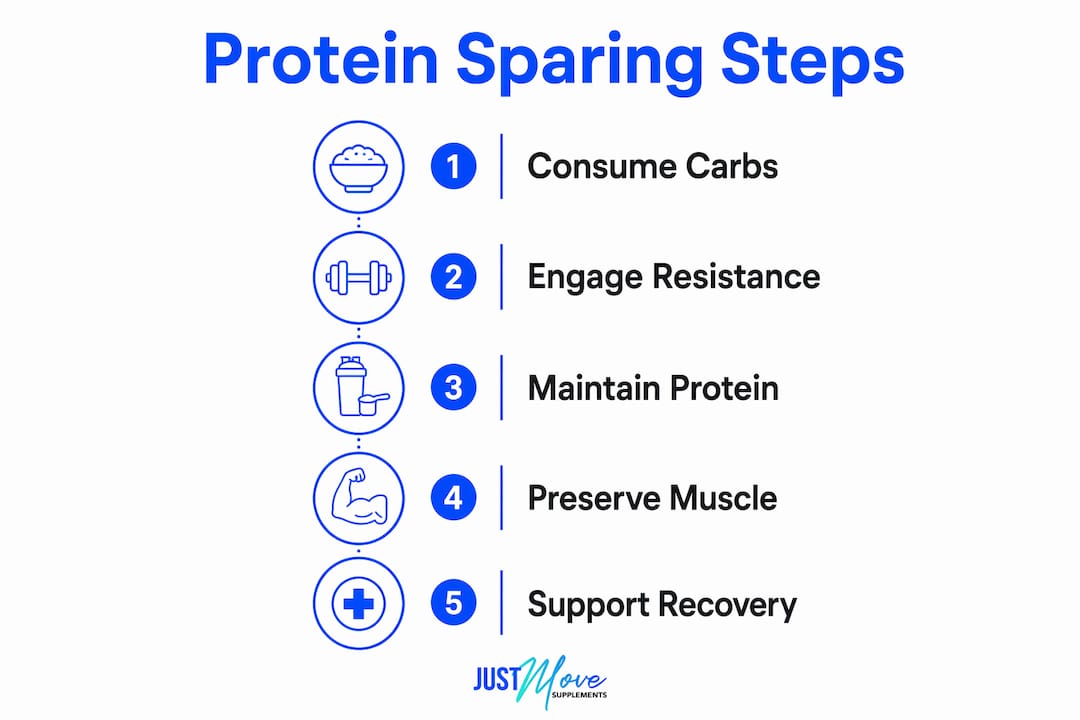
Protein sparing is the physiological process by which adequate carbohydrate intake prevents your body from breaking down muscle protein for energy. When you eat enough carbohydrates, your body uses them as its primary fuel source, leaving dietary and structural protein available for muscle repair and growth instead of gluconeogenesis. For fitness enthusiasts in a calorie deficit, this distinction is the difference between losing fat and losing muscle.
Here is the core concept in plain terms:
-
Carbohydrates are the primary protein sparers. Research confirms that protein sparing reaches near-maximum when daily carbohydrate intake provides roughly 300 calories, with only modest additional benefit beyond that threshold.
-
Protein quality and quantity matter. Adequate protein intake gives your body the amino acids it needs for muscle synthesis, while carbohydrates handle the energy demand.
-
Total calorie intake shapes the outcome. A severe deficit without enough carbohydrates forces the body to cannibalize muscle protein for glucose, regardless of how much protein you eat.
-
The Protein-Sparing Modified Fast (PSMF) is a separate clinical protocol. The PSMF restricts calories below 800 per day and requires medical supervision. It is not the same as the general protein-sparing principles fitness enthusiasts apply daily.
Understanding protein sparing means recognizing that muscle preservation is a team effort between carbohydrates, protein, and exercise, not a single-nutrient fix.
Table of Contents
How protein sparing actually works in your body
The science behind protein sparing centers on gluconeogenesis, the process by which your liver manufactures glucose from amino acids when carbohydrate availability is low. When you eat enough carbohydrates, gluconeogenesis from muscle amino acids is suppressed, and your muscles stay intact.
-
Carbohydrates suppress amino acid catabolism. Studies show that dietary fat does not produce the same effect. Fat and starvation conditions both increase branched-chain amino acid oxidation, while carbohydrate intake significantly reduces it.
-
Metabolic flexibility supports performance. Adequate protein and carbohydrate intake helps athletes maintain endogenous glucose production and switch fuel sources efficiently, sustaining performance even during a calorie deficit.
-
Resistance training is a non-negotiable stimulus. During extreme energy deficits, resistance exercise acts as a direct counter-signal to muscle catabolism, preserving lean mass beyond what diet alone can achieve.
-
Fats are poor protein sparers. Unlike carbohydrates, dietary fat does not meaningfully reduce nitrogen excretion or suppress branched-chain amino acid oxidation during calorie restriction.
-
A common misconception: eating more protein without adequate carbohydrates does not fully spare muscle. Carbohydrates and total calorie intake are equally critical to prevent catabolism.
Muscle preservation during a calorie deficit depends on reducing muscle protein breakdown while maintaining synthesis, and resistance exercise is the primary driver of that balance.
How to apply protein sparing principles in your training and nutrition
Knowing the science is one thing. Putting it into practice is where most fitness enthusiasts either get it right or leave muscle on the table.
-
Keep carbohydrates in your diet during a cut. Dropping carbs entirely while restricting calories accelerates muscle loss. Even a modest carbohydrate intake goes a long way toward protecting muscle protein.
-
Prioritize resistance training above all other exercise. Lifting signals your body to preserve muscle even when calories are low. Young men consuming 2.4 g/kg of protein with resistance exercise actually increased lean body mass despite a 40% energy deficit.
-
Focus on total daily protein, not just post-workout timing. The anabolic response is governed more by overall daily intake and training stimulus than by the exact window you consume protein after a session. Understanding protein intake frequency matters more than chasing a 30-minute post-workout window.
-
Add low-intensity movement. Walking and similar activities can reduce muscle loss by up to 30% during calorie deficits through mechanical survival signaling, even when protein intake is modest.
-
Build meals around whole-food protein sparers. Oats, sweet potatoes, rice, and legumes provide carbohydrates that suppress gluconeogenesis. Pair them with quality protein sources like eggs, chicken, Greek yogurt, or fish.
-
Do not skip micronutrients. Vitamins and minerals support the enzymatic processes behind protein synthesis and energy metabolism. A deficit diet that strips micronutrients undermines the whole system.
Pro Tip: Combining two or three resistance sessions per week with daily low-intensity activity like walking gives you the mechanical signals for muscle preservation without the recovery cost of daily high-intensity training.
How protein supplements support your protein-sparing goals
Whole foods are the foundation, but protein supplements fill real gaps, especially when life gets busy or appetite drops during a calorie deficit.
-
Convenience drives compliance. Meeting a daily protein target of 2.0–2.4 g/kg is easier when a quality supplement is available. Skipping meals or falling short on protein because of schedule pressure is one of the most common ways fitness enthusiasts undermine their muscle-preservation efforts.
-
Flavor variety reduces supplement fatigue. The Just MOVE Protein Sample Variety Pack offers 7 distinct flavors, letting you find what you actually enjoy before committing to a full-size tub. Consistency matters more than perfection, and you will not stay consistent with a flavor you dislike.
-
Choose supplements with high protein content and low sugar. A supplement that spikes blood sugar without delivering meaningful protein undermines both your calorie budget and your muscle-preservation goals. Knowing how to choose a low-sugar protein supplement keeps your macros aligned with your sparing strategy.
-
Supplements complement whole foods, they do not replace them. Carbohydrates from whole foods still do the heavy lifting in protein sparing. A protein shake alongside a carbohydrate-rich meal is a far more effective strategy than a protein shake alone.
-
Timing flexibility is a feature, not a flaw. You can use a protein supplement at any point in the day where your whole-food intake falls short, morning, midday, or evening, without losing the muscle-preservation benefit.
What you should take away from protein sparing
Protein sparing is not a trend or a supplement marketing term. It is a well-documented metabolic principle with direct implications for anyone trying to lose fat without sacrificing muscle.
-
Carbohydrates do the primary work. They suppress gluconeogenesis and protect muscle protein from being burned as fuel during a calorie deficit.
-
Resistance training is non-negotiable. Diet alone cannot fully preserve muscle during a deficit. The mechanical stimulus from lifting is what tells your body to hold onto lean mass.
-
Total daily protein intake drives results. Hitting your protein target across the day matters far more than obsessing over post-workout timing windows.
-
Metabolic flexibility is a performance asset. Training your body to switch efficiently between fuel sources keeps performance high even when calories are restricted.
-
Protein supplements are a practical tool. They support consistent intake, reduce the friction of meal prep, and, with the right product, make the process enjoyable enough to stick with long-term.
-
Myths about timing and fat-based diets persist. The research is clear: fat does not spare protein the way carbohydrates do, and the post-workout anabolic window is far less critical than total daily intake.
Key Takeaways
Protein sparing requires carbohydrate intake, resistance training, and adequate total daily protein working together to preserve muscle mass during a calorie deficit.
| Point |
Details |
| Carbs are the primary protein sparers |
Near-maximum protein sparing occurs at a modest daily carbohydrate intake; fat does not produce the same effect. |
| Resistance training preserves muscle |
Exercise acts as a direct counter-signal to catabolism, even during severe calorie deficits. |
| Total protein intake drives results |
Daily protein target matters more than post-workout timing for muscle preservation. |
| Low-intensity activity adds protection |
Walking and similar movement can reduce muscle loss significantly during calorie restriction. |
| Justmovesupplements supports compliance |
The Just MOVE Protein Sample Variety Pack in 7 flavors helps you meet daily protein targets consistently and enjoyably. |
Justmovesupplements makes hitting your protein targets easier
Knowing the science behind protein sparing puts you ahead of most gym-goers. Acting on it consistently is where Justmovesupplements comes in.

Justmovesupplements is built for fitness enthusiasts who want quality protein without the guesswork of committing to a single flavor. The Just MOVE Protein Sample Variety Pack gives you all 7 flavors in one order, so you can find what works for your taste and your routine before buying in bulk. Every formula is crafted with protein content and digestibility in mind, keeping your macros clean and your compliance high. Whether you are in a calorie deficit protecting hard-earned muscle or fueling a training block, Justmovesupplements gives you a trusted, proven option that fits your goals. Try the variety pack today and find your go-to flavor at justmovesupplements.com.
Recommended


