Your quickest route to a satisfying dessert is a mug cake, a blended protein pudding, a no-bake cheesecake cup, a protein bar, or an energy bite. Every one of these works because it swaps flour and sugar for blended cottage cheese, Greek yogurt, or a well-matched protein powder, so you get real dessert texture with a fraction of the added sugar. What follows is a set of recipes you can actually make tonight, plus the fixes that stop them from turning grainy.
TL;DR:
Cottage cheese and Greek yogurt form the most effective bases for high-protein desserts, providing texture and flavor without graininess.
Proper blending with a high-speed blender or food processor is essential to eliminate curds and achieve a smooth, pudding-like consistency.
Dairy-free and vegan options require plant-based yogurts and proteins, with adjustments like additional gelatin substitutes or longer chilling times to ensure proper setting.
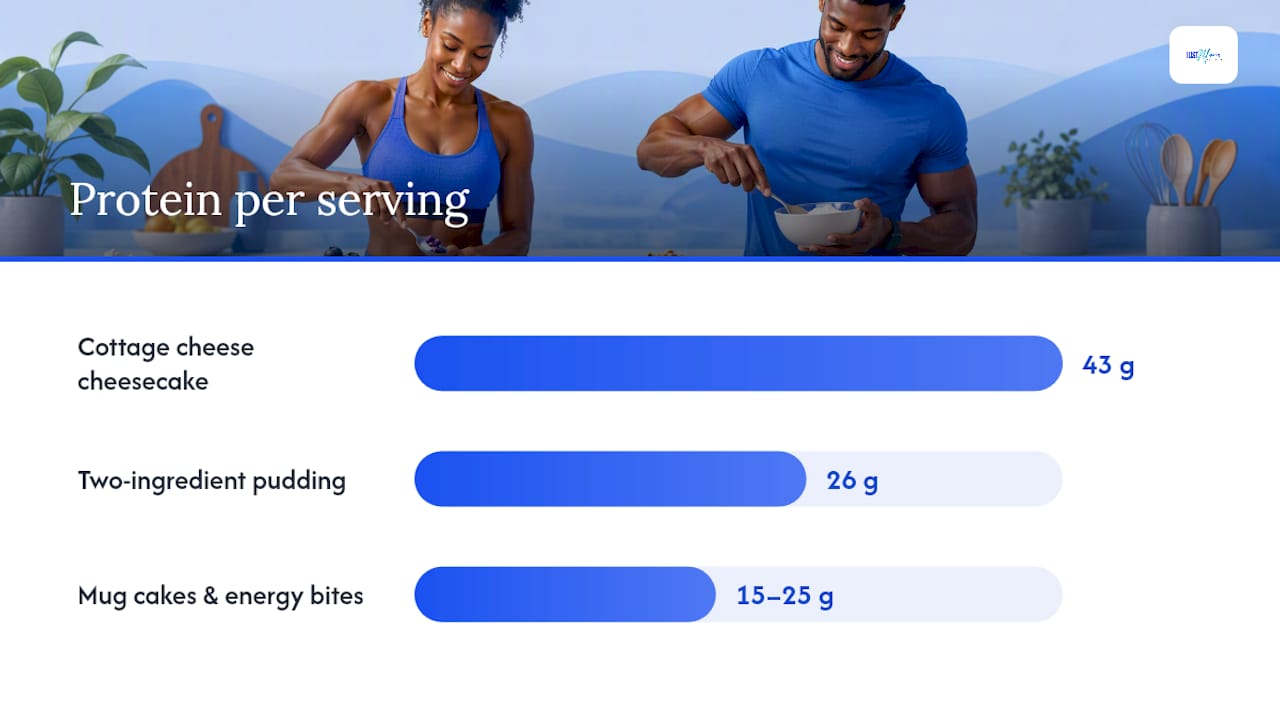
Recipes like high-protein cheesecakes can deliver up to 43 grams of protein per serving, while quick puddings offer around 26 grams, suitable for different macros.
Flavor pairings such as salted caramel, apple pie, and chocolate enhance taste and mask any residual powder aftertaste, with salt and coffee adding complexity.
Justmovesupplements
Find Your Favourite Protein Flavour
Explore Just Move Supplements’ varied protein options, crafted for taste and effectiveness in desserts, recovery, and everyday nutrition.
You don’t need a pastry background to pull these off. Most of these recipes lean on two workhorse ingredients, cottage cheese and Greek yogurt, blended until smooth, then flavored to taste like something you’d order at a diner instead of choke down at a gym. Below are ten formats worth keeping in your regular rotation, each with a rough protein estimate per serving and a shortcut to make it easier.
90 second protein mug cake. Mix a scoop of protein powder, a tablespoon of cocoa or vanilla whey, an egg white, and a splash of milk in a mug, then microwave for 60 to 90 seconds. Expect somewhere around 20 to 25 grams of protein per mug, depending on your powder. Swap in the protein powder pairings guide if your batter comes out gummy instead of fluffy.
Two-ingredient protein pudding. This is the fastest dessert on the list. Blend a large protein shake with sugar-free instant pudding mix and it sets into a two-serving pudding in minutes, using roughly a 14-ounce shake (about 26 grams of protein) mixed with an ounce of pudding powder, according to Damn Easy Recipes. No cooking, no chilling drama, just a shake and a whisk.
Cottage cheese chocolate pudding. Blend full-fat cottage cheese with cocoa powder, a touch of maple syrup, and a scoop of protein powder until glossy. Primal Edge Health notes this style can be sugar-free, low-carb, and ready in about five minutes once your blender does the work, with cottage cheese giving it a velvety, custard-like body.
Greek yogurt and gelatin chocolate pudding. For a firmer, more scoopable pudding, combine Greek yogurt, protein powder, and a small amount of gelatin. This method, detailed by Peach and Maple, thickens naturally without a drop of heavy cream and holds its shape better in the fridge than a straight yogurt mix.
No-bake protein cheesecake cups. Blend cottage cheese or cream cheese with Greek yogurt, sweetener, and vanilla, then chill in small jars. One version from Healthy Kitchen reaches roughly 43 grams of protein per serving when built around a full-fat cottage cheese and Greek yogurt base, no protein powder required.
Powder-free cheesecake cups. Not every high-protein dessert needs a scoop of powder. Bake With Neetu shows that Greek yogurt and cream cheese alone can hit strong protein numbers, which is worth knowing if you find powder aftertaste distracting in a chilled dessert.
Protein ice cream bars. Blend cottage cheese and Greek yogurt into a smooth filling, pour into a bar mold, dip in melted dark chocolate, and freeze. Texanerin found that full-fat cottage cheese and Greek yogurt together give the creamiest, least icy texture once frozen.
Peanut butter protein pudding. Blend Greek yogurt, a scoop of vanilla or chocolate protein powder, and a spoonful of natural peanut butter. The fat from the peanut butter smooths out any chalkiness and turns a basic pudding into something closer to a peanut butter cup filling.
Chickpea chocolate chip blondies. Blend a can of drained chickpeas with peanut butter, a little maple syrup, and mini chocolate chips, then bake for 20 minutes. It’s an unconventional base, but legumes bring both protein and fiber to a dessert that bakes up dense and fudgy.
No-bake energy bites. Combine oats, protein powder, nut butter, and chopped dates, roll into balls, and refrigerate. These travel well and work as a grab-and-go answer to an afternoon sugar craving.
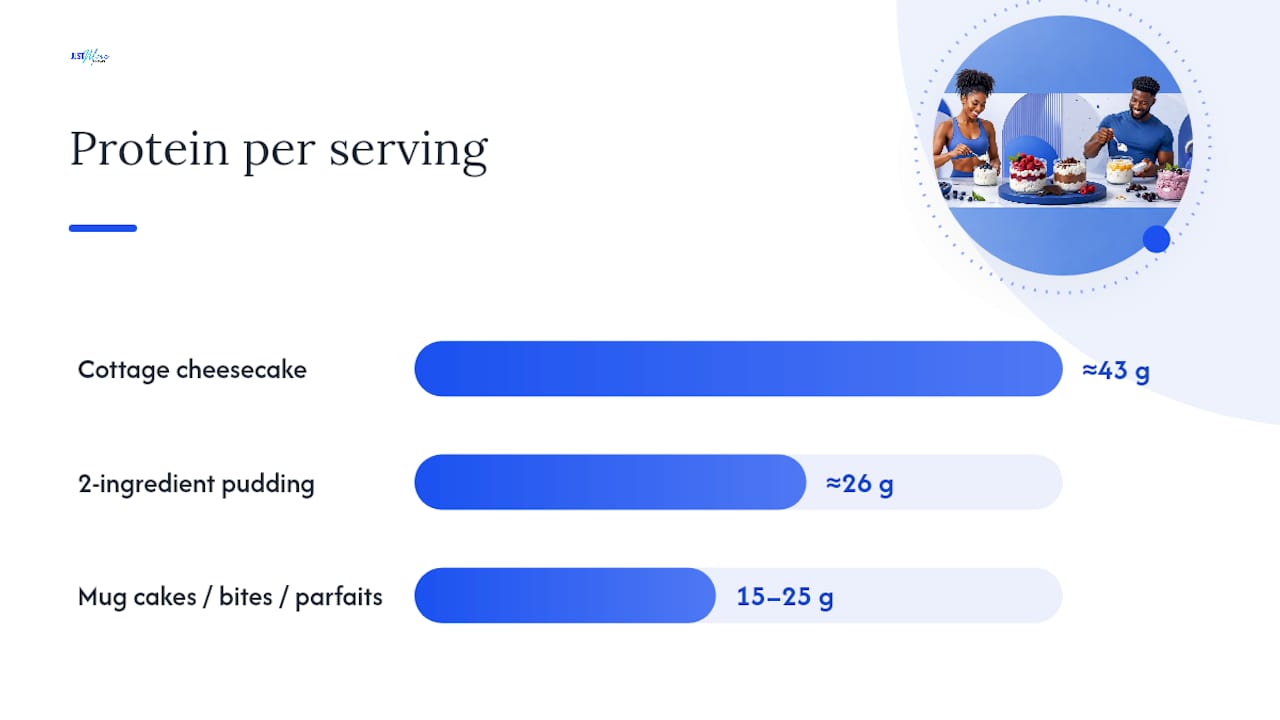
Protein per serving snapshot: cottage cheese based cheesecakes can land near 43 grams per serving, while the fastest two-ingredient pudding shortcut delivers close to 26 grams from the shake alone before you count the pudding mix. Mug cakes and energy bites typically fall in a lighter 15 to 25 gram range, which makes them a better fit as a snack than a full meal replacement.
If you want a base recipe to practice these blending skills on before you improvise flavors, the protein yogurt bowl method is a good five-minute starting point.
Why Protein Desserts Turn Grainy (And How to Fix It)
Grainy or chalky texture is almost always a blending problem, not an ingredient problem. Cottage cheese curds resist a light stir. They need real mechanical force to break down into something creamy, and a fork or a weak blender simply won’t get there.
The fix is aggressive blending. A high-speed blender or food processor run for 60 to 90 seconds, scraping the sides and repeating until the mixture looks glossy, reliably eliminates curds and produces a pudding-like mouthfeel, according to testing from The Baking ChocolaTess. An immersion blender works in a pinch, but it takes longer and you’ll want to angle the cup to keep pulling curds back into the blades.
Your protein powder choice matters just as much as your blending technique. Whey isolate tends to blend the smoothest in cold, no-bake applications like pudding and cheesecake filling. Plant-based powders are often grittier by nature and usually need a splash of extra milk or yogurt to compensate for their tendency to soak up liquid and turn dry. Casein based powders can also over-thicken once chilled, so many home bakers reserve casein for recipes where a firmer, almost fudge-like set is the goal, and reach for whey or a whey blend everywhere else.
A few practical habits go a long way:
Sift protein powder before mixing to knock out clumps before they ever hit the batter.
Add wet ingredients gradually and blend between additions rather than dumping everything in at once.
Use full-fat cottage cheese or Greek yogurt when you want richness. Fat covers up chalkiness far more effectively than extra sweetener does.
Chill no-bake desserts a minimum of two hours, and closer to four for cheesecake style recipes, so the structure fully sets before slicing.
Reach for a small amount of gelatin when a pudding needs more hold, or xanthan gum when you want thickness without changing the flavor.
Pro Tip:If a pudding still tastes slightly chalky after blending, stir in a spoonful of natural nut butter. The fat coats your palate and masks the dry, powdery aftertaste that plain protein powder can leave behind. For a deeper walk-through of powder-specific fixes, the protein powder texture guide covers brand-by-brand quirks worth knowing before you commit to a big batch.
How Much Protein Is in Each Dessert, and How to Store It
Protein per serving swings widely by format, so it helps to know roughly what you’re working with before you build a day’s macros around dessert. Cottage cheese cheesecakes tend to run highest, with one recipe reaching about 43 grams per serving thanks to the double dose of cottage cheese and Greek yogurt. The two-ingredient pudding shortcut delivers close to 26 grams from the shake base before the pudding mix adds a bit more. Mug cakes, energy bites, and yogurt parfaits generally land lighter, in the 15 to 25 gram range per portion.
If a recipe falls short of your target, add a half scoop of protein powder and increase the liquid slightly to keep the texture from turning stiff. Adding a full extra scoop without adjusting liquid is the most common cause of a dry, pasty dessert.
Portioning matters just as much as the recipe itself:
Divide batch recipes like cheesecake cups or pudding into individual jars right after blending, so your protein count per serving stays accurate instead of guessed.
Refrigerate yogurt and cottage cheese based desserts for up to four to five days in a sealed container.
Freeze protein ice cream bars for up to two months, and let them sit at room temperature for five minutes before eating for the best texture.
Thaw frozen protein bars in the fridge overnight rather than on the counter to avoid a watery texture as they defrost.
What Testing These Recipes Taught Us About Texture
Just, recipe author at Just Move Supplements, ran dozens of side-by-side batches while narrowing this list down. Cottage cheese and Greek yogurt consistently outperformed protein powder alone for both flavor and mouthfeel.
The biggest surprise in testing wasn’t a fancy ingredient. It was how far a full-fat cottage cheese, blended properly, could carry a dessert without any protein powder at all. Whey helped round out flavor and hit higher protein numbers, but the texture win almost always came from the whole-food base first.
That’s why the list above leans on cottage cheese and Greek yogurt as the foundation, with protein powder used to boost the number rather than carry the whole dessert. Anyone who wants to taste that combination before committing to a flavor can try a sample pack and test a few options side by side.
Vegan, Gluten-Free, and Dairy-Free Swaps That Still Work
Dairy-free doesn’t mean starting over. Swap cottage cheese and Greek yogurt for a thick coconut or almond-based yogurt, and lean on a plant-based protein powder to make up the protein gap those dairy bases would otherwise cover. Expect a slightly looser set in no-bake cheesecakes, so add a bit more gelatin substitute, like agar agar, or chill longer before slicing.
Gluten-free is easier here than in most desserts, since the majority of this list, puddings, cheesecake cups, energy bites, ice cream bars, never touches flour to begin with. The one recipe to watch is the chickpea blondie. Double-check your oats are labeled gluten-free if you’re adding any to the batter, since standard oats are frequently cross-contaminated during processing.
Vegan versions require the most adjustment. Skip whey and casein entirely and reach for pea, soy, or a blended plant protein instead, expecting slightly more graininess that extra blending time and a spoonful of nut butter can smooth over. The chickpea blondies convert to vegan almost effortlessly by using a flax egg instead of a real one. For inspiration on building whole-food, plant-based protein desserts without leaning on powder at all, Wild Foodz has practical bowl-building ideas that translate well into chilled dessert bases.
Whatever substitution you make, taste as you go. Plant-based swaps change sweetness perception more than most people expect, so a recipe that reads as balanced with dairy can taste flat or oddly bitter with a straight one-to-one plant swap.
Flavor Pairings That Make Protein Desserts Taste Like Dessert
Pairing the right flavors is what separates a dessert from a shake in a bowl. Chocolate and peanut butter remain the most forgiving combination for masking any lingering protein powder aftertaste, since both flavors are naturally strong enough to dominate the palate. Cinnamon and vanilla work almost as well, especially in mug cakes and puddings, because warm spice notes round out the slightly metallic edge some whey powders carry.
Fruit pairs best with lighter bases like Greek yogurt parfaits rather than dense cottage cheese blends. Berries, in particular, cut through richness and add natural sweetness, which means you can often reduce your added sweetener when fruit is doing some of the work.
Salt is the most underused tool on this list. A small pinch in a caramel or chocolate pudding sharpens sweetness and makes a dessert taste more complex without adding a single gram of sugar. Apple and cinnamon together turn a basic mug cake into something closer to a pie filling, and a touch of nutmeg pushes that further toward a fall dessert even outside of season.
Coffee is worth experimenting with too. A half teaspoon of instant espresso powder deepens chocolate flavor in puddings and mug cakes dramatically, the same trick bakeries use in brownies, without adding any noticeable coffee taste on its own.
Balancing Sweetness Without Loading Up on Sugar or Sweeteners
The instinct with any high-protein dessert is to reach for more sweetener to cover up powder flavor, but that usually backfires into something cloying. A better approach starts with fat and acid instead of sugar. A spoonful of nut butter, a splash of vanilla extract, or a small amount of lemon zest in a cheesecake base rounds out flavor without adding sweetness at all.
Ripe fruit is a cleaner sweetener than most people give it credit for. A mashed banana or a few blended dates in an energy bite recipe brings real sweetness along with fiber, and it means you can cut back on maple syrup or honey by a third without the final result tasting muted.
If you do use a sugar substitute, stick to one you actually enjoy the aftertaste of, since that aftertaste becomes more noticeable, not less, as protein content goes up. Monk fruit and allulose tend to read cleaner than stevia in chilled, dairy-based desserts specifically. Whatever you choose, use it in smaller amounts than a standard recipe calls for and taste as you build, because protein powder itself often carries some inherent sweetness that a straight sugar-replacement calculation won’t account for.
What Actually Matters When You’re Building These Desserts Yourself
The conventional wisdom on high-protein desserts treats protein powder as the star ingredient, and that’s backwards. The real texture and flavor breakthroughs in this category come from whole-food bases, cottage cheese and Greek yogurt, that happen to already carry serious protein numbers before you add a single scoop of anything.
Where most recipe roundups fall short is treating every protein powder as interchangeable. It isn’t. A gritty plant powder dropped into a delicate pudding recipe will sink the whole dessert regardless of how good the flavor idea was on paper.
If you’re starting out, prioritize the blend, not the sweetener. Get your cottage cheese or Greek yogurt genuinely smooth first, then adjust sweetness last. Most disappointing homemade protein desserts fail at the blending stage, not the recipe stage, and no amount of vanilla extract fixes a gritty base.
— Just
Try These Recipes With Just Move Supplements Flavors
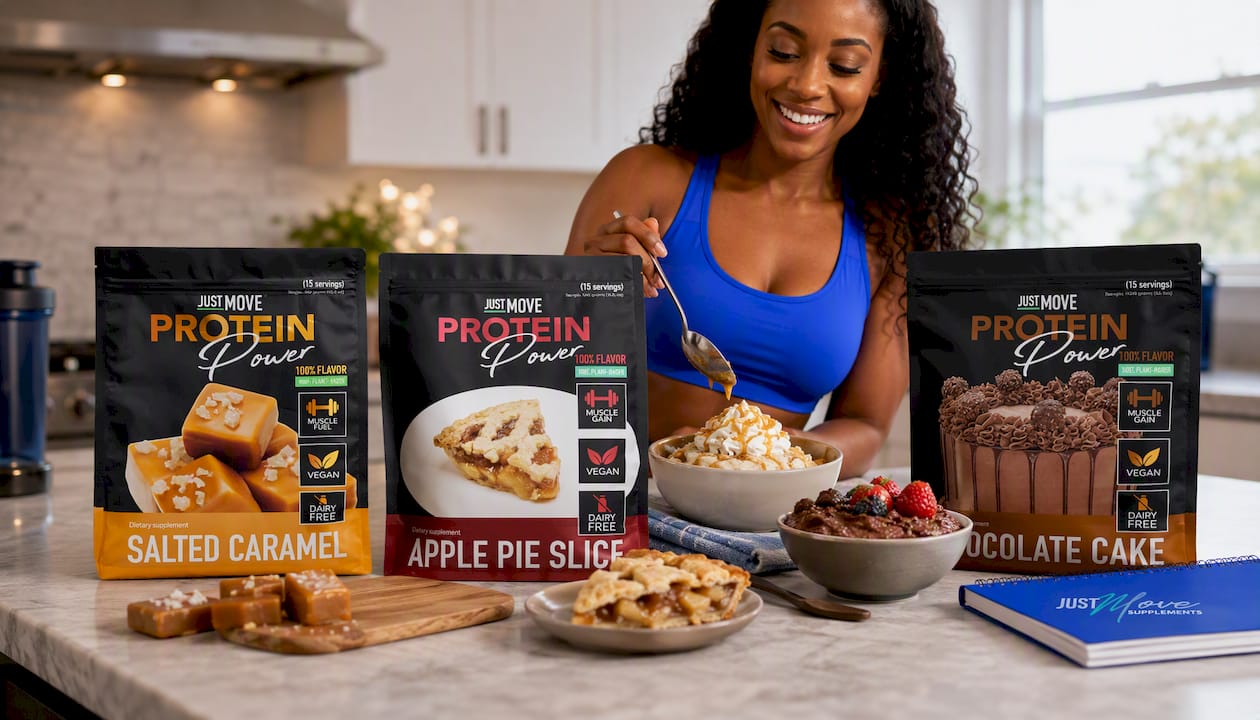
Now that you know how to build these desserts, matching the right protein flavor to the right recipe makes the difference between a good result and a great one. Salted Caramel Protein works especially well folded into the two-ingredient pudding shortcut or blended straight into a cheesecake cup base, where that salt note plays off the sweetness the way a real salted caramel dessert would. Apple Pie Slice Protein is a natural fit for the mug cake, since a pinch of cinnamon and this flavor together taste closer to an actual slice of pie than most people expect from a scoop of powder. Chocolate Cake Protein is the one to reach for in the chickpea blondies or the peanut butter pudding, where a rich chocolate base carries the whole dessert.
Not sure which flavor fits your go-to recipe? A protein sample pack lets you try several flavors before committing to a full tub, so you can test Salted Caramel, Apple Pie Slice, and Chocolate Cake side by side in your own kitchen. Browse the full protein and supplement collection to find your next dessert-night staple.
No-bake protein cheesecake made with blended cottage cheese and Greek yogurt tends to top the list, with one version reaching about 43 grams of protein per serving. Ice cream bars built on the same cottage cheese and yogurt combination come in close behind.
How Do I Get 40 Grams of Protein From Dessert Easily?
A cottage cheese and Greek yogurt cheesecake cup is the simplest way to hit that number in one sitting, since the base itself carries most of the protein before you add powder. Blending in a scoop of whey and topping with a few chopped nuts can push a lighter recipe closer to that range as well.
What Snack Has 30 Grams of Protein?
The two-ingredient protein pudding gets close, built from a large protein shake carrying roughly 26 grams of protein before the pudding mix is added. A cottage cheese pudding blended with a full scoop of a flavor like Chocolate Cake Protein can reach a similar range depending on the powder’s protein content per scoop.
What Is Sweet but High in Protein?
Peanut butter protein pudding and chickpea chocolate chip blondies both deliver real dessert sweetness while carrying meaningful protein from Greek yogurt, protein powder, or blended legumes. Flavors like Salted Caramel Protein or Apple Pie Slice Protein make it easier to hit that sweet, dessert-like taste without leaning on extra sugar to get there.
Find the right pre workout timing: 30 to 60 minutes for caffeine, 2 to 3 hours for nitrates. Use the three session test (20, 40, 60 minutes) to find your...
Consuming this product can expose you to chemicals including
Lead, which is known to the State of California
to cause cancer and birth defects or other reproductive harm.