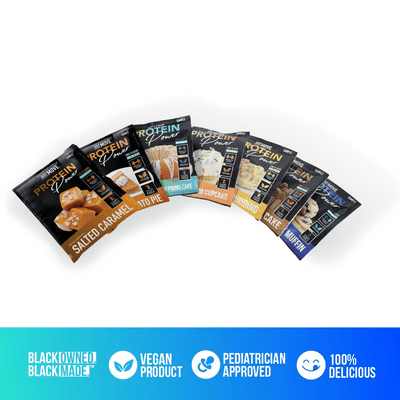
If you want protein shakes that taste like desserts, cocktails, or surprising savory treats, this guide delivers 40+ unique flavor ideas you can mix at home or buy ready-made, plus recipes and a sample pack option that lets you taste several flavors before committing to a full tub. We cover dessert-inspired, fruity, beverage-style, savory, and plant-based options so you find a flavor that actually gets finished.
TL;DR:
Use clear protein with water or sparkling water for lighter fruit and soda flavors; reserve milk, coconut milk, or blending for richer dessert combinations.
Add liquid before powder, keep ingredients cold, and use a blender for fruit or ice; warm liquids can cause some proteins to seize.
Use the seven flavor sample pack to compare options, then test half servings and rate sweetness, aftertaste, and texture before choosing a full tub.
Fermented pea protein tested less bitter than unfermented versions, while TastePepAI validated 73 taste peptides with sweet, salty, or umami properties.
People with kidney disease, diabetes, or those taking certain medications should consult a health professional before increasing protein intake, NIH guidance advises.
Justmovesupplements
Find a Protein Flavor You’ll Enjoy
Explore varied protein flavors and try multiple options with Just Move Supplements’ protein sample pack before choosing a full tub.
Finding a flavor you actually look forward to drinking starts with knowing what’s out there. We grouped the most interesting options by style, with a quick note on why each works, which protein base suits it, and how to mix it.
Dessert-inspired flavors tend to win over skeptics fastest because they mimic familiar comfort foods.
Salted caramel: a whey or blended base with milk delivers a rich, buttery finish; our Salted Caramel Protein is built for this exact craving.
Cinnamon churro: pairs well with oat milk and a dash of cinnamon for a dessert-cart feel.
Birthday cake: whey base with almond milk and a few sprinkles if you want the full effect.
Tiramisu: blend whey with cold brew and a splash of milk for coffee-dessert layering.
Peanut butter cup: whey or plant protein with milk and a half-tablespoon of cocoa powder.
Maple pecan: works best in oats or warm milk rather than a shaker.
Key lime pie: a clear or light whey base with water keeps it tasting like pie filling instead of a milkshake.
S’mores: cocoa-based whey with milk and a few mini marshmallows blended in.
Fruity and tropical flavors suit lighter, post-workout sips when you don’t want anything heavy.
Mango passionfruit: clear protein with water for a juice-like texture.
Piña colada: whey or plant protein blended with coconut milk.
Watermelon mint: clear protein base, water, and fresh mint leaves.
Strawberry basil: unexpected but refreshing; clear protein with water works best.
Blood orange: whey with water or sparkling water for a soda-like lift.
Pineapple coconut: plant protein with coconut water for a tropical base.
Peach iced tea: clear protein mixed into brewed, chilled tea instead of milk.
Guava lime: clear protein with water and a squeeze of fresh lime.
Beverage-style and clear flavors read more like a soft drink than a shake, which makes them easier to drink daily.
Classic cola: clear protein with sparkling water.
Lemon-lime soda: clear protein with sparkling water and a lime wedge.
Root beer float: clear protein with cream soda or sparkling water.
Iced matcha lemonade: clear protein, matcha powder, and water.
Ginger peach fizz: clear protein, ginger syrup, and sparkling water.
Savory and umami flavors are the smallest category but growing fast among people who find sweet shakes fatiguing.
Savory herb and olive oil: unflavored whey or plant protein blended with water, herbs, and a drizzle of olive oil.
Tomato basil: unflavored protein stirred into warm tomato broth.
Miso ginger: unflavored protein whisked into warm miso broth.
Everything bagel seasoning shake: unflavored protein with a pinch of everything-bagel seasoning and cream cheese-style flavoring.
Seasonal and limited-edition flavors give you something to look forward to without committing long term.
Pumpkin spice: whey with milk and real pumpkin puree in fall.
Peppermint mocha: whey with milk and cocoa in winter.
Gingerbread: whey with milk and molasses notes.
Apple cider: clear or light protein with warm apple cider.
Summer berry lemonade: clear protein with water and mixed berries.
If you want multiple flavors in one order without guessing, our Just MOVE Protein Sample Variety Pack - 7 Flavors spans several of these categories in a single purchase, and our 15 Serving Protein Variety Bundle works well once you’ve narrowed down two or three favorites. For a longer list of uncommon combinations, our exotic flavors guide goes deeper, and our fruity protein powder picks rank the tropical and citrus options above in more detail.
2. How to mix and test unique flavors at home
A great flavor on paper can still taste off if the ratios or technique are wrong. These recipes and the testing routine below help you dial in a shake you’ll actually want to repeat.
Mango passionfruit cooler: one scoop clear mango protein, 10 oz cold water, shaken hard for 20 seconds.
Salted caramel latte: one scoop Salted Caramel Protein, 6 oz cold brew, 4 oz milk, blended with ice.
Piña colada shake: one scoop vanilla or plant protein, 8 oz coconut milk, a few frozen pineapple chunks, blended.
Peanut butter cocoa: one scoop chocolate protein, 8 oz milk, half a tablespoon cocoa powder, shaken.
Watermelon mint refresher: one scoop clear protein, 10 oz water, three mint leaves, shaken and strained.
Savory tomato basil sip: one scoop unflavored protein whisked into 8 oz warm tomato broth with dried basil.
Pumpkin spice blend: one scoop vanilla protein, 8 oz milk, two tablespoons pumpkin puree, cinnamon, blended.
Iced matcha lemonade: one scoop clear protein, 10 oz water, half a teaspoon matcha, a squeeze of lemon, shaken.
Root beer float shake: one scoop vanilla or clear protein, 8 oz cream soda, blended briefly to keep some fizz.
For technique, add liquid to your shaker or blender before the powder: this reduces clumping. A shaker bottle with a wire ball works for most flavors mixed with water or milk, while anything with fruit, ice, or seeds (mint, pumpkin) needs a blender. Cold liquid preserves texture better than room-temperature liquid, since heat can cause some proteins to seize. If a flavor tastes thin, add less liquid or a small amount of Greek yogurt; if it tastes too sweet, cut the liquid ratio or add a splash of unsweetened almond milk.
To test a new flavor without wasting a full tub, mix a half-serving first, rate it on a simple one-to-five scale for sweetness, aftertaste, and texture, then adjust one variable at a time on your next attempt. Our mixing guide walks through additional pairings if you want more starting points, and the Forkward overnight oats guide offers a tested ratio method that works well if you want to fold protein powder into oats instead of a shake.
Pro Tip:If a flavor has a bitter edge, blend it with frozen banana or a spoonful of nut butter. Both mask bitterness without masking the core flavor you’re trying.
Our flavor masking guide covers more fixes if a particular powder still tastes off after adjusting your base.
3. Why novel protein flavors actually work
Flavor innovation in protein powder isn’t just marketing. A growing body of food science explains why some newer powders taste smoother and less bitter than older formulas, and why plant proteins in particular have improved so much.
Fermentation is one of the biggest levers. A study on Lactobacillus johnsonii-fermented pea protein found that fermentation produces taste-active peptides that increase umami and kokumi (a rich, savory depth) while reducing bitterness, a problem that has long held plant proteins back. Those peptides had recognition thresholds in the 0.046 to 0.555 millimolar range, and sensory panels rated the fermented version noticeably less bitter than unfermented pea protein.
Separately, researchers have turned to artificial intelligence to design taste peptides directly. The TastePepAI platform identified and validated 73 peptides with sweet, salty, or umami properties, giving formulators new tools to build flavor without leaning on large amounts of added sugar.
Fermentation reduces bitterness and boosts umami in pea protein, per sensory testing.
AI-designed taste peptides can replicate sweet, salty, or umami notes, per TastePepAI.
γ-Glutamyl peptides from soy hydrolysate can enhance saltiness and umami, letting formulators cut added salt while keeping flavor intensity.
Duckweed (Mankai) offers a complete amino-acid profile and is emerging as a base for unique plant-based textures.
TastePepAI validated many novel sweet, salty, and umami peptides, expanding the toolkit available for flavoring plant proteins without relying solely on traditional sweeteners, according to the TastePepAI platform.
If you’re reading labels, look for terms like “fermented protein,” “peptide-enhanced,” or “clear protein”: each signals a formulation built for a cleaner taste rather than a heavier, chalkier one.
4. How Just Move Supplements helps you try unique flavors
We built our lineup around the idea that you shouldn’t have to commit to a full tub just to find out if a flavor works for you. The Just MOVE Protein Sample Variety Pack - 7 Flavors lets you taste a spread of our offerings before buying in bulk, our Salted Caramel Protein is one of our most requested dessert-style flavors, and the 15 Serving Protein Variety Bundle suits anyone who already knows a few favorites and wants variety without ordering several separate tubs. We focus on taste and effectiveness together, and our product reviews reflect that balance.
5. What customers say about our unique flavors
Feedback on unique protein flavors tends to follow a pattern: people are skeptical until they try a format built for flavor first. Reviewers of flavor-forward protein powders consistently mention two things, the first sip exceeding expectations and the texture holding up better than older plant-based formulas they remember.
A common theme across customer feedback for dessert-style and fruity flavors is relief that the powder doesn’t taste “chalky” or “fake,” which has historically been the biggest complaint about flavored protein. Sample packs show up often in this kind of feedback too, since they remove the risk of buying a full tub of a flavor that doesn’t land. We see this reflected in our own customer reviews, where satisfaction tends to center on finding a flavor that fits a specific routine rather than just picking the most popular option. That pattern mirrors what you see across the wider market: flavor loyalty tends to form fast once someone finds the right match, which is exactly why trying several options before committing to one matters more than chasing a single “best” flavor.
6. When novelty beats a daily staple, and when it doesn’t
Novelty flavors are great for breaking a plateau in motivation, but your daily shake should be something you don’t have to think about. We’d recommend a sample pack when you’re exploring, and a single favorite flavor in bulk once you know what works for your routine.
Match the flavor style to the moment: something light and fruity for post-workout, something richer and dessert-like for a meal replacement. If you remember one thing from this guide, let it be that the easiest way to find a flavor you’ll stick with is to taste several before buying a full tub.
— Just
7. Try the sample pack and flavor bundles today
We know the hardest part of finding a protein flavor you love is committing to a full tub before you’ve actually tasted it. That’s exactly why we built options that let you explore first and commit later.
Start with the Just MOVE Protein Sample Variety Pack - 7 Flavors if you want to taste a range before choosing a favorite.
Try Salted Caramel Protein if a dessert-style flavor is what you’re after right now.
Move to the 15 Serving Protein Variety Bundle once you’ve found two or three flavors worth keeping on hand.
Taste is personal, but dessert-inspired flavors like salted caramel and peanut butter cup tend to rank highest in casual taste tests because they mimic familiar comfort foods. Fruity and clear protein formats are a close second for people who prefer a lighter, soda-like drink over a milkshake.
Why do doctors say no to protein powder?
Doctors don’t generally advise against protein powder outright; the caution is usually about total intake and underlying health conditions. The NIH Office of Dietary Supplements notes that up to about 2.0 g per kilogram of body weight per day is considered safe for athletes, but people with kidney disease, diabetes, or those taking certain medications should talk to a healthcare professional before increasing protein intake.
Does Virat Kohli use protein powder?
We don’t have a verified, sourced answer to this question, so we can’t confirm it here.
What is a good chocolate protein powder?
A good chocolate protein powder should taste rich without being overly sweet or chalky, which is often a sign of fermentation or peptide-based flavor enhancement rather than added sugar alone. Pairing chocolate protein with milk and a half-tablespoon of cocoa powder, as in the peanut butter cocoa recipe above, deepens the flavor without extra sweetness.
How long does it take to find a protein flavor you like?
Most people find a flavor they enjoy within two to three tries when they use a sample pack instead of buying full tubs one at a time. Rating each flavor on sweetness, aftertaste, and texture after a half-serving test helps narrow things down faster.
Compare joggers and shorts by workout intensity, weather, and mobility. Learn which fabrics and fits support comfort, training, and recovery readiness.
Learn when to take a fat burner based on its ingredients, avoid caffeine near bedtime, and pair daytime stimulants with a night formula without caffeine.