Make a single-serving protein mug cake in about a minute using protein powder, oat flour, baking powder, and milk, microwaved on high for 60 to 75 seconds. That’s the entire formula. Texture depends almost entirely on which protein powder you use and how long you let the microwave run past that first minute, both of which we break down below.
TL;DR:
- Using the right protein powder, such as whey or casein, is crucial as collagen or beef proteins can make the cake gummy or flat.
- Adjust microwave timing based on wattage, starting at 50-60 seconds and adding increments carefully, to avoid rubbery texture from overcooking.
- Incorporate oat or almond flour to provide structure and prevent a sponge-like result, especially if batter appears thick before microwaving.
- Reducing flour and adding more moisture is necessary when making peanut butter mug cakes due to denser batter from nut butter, with slightly longer microwave times.
- Topping with high-protein or low-sugar ingredients like Greek yogurt, berries, or nuts enhances flavor without excessive calories, and storing in the fridge up to 24 hours is recommended.
Justmovesupplements
Find Your Next Protein Flavor
Explore protein powders and supplements crafted for taste and effectiveness, including varied options for fitness enthusiasts.
Explore supplements
Table of Contents
What Goes Into a Protein Mug Cake?
A reliable single-serving protein mug cake comes down to four roles: protein, structure, moisture, and lift. Skip any one of them and you’ll end up with something rubbery or flat instead of cake-like.
-
Protein powder: 2 tablespoons or 1 scoop (whey, casein, or a smooth plant blend all work)
-
Oat or almond flour: 2 to 3 tablespoons, the ingredient that actually gives you crumb instead of sponge
-
Liquid: ¼ cup milk, plant milk, or water
-
Baking powder: ¼ to ½ teaspoon
-
Optional binder: 1 tablespoon Greek yogurt or 1 egg, for a moister, more cohesive bite
- Pinch of salt
-
Optional mix-ins: 1 tablespoon chocolate chips, chopped nuts, or berries
You need an 8 to 12 ounce microwave-safe mug or a small ramekin, a spoon or small whisk, and measuring spoons. Protein powder alone has no starch, which is exactly why oat flour gives the crumb its structure instead of a gummy, spongy result. Microwave wattage varies by kitchen. The times throughout this guide assume a 900 to 1,000 watt microwave. If yours runs lower, expect to add 10 to 15 extra seconds; if it runs higher, shave time off and check early.
How Do You Make a Chocolate Protein Mug Cake?
This is the version most people make first, and for good reason. It’s forgiving, fast, and tastes like an actual dessert.
- In your mug, whisk together 2 tablespoons chocolate protein powder, 2 tablespoons oat flour, 1 tablespoon cocoa powder, and ¼ teaspoon baking powder.
- Add ¼ cup milk and 1 tablespoon Greek yogurt (or 1 teaspoon oil for extra moisture), then stir until smooth with no dry pockets.
- Fold in 1 tablespoon chocolate chips if you’re using them.
- Microwave on high for 60 seconds.
- Check the center. If it’s still wet, microwave in 10 to 15 second bursts until just set.
- Let it rest 30 seconds before eating. It firms up as it cools.
The ratio of oat flour to liquid is what separates a moist cake from a dry one. If your batter looks thick before microwaving, add a splash more milk rather than hoping the microwave fixes it. Top with a spoon of nut butter, fresh berries, a pinch of coarse salt, or a scoop of quick protein “ice cream” made from frozen Greek yogurt.
Can You Make a Peanut Butter Protein Mug Cake?
Nut butter changes both flavor and texture, so the ratios shift slightly from the chocolate base. Peanut butter adds fat and moisture, which means you need less flour to compensate.
- Reduce your oat flour by 1 tablespoon (down to 1 to 2 tablespoons total)
- Add 1 tablespoon natural peanut butter or another nut butter
- Keep your liquid at ¼ cup, but add it gradually since peanut butter batter is denser
- Microwave 5 to 10 seconds longer than the chocolate version, since the batter is thicker and heats more slowly
- Swirl a second tablespoon of peanut butter on top before cooking for a marbled look, or fold it in fully for a uniform peanut butter flavor throughout
Denser batter means the center takes longer to set, so check at the 65 second mark rather than 60. A few peanut butter chips or a drizzle of honey on top rounds it out nicely.
What Is a Cottage-Cheese Lava Protein Mug Cake?
This is the highest-protein version on this list, and it produces something closer to a molten chocolate cake than a standard mug cake. Blending cottage cheese with protein powder before microwaving consistently produces a gooey, molten center rather than a grainy one.
- Blend ½ cup cottage cheese, 2 tablespoons protein powder, 1 tablespoon cocoa powder (for chocolate) or vanilla extract, and 1 egg (or your usual binder) until smooth.
- Pour into your mug, filling no more than three-quarters full.
- Microwave on high for 75 seconds.
- Check for a slightly jiggly center. That jiggle is the lava.
- If it’s still fully liquid in the middle, add 10 second bursts until it wobbles but doesn’t slosh.
- Let it sit 60 seconds. The center keeps cooking slightly as it rests, so pull it before you think it’s done.
Blending gives you a smooth, custard-like texture. Skipping the blender and just mashing the cottage cheese by hand gives a more rustic, curd-flecked result. Both work. It’s a texture preference, not a mistake.
How Long Should You Microwave a Protein Mug Cake?
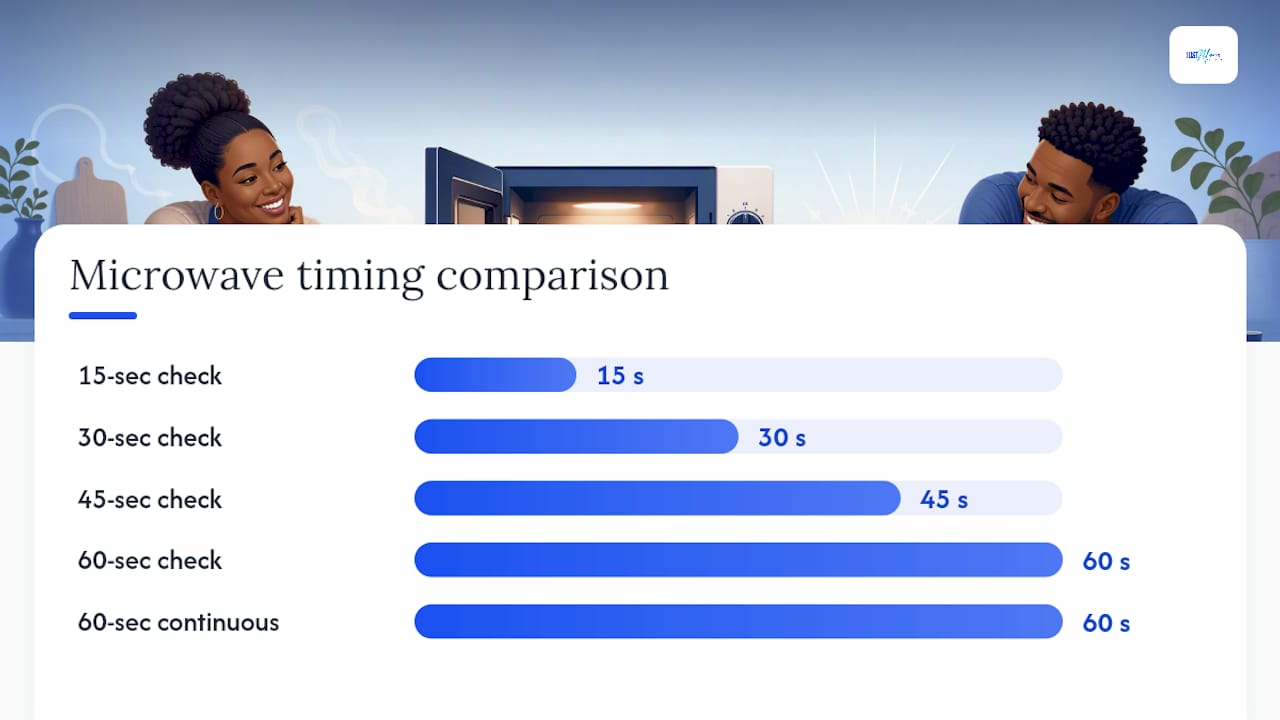
Timing matters more than any single ingredient choice. Protein denatures fast under heat, and a few extra seconds is the single most common reason a mug cake turns rubbery instead of tender.
- Start with 50 to 60 seconds on high for a standard batter
- Add 10 to 20 second increments after that, checking each time, rather than guessing a longer single cook
- Pull the cake when the center still looks slightly underdone. Residual heat and a 30 to 60 second rest finish the job without overcooking the edges
- Use an 8 to 12 ounce mug and leave about an inch of headspace, since the batter rises as it cooks and will overflow a mug that’s too full
If you don’t have a microwave handy, bake at 350°F for 10 to 15 minutes in an oven-safe ramekin, or run it 8 to 12 minutes in an air fryer at the same temperature. Both give a slightly firmer, more traditional cake texture than the microwave version.
Pro Tip: Set your microwave to 15 seconds and hit it repeatedly instead of typing in 60 seconds at once. It sounds tedious, but it’s the easiest way to catch the exact moment your cake goes from perfect to rubbery.
Which Protein Powder Works Best in a Mug Cake?
Not every protein powder behaves the same way under heat, and this is the single biggest factor separating a good mug cake from a bad one.
- Whey, casein, and smooth pea or plant blends generally bake well and hold moisture
- Collagen and many beef-based proteins tend to make cakes gummy or oddly flat, since they lack the structure whey and casein bring to a batter
- If your powder is highly absorbent (common with some plant blends), add 5 to 10% more liquid or fold in Greek yogurt to avoid a chalky bite
A quick number worth remembering: substituting protein powder for 20 to 33% of your flour works in most home recipes, as long as you adjust liquid slightly to compensate for the extra absorption. Our flour-swap breakdown walks through the exact ratios.
Certain flavored protein powders may work better in specific recipes depending on their moisture content and flavor profile; for example, a chocolate protein powder may work well in a chocolate base recipe, while others may benefit from added moisture or complementary mix-ins. For more on how different powders behave in batters generally, our guide to protein powder for baking covers the wider picture.
Why Is My Protein Mug Cake Rubbery or Dry?
Most mug cake failures trace back to one of four causes, and each has a fast fix.
-
Rubbery texture: usually overcooked, or made with collagen or beef protein. Cut cook time by 10 to 15 seconds next round and rest longer instead of cooking longer.
-
Dry or crumbly cake: too much flour relative to liquid. Add a tablespoon of milk or Greek yogurt and stir again before microwaving.
-
Sunken or flat center: batter was overmixed, or baking powder was old. Whisk gently instead of vigorously, and check your baking powder is still active.
-
Overflowed mug: filled past the three-quarter mark. Leave at least 25% headspace before microwaving.
A second short burst is fine if the center is only slightly underdone. If the whole cake looks wrong from the start (soupy, separated, or lumpy), it’s faster to stir in a bit more flour and start the timer over than to keep microwaving a broken batter.
How Do You Top and Store a Protein Mug Cake?
Keep toppings high-protein and low-sugar if you’re watching macros closely. A tablespoon of Greek yogurt, a drizzle of nut butter, fresh berries, or a dusting of cocoa powder all add flavor without much extra sugar.
- Greek yogurt or whipped cottage cheese for extra protein without heavy calories
- Berries or sliced banana for natural sweetness
- Sugar-free syrup or a few dark chocolate chips for a dessert feel
- Chopped nuts for crunch and healthy fat
Heavier toppings like full-fat nut butter or syrup add calories fast, so use a light hand if you’re tracking intake. Mug cakes store in the refrigerator for up to 24 hours in an airtight container. Reheat gently for 10 to 15 seconds in the microwave rather than a full cook cycle, which will dry it out.
What Are the Typical Macros in a Protein Mug Cake?
Macros swing widely depending on which protein and binder you use, so it helps to know the range before you build your own version.
A basic single-scoop protein mug cake with oat flour and milk lands around 16 grams of protein and 180 to 220 calories. Swap in cottage cheese or a full scoop of a denser powder, and protein climbs toward 25 to 31 grams, with calories rising depending on your binder and mix-ins.
Want more protein without changing texture much? Add a tablespoon of Greek yogurt or cottage cheese rather than a second scoop of powder, which can dry out the crumb. Want more calories for a post-workout meal? A tablespoon of nut butter adds roughly 90 to 100 calories of fat and flavor with minimal texture change. Adequate protein intake supports muscle recovery and increases satiety compared with lower-protein snacks, which is part of why a mug cake works as well after a workout as it does as a dessert.
Why Bother Making Your Own Protein Mug Cake?
Most dessert cravings aren’t really about sugar. They’re about wanting something warm, soft, and immediately satisfying, and a protein mug cake solves that faster than baking a real cake ever could. What surprises people most isn’t the speed. It’s how much the protein source changes the outcome, far more than any technique tip about stirring or timing.
The conventional wisdom treats protein powder like a drop-in flour replacement. It isn’t. Whey and casein behave like functional baking ingredients with their own moisture and setting properties, while collagen and beef proteins behave more like additives that were never meant to hold a batter together. Choosing the right powder for baking matters more than perfecting your microwave timing, and that’s the piece most quick recipe roundups skip entirely.
The other overlooked point is restraint. Every failed mug cake in our testing came from a batter that looked underdone getting one more 20 second burst “just to be safe.” Pulling it early and trusting the rest period is the single hardest habit to build, and the one that makes the biggest difference in the final bite.
— Just
Try These Protein Powders in Your Next Mug Cake
If you’ve been using a plain unflavored protein powder and wondering why your mug cake tastes like cardboard, the fix is simpler than a new recipe. It’s a better-tasting powder built for baking in the first place.
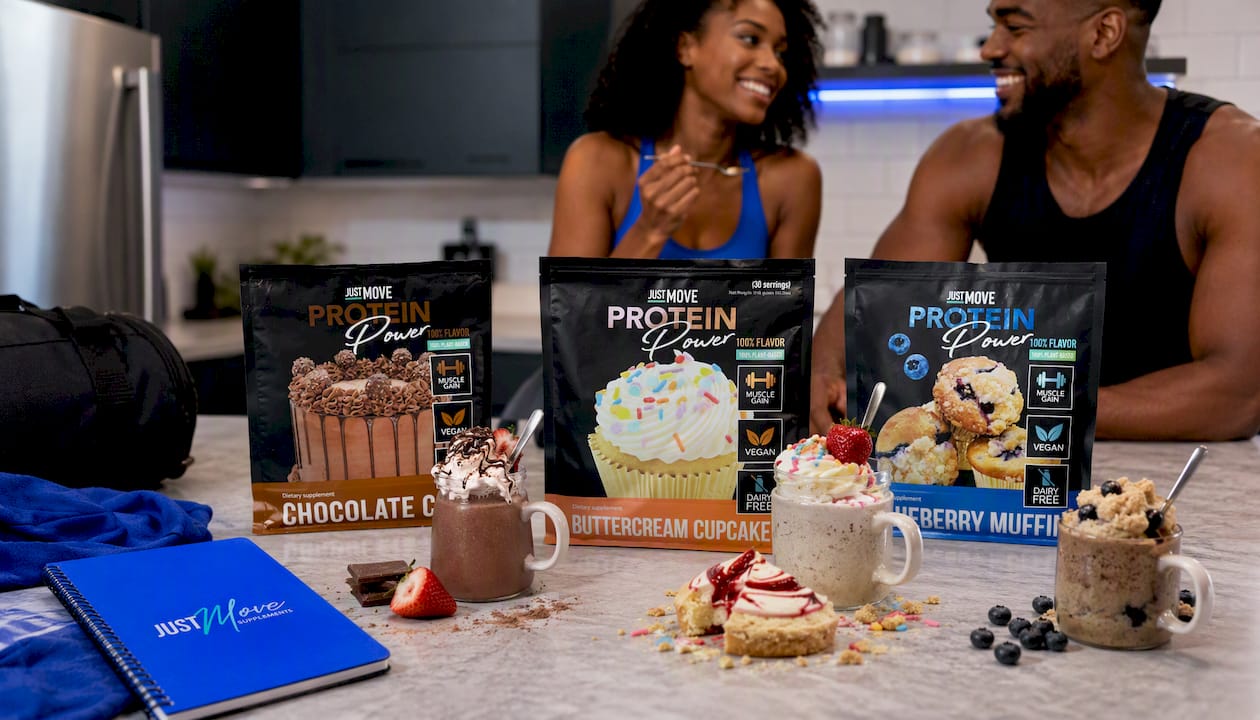
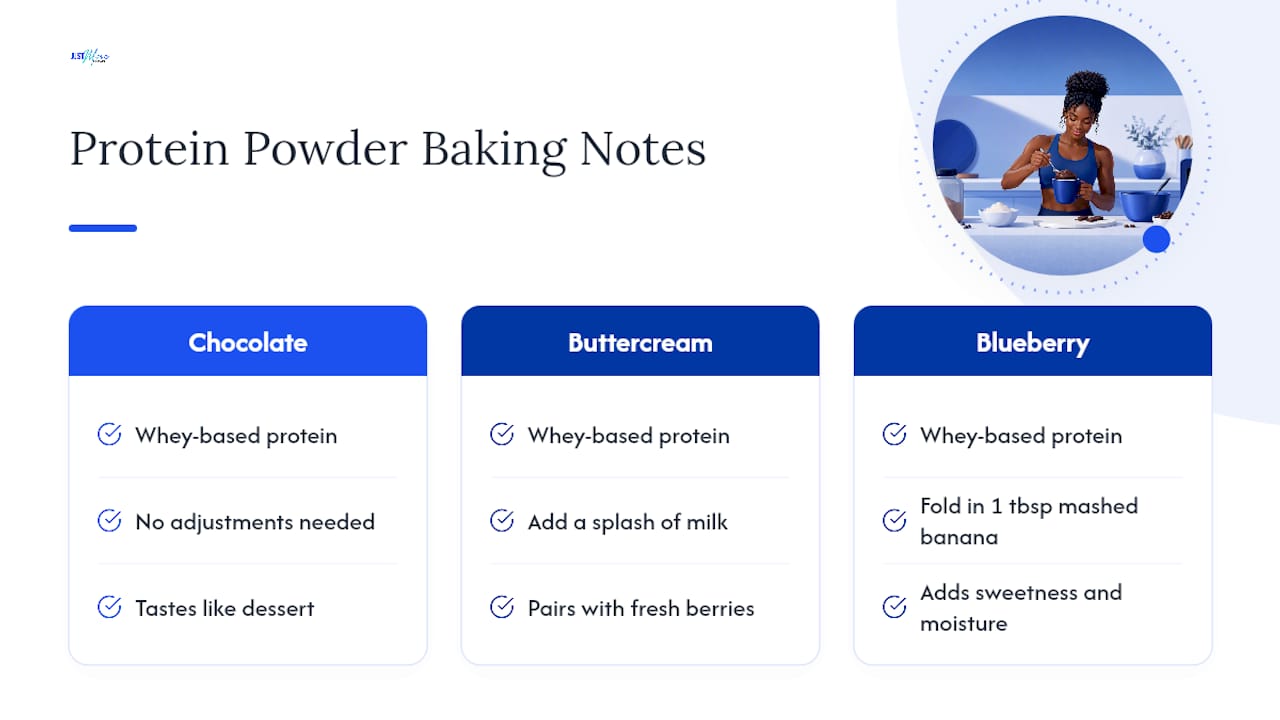
Chocolate Cake Protein drops straight into the chocolate base above with zero adjustments needed, and it tastes like dessert on its own. Buttercream Cupcake Protein works best with an extra splash of milk since it runs slightly drier than standard whey, and it pairs beautifully with fresh berries on top. Blueberry Muffin Protein shines with a tablespoon of mashed banana folded in for natural sweetness and moisture.
All three are whey-based, which means they hold structure in a microwave batter instead of turning gummy the way collagen or beef protein can. Pick a flavor, grab your measuring spoons, and check out the full lineup on Justmovesupplements to build your next mug cake around a powder that was actually made for it.
Sources
This guide draws on tested recipe guidance from Healthful Blondie on timing and powder behavior, Running to the Kitchen on oat flour structure and container sizing, Naomy’s Kitchen on cottage-cheese lava cake technique, and a PubMed entry on protein’s role in satiety and recovery. For managing cravings around healthy eating more broadly, Wild Foodz’s guide to eating well on holiday offers useful context.
Recommended


