Take a moderate amount of high-quality protein plus an amount of carbohydrate scaled to your body weight within 0–2 hours after training, repeat a similar feed roughly 2 hours later, and aim to meet your total daily protein needs. That is the complete recovery nutrition plan step by step, and everything below shows you exactly how to execute it.
Your immediate post-workout checklist:
- Protein: a moderate serving from a shake or whole-food source within 0–2 hours
- Carbohydrates: an amount scaled to your body weight alongside that protein dose
- Hydration: 16–24 oz of water or an electrolyte drink right after training
- Supplements: creatine daily (3–5 g) if you use it; electrolytes after heavy sweating
- Whole-food meal: 1–2 hours after your shake if appetite allows
- Pre-sleep protein: 30–40 g casein if daily intake may fall short
The Just MOVE Protein Sample Variety Pack covers the shake step conveniently, letting you test seven flavors before committing to a full tub.
Table of Contents
Why does protein and carbohydrate timing improve recovery?
Nutrient sensitivity is elevated immediately after training. Muscle cells are primed to absorb glucose and amino acids, which means the same dose of protein and carbohydrate produces a stronger anabolic response in the first two hours than it would at rest.
The NSCA recommends approximately 1.0–1.2 g of carbohydrate per kilogram of body weight plus 0.5–0.6 g/kg of protein immediately after resistance sessions, repeated at roughly 2-hour intervals. That combination restores muscle glycogen, attenuates protein breakdown, and stimulates muscle protein synthesis simultaneously.
“Carbohydrate-protein supplementation after resistance exercise can restore muscle glycogen, repair muscle damage, attenuate protein degradation, and initiate protein synthesis — making the post-exercise feed one of the highest-leverage nutritional moments of the day.” — NSCA Strength & Conditioning Journal
The strict 30-minute “anabolic window” is overstated. Sports nutrition evidence consistently shows that consuming protein and carbs within 2 hours is beneficial, and total daily protein intake matters more than hitting an exact minute mark. Missing the first 30 minutes is not a crisis. Missing your daily protein target is.
Protein dose that maximizes muscle protein synthesis: The ISSN position stand recommends 20–40 g of high-quality protein per feeding, spaced every 3–4 hours, to sustain elevated muscle protein synthesis across the day.
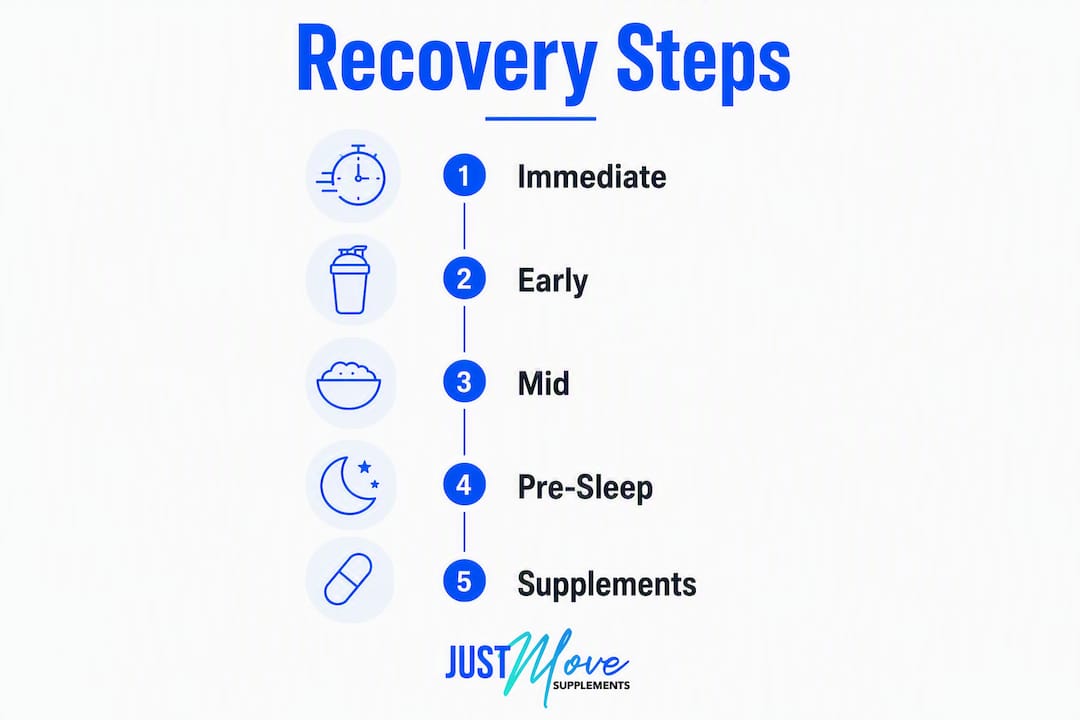
Your step-by-step recovery meal plan, hour by hour

This is the time for speed, not perfection. If appetite is low, a protein shake is the right call. Liquids digest quickly and deliver amino acids faster than solid food when your gut is still in exercise mode.
- Mix a moderate serving of whey or plant-based protein with water or milk.
- Add a moderate amount of fast carbohydrates such as a banana, white rice cake, or a small sports drink.
- Drink 16–24 oz of water or an electrolyte beverage.
Early recovery (30–120 minutes)
Appetite usually returns here. A whole-food meal now extends amino acid availability and adds micronutrients that a shake cannot match.
Sample meal table:
| Meal Option |
Protein |
Carbs |
Notes |
| Grilled chicken + white rice + broccoli |
20–40 g |
~60 g |
Classic resistance-training meal |
| Greek yogurt + banana + granola |
~20 g |
— |
Fast to prepare, high leucine |
| Tofu scramble + sweet potato + spinach |
~25 g |
~50 g |
Vegan-friendly, iron-rich |
| Cottage cheese + pineapple + whole-grain toast |
20–40 g |
— |
Budget-friendly, slow-digesting casein |
| Tuna wrap + apple |
~30 g |
~40 g |
Portable, high omega-3 |
For an average athlete, carbohydrate and protein targets in the recovery window are scaled to body weight accordingly. Those numbers fit the chicken-and-rice row almost exactly.
2–8 hours post-training
Keep protein feedings spaced every 3–4 hours. A second whole-food meal with lean protein, complex carbohydrates, and vegetables covers this window well. Fat intake is fine here; the only reason to limit fat immediately post-workout is that it slows gastric emptying, which matters most in the 0–30 minute window.
Pre-sleep (8+ hours post-training)
A 30–40 g casein or slow-digesting protein dose before bed supports overnight muscle protein synthesis, particularly when total daily intake is at risk of falling short.
- Vegan option: blend pea protein with almond milk and a tablespoon of nut butter.
- Whole-food option: cottage cheese with a handful of berries.
Pro Tip: Pre-portion a single-serve protein packet in your gym bag the night before. When appetite is low after training, the barrier to drinking a shake drops to zero.
Which recovery supplements actually help?
Protein powders, creatine, and electrolytes each have a clear, evidence-backed role. The key is knowing when they add value versus when whole food is sufficient.
Protein powders deliver rapid amino acid availability when appetite is low post-training. Research confirms that liquids are practical for the immediate window; whole foods are better for sustained amino acid release later in the day. Dose: 20–40 g per serving, scaled to the muscle mass involved. A full-body session calls for the higher end; an isolated arm workout may need only 20 g.
Creatine supports repeated-bout recovery and can marginally improve glycogen resynthesis. Take 3–5 g daily, consistently, rather than only on workout days. Loading phases (20 g/day for 5–7 days) saturate stores faster but are not required.
Electrolytes replace sodium, potassium, and magnesium lost through sweat. After sessions lasting more than 60 minutes or in hot conditions, an electrolyte drink or tablet alongside water is more effective than plain water alone.
Caffeine co-ingestion with carbohydrates can accelerate glycogen resynthesis during short recovery windows. The Sports Medicine review notes that 3–8 mg/kg caffeine alongside aggressive carbohydrate refeeding (~1.2 g/kg/h) benefits athletes with less than 4 hours between sessions.
“Supplements are most useful as a convenience and for rapid amino acid delivery when appetite is low. They should not replace balanced whole foods across the day.” — NSCA
When carbohydrate intake is at or above 1.2 g/kg/h, adding extra protein offers no additional glycogen benefit, per the MDPI Nutrients review. Protein addition matters most when carbohydrate intake is below 0.8 g/kg/h.
How to adjust your plan for muscle gain, fat loss, or endurance
Muscle gain
- Daily protein: 1.7–2.2 g/kg, distributed across 4–5 feedings
- Post-workout carbs: lean toward the higher end (1.0–1.2 g/kg) to support training volume
- Add a 30–40 g pre-sleep protein dose, ideally casein, to support overnight synthesis
- Total calorie surplus of 250–500 kcal/day drives consistent lean mass gain without excess fat
Fat loss and body composition
- Keep protein at 1.6–2.2 g/kg to preserve lean mass in a calorie deficit.
- Reduce total daily carbohydrates, but keep immediate post-workout carbs adequate when training intensity is high.
- Use a low-calorie protein shake post-workout when appetite is limited. Protein’s satiety effect also helps manage overall intake, as research on appetite control confirms.
- For body-composition goals, a realistic nutrition plan that pairs adequate protein with a moderate deficit is more sustainable than aggressive restriction.
Endurance training
- Prioritize carbohydrate refeeding: 1.2 g/kg/h when recovery time is under 4 hours
- Include 0.2–0.4 g/kg/h of protein alongside carbs during short turnarounds
- Co-ingesting carbohydrate and protein between bouts shorter than 24 hours produces small but meaningful performance gains of 0.6–1.6%, which can matter in competition
- Plan electrolytes and caffeine when back-to-back sessions occur the same day
Common recovery nutrition mistakes and how to fix them
Pro Tip: Take creatine every day, not just on training days. Consistent daily dosing maintains muscle saturation; skipping rest days creates gaps that reduce its effectiveness.
The most common mistake is obsessing over a 30-minute window while neglecting total daily protein. Hitting 25 g of protein within 20 minutes of training means nothing if you only reach 80 g total by end of day when your target is 160 g.
“Total daily protein intake and even spacing of feedings is the single strongest dietary lever for long-term recovery and adaptation.” — ISSN Position Stand
Do not do these:
- Fast immediately after high-volume sessions, especially when training twice a day
- Overload carbohydrates when session intensity was low; match carb intake to actual glycogen demand
- Ignore hydration and electrolytes after heavy sweating, then wonder why recovery feels sluggish
- Rely solely on stimulants or fat burners for recovery without adequate protein and carbs
- Ignore iron or vitamin D deficiency; both impair oxygen transport and muscle function, and no protein dose compensates for them
Micronutrients matter more than most athletes acknowledge. Antioxidants from colorful vegetables reduce exercise-induced oxidative stress. Vitamin C supports collagen synthesis for connective tissue repair. Magnesium aids muscle relaxation and sleep quality, which is where a significant portion of physical recovery actually happens. Sleep is not optional in a recovery nutrition plan; it is the period when growth hormone peaks and protein synthesis accelerates.
How this plan was built and who it is for
This recovery nutrition plan is built on guidance from the ISSN position stand on nutrient timing, NSCA Strength & Conditioning Journal recommendations, and peer-reviewed reviews published in Sports Medicine and Nutrients. Dosages were selected by cross-referencing these sources and scaling recommendations to a practical athlete population (60–100 kg body weight, recreational to competitive training frequency).
“The recommendations in this article prioritize ISSN and NSCA guidance, recent narrative reviews, and practical athlete-focused trials. Product mentions reflect genuine fit with the plan’s timing and convenience requirements.” — [brand_signal] | [author_bio]
Product mentions in this article are for Justmovesupplements products. Justmovesupplements provided no editorial direction over the nutritional recommendations; all dosing and timing guidance derives from the cited research.
Key Takeaways
A complete post-workout recovery nutrition plan requires 20–40 g of protein plus 1.0–1.2 g/kg of carbohydrate within 2 hours of training, spaced protein feedings every 3–4 hours across the day, and consistent hydration.
| Point |
Details |
| Immediate protein + carbs |
Take 20–40 g protein and 1.0–1.2 g/kg carbs within 0–2 hours post-training. |
| Daily protein target |
Hit 1.2–2.2 g/kg total daily protein, spaced every 3–4 hours, for sustained recovery. |
| Supplements when convenient |
Use protein shakes for speed and convenience; default to whole foods when time and appetite allow. |
| Hydration and electrolytes |
Drink 16–24 oz water or an electrolyte drink immediately after every session. |
| Justmovesupplements sample pack |
The Just MOVE Protein Sample Variety Pack lets you test seven flavors to find your ideal post-workout shake. |
What actually works in practice
The research is clear, but habits are where most athletes fall short. The single most reliable experiment you can run this week: immediately after each training session, consume 25 g of protein and 30–50 g of carbohydrates, then track how your soreness and energy feel by day four. Most athletes notice a real difference within one training week, not months.
The plan does not need to be perfect. It needs to be consistent. A shake you actually drink beats a meticulously planned meal you skip because you were not hungry.
Try Justmovesupplements for your post-workout protein
Figuring out which protein flavor you will actually drink after a hard session is half the battle. Justmovesupplements solves that with the Just MOVE Protein Sample Variety Pack, which gives you seven flavors to test before you commit to a full tub. No guessing, no wasted money on a flavor you end up avoiding.
For athletes focused on body composition alongside recovery, the Just Shred Green Apple Fat Burner is worth exploring. Pair it with adequate post-workout protein to preserve lean mass while in a calorie deficit. Fat-loss products work best when protein intake stays high, not when protein gets cut to reduce calories.
Disclosure: product links in this section are for Justmovesupplements products. All nutritional recommendations above are based on independent research.
Useful sources and further reading
- ISSN Position Stand: Nutrient Timing — Primary source for protein dose (20–40 g), feeding frequency (every 3–4 hours), and pre-sleep protein guidance.
- Sports Medicine Review: Nutritional Strategies to Improve Post-Exercise Recovery — Covers rapid glycogen refeeding, caffeine co-ingestion, and carbohydrate-protein performance gains for short recovery windows.
- Nutrients: Restoration of Muscle Glycogen and Functional Capacity — Details when protein addition improves glycogen resynthesis and when carbohydrate alone is sufficient.
- Healthline: Should You Eat After a Workout? — Accessible summary debunking the strict 30-minute anabolic window and emphasizing total daily protein.
Recommended


