Protein intake frequency is defined as how often you consume protein throughout the day, and it directly determines how many times your muscles receive a signal to grow and repair. Spreading your daily protein across multiple meals produces 20–30% greater 24-hour muscle protein synthesis (MPS) rates compared to loading the same total amount into one or two large doses. That gap translates to real, measurable differences in lean mass over time. Understanding why protein intake frequency matters gives you a concrete edge in both muscle building and recovery, without requiring you to eat more total protein.
Why protein intake frequency matters biologically
Muscle protein synthesis is the process your body uses to build and repair muscle tissue. It does not run continuously. Each time you eat a protein-rich meal, MPS activates within 1–2 hours and then plateaus, a phenomenon researchers call the “muscle full” effect. After that plateau, additional amino acids from the same meal are simply oxidized for energy rather than used to build muscle.
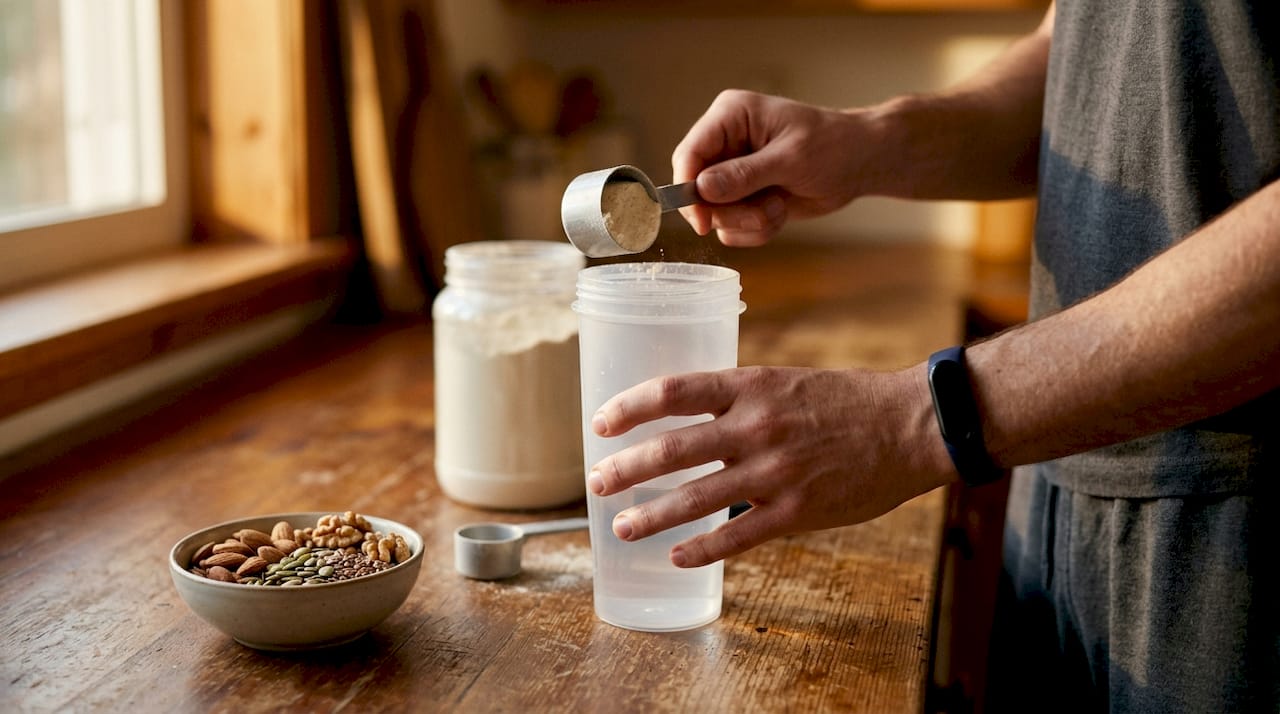
The key trigger for MPS is leucine, a branched-chain amino acid that activates the mTORC1 signaling pathway. You need to cross a minimum leucine threshold with each meal to switch MPS on. A meal that falls below that threshold produces little to no anabolic response, regardless of how much protein you ate at your last meal.
Each protein meal you eat triggers an independent MPS pulse. Eating four meals instead of two means four separate pulses instead of two. Those extra pulses accumulate into a meaningfully higher total MPS rate across the day. This is the core biological reason why distributing protein matters, not just hitting a daily number.
Research also shows diminishing returns above roughly 40g of protein per meal. Protein beyond that threshold does not proportionally increase MPS. It gets oxidized. Splitting a 160g daily target into four 40g meals is more effective than eating 80g twice, even though the total is identical.
- MPS activates 1–2 hours after a protein meal, then plateaus
- Leucine is the primary trigger via the mTORC1 pathway
- Each meal creates an independent anabolic pulse
- Excess protein above ~40g per meal is oxidized, not used for muscle
- Optimal spacing between meals is 3–5 hours to allow a full MPS cycle
Pro Tip: If you train fasted and skip breakfast, you are losing an entire MPS pulse. Adding 25–40g of protein at your first meal of the day is the single highest-leverage nutritional change most fitness enthusiasts can make.
What does research recommend for optimal protein intake frequency?
The current evidence-based consensus is clear: 3–4 protein-containing meals per day, each containing 25–45g of high-quality protein, represents the practical ideal for most fitness enthusiasts. This aligns directly with the 2017 International Society of Sports Nutrition (ISSN) Position Stand, which recommends eating 3–4 meals with 25–40g of high-quality protein each.
The per-meal target is more specific than most people realize. Research points to 0.4–0.55g of protein per kilogram of bodyweight per meal as the effective range. For a 180-pound (82kg) person, that works out to roughly 33–45g per meal. Hitting that range at each of your three or four meals covers both the leucine threshold and the upper limit of productive MPS stimulation.
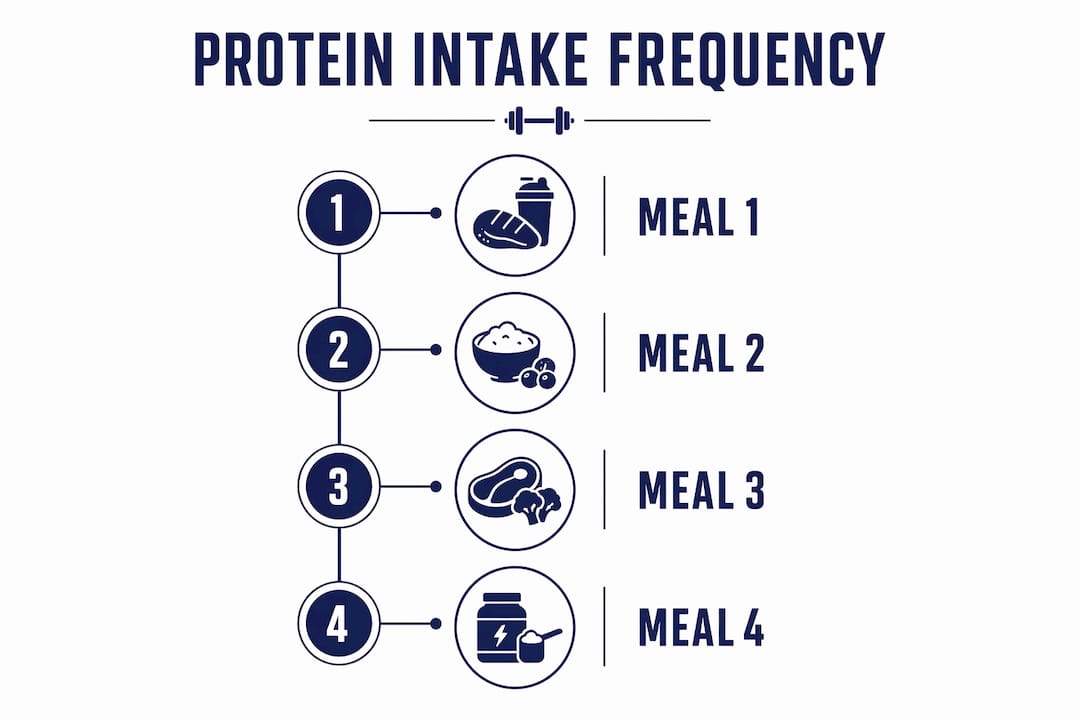
Eating more than five protein meals per day produces no additional hypertrophy benefit. Fewer than three meals reduces the number of anabolic pulses your muscles receive, which limits your ceiling for growth. The sweet spot is genuinely narrow.
Age changes the equation. Older adults require 30–50g of protein per meal to overcome anabolic resistance, a reduced sensitivity to leucine that develops with age. Younger fitness enthusiasts can trigger MPS with less per meal, but older adults need a higher dose to cross the same threshold.
| Scenario |
Meals per day |
Per-meal protein |
Expected outcome |
| Fewer than 3 meals |
1–2 |
60–80g |
Reduced MPS pulses, lower anabolic stimulus |
| Optimal range |
3–4 |
25–45g |
Maximum MPS pulses, best hypertrophy signal |
| More than 5 meals |
5+ |
15–20g |
No added benefit, leucine threshold risk |
| Older adults |
3–4 |
30–50g |
Overcomes anabolic resistance |
Intermittent fasting compresses your eating window, which forces you to fit your protein into fewer meals. Two large protein meals produce fewer muscle-building pulses than four smaller ones, even when total protein is matched. Short-term fasting does not impair MPS if you hit your daily target, but you need to distribute protein carefully within your eating window to preserve as many pulses as possible.
Does the anabolic window matter as much as frequency?
The anabolic window is the period after exercise when your muscles are most receptive to protein. It is real, but it is much wider than the fitness community once believed. Consuming protein within 1–2 hours post-workout is sufficient for recovery and growth. The old idea of a 30-minute window has been consistently disproven.
A meta-analysis of 23 studies found that timing effects disappear once total protein intake is controlled. Total daily protein intake is the primary predictor of muscle growth. Timing is a secondary variable that matters far less than most people assume.
“The anabolic window is better understood as an ‘anabolic day.’ Multiple protein feedings across 12–24 hours post-exercise maintain elevated MPS far more effectively than obsessing over a single post-workout meal. Your entire day of eating is your recovery window.”
This reframing has practical value. You do not need to rush a protein shake onto the gym floor the moment you finish your last set. What you do need is a protein-containing meal within a couple of hours before or after training, combined with consistent protein distribution across the rest of your day.
The key points on timing versus frequency:
- The post-workout window is 1–2 hours, not 30 minutes
- Total daily protein explains muscle gains better than meal timing
- Pre- and post-workout meals within 1–2 hours of training are sufficient
- Consistent daily protein distribution matters more than precise timing
- Think “anabolic day,” not “anabolic window”
How to apply protein frequency principles in daily life
Start with your total daily protein target before worrying about distribution. Total daily intake drives 80–85% of hypertrophic results. Distribution and frequency are meaningful optimizations, but they only matter once your total is on track. The target range for fitness enthusiasts is 1.6–2.2g of protein per kilogram of bodyweight per day.
Once your total is set, distribute it across 3–4 meals spaced 3–5 hours apart. Here is a practical daily structure for a 180-pound fitness enthusiast targeting 160g of protein:
-
Breakfast (7:00 AM): 40g protein. This is the meal most people skip or underload. The typical Western breakfast falls below the leucine threshold, leaving MPS dormant after an overnight fast. Eggs, Greek yogurt, cottage cheese, or a protein shake all work.
-
Lunch (12:00 PM): 40g protein. A chicken breast, canned salmon, or a high-protein grain bowl with legumes and a protein supplement mixed in covers this easily.
-
Post-workout or dinner (5:00–6:00 PM): 40g protein. Align this meal with your training session when possible. Lean beef, turkey, or a plant-based protein source with a supplement to fill the gap all work well.
-
Evening snack (9:00 PM): 40g protein. Casein-rich foods like cottage cheese or a slow-digesting protein supplement support overnight MPS and reduce morning catabolism.
Pro Tip: If your schedule is irregular, use an unflavored protein powder as a flexible tool. You can add it to oatmeal, soup, or a smoothie without changing the flavor of your meal, making it easy to hit your per-meal target regardless of what you are eating.
Protein supplements fill gaps without requiring you to restructure your entire diet. If your lunch is protein-light, adding a scoop of protein powder to a smoothie or mixing it into a sauce closes the gap in under a minute. Learning to incorporate protein supplements into existing meals is more sustainable than overhauling your eating habits entirely.
For intermittent fasting practitioners, compress your protein into 3–4 meals within your eating window. Space them as evenly as possible. Two large meals are better than one, but three is meaningfully better than two.
Key Takeaways
Distributing protein across 3–4 meals per day triggers more muscle-building pulses than any single large dose, making consistent frequency the most practical tool for maximizing muscle growth beyond total intake.
| Point |
Details |
| Frequency drives MPS pulses |
Each protein meal triggers an independent anabolic response; more meals mean more growth signals. |
| Per-meal target is 0.4–0.55g/kg |
Aim for 25–45g per meal to cross the leucine threshold and maximize each MPS pulse. |
| Total intake comes first |
Hit your daily protein target of 1.6–2.2g/kg before fine-tuning meal distribution. |
| The anabolic window is wide |
Protein within 1–2 hours of training is sufficient; the entire day functions as your recovery window. |
| Older adults need more per meal |
30–50g per meal helps overcome age-related anabolic resistance and preserve lean mass. |
I have worked with fitness enthusiasts who track their protein to the gram, splitting meals into five or six servings and stressing over every hour between feedings. That level of precision rarely produces better results than a simpler approach, and it often produces worse ones because the stress itself becomes a barrier to consistency.
The research is clear: total daily protein accounts for the vast majority of your results. Frequency is a meaningful secondary factor, particularly for serious athletes chasing the last few percentage points of performance. For most fitness enthusiasts, the biggest gains come from simply not skipping breakfast protein and not cramming all their protein into dinner.
Older adults and people in a caloric deficit get the most from optimized distribution. When you are eating less overall, each meal’s protein quality and quantity matters more. Spreading protein evenly protects lean mass during a cut far better than uneven distribution.
My honest recommendation: build a flexible routine that hits your daily target across three or four meals, and treat that as a non-negotiable. Do not let perfect timing become the enemy of consistent eating. The fitness enthusiast who eats 160g of protein in three solid meals every day will outperform the one who obsesses over five perfectly timed servings but misses days because the schedule is too rigid.
— Just
Protein options that fit your daily frequency goals
Building a consistent protein schedule is straightforward when you have the right products on hand. Justmovesupplements offers the Plain and Simple Unflavored Protein as a flexible, no-fuss option you can add to any meal without changing its taste. It fits perfectly into the breakfast gap, a mid-afternoon snack, or an evening serving.
Not sure which protein flavor works best for your routine? The protein sample variety pack lets you try multiple flavors before committing to a full tub. That means you can rotate flavors across your daily meals, keeping things fresh and making it easier to stay consistent. Justmovesupplements builds every product with both taste and effectiveness in mind, so hitting your per-meal protein targets never feels like a chore.
FAQ
How many protein meals per day builds the most muscle?
Three to four protein-containing meals per day produces the most muscle-building pulses. Eating fewer than three reduces anabolic stimulation; more than five provides no additional benefit.
Does protein timing around workouts really matter?
Timing matters less than total daily intake. Consuming protein within 1–2 hours before or after training is sufficient, and total daily protein is the primary predictor of muscle growth.
How much protein should each meal contain?
The effective range is 0.4–0.55g of protein per kilogram of bodyweight per meal, which equals roughly 25–45g for most fitness enthusiasts. Older adults should aim for the higher end of 30–50g per meal.
Can intermittent fasting work with optimal protein frequency?
Yes, if total daily protein is met. Compress your protein into 3–4 meals within your eating window and space them as evenly as possible to preserve multiple MPS pulses.
Is a protein supplement necessary to hit per-meal targets?
Not strictly necessary, but protein supplements make it significantly easier to hit 25–45g per meal without restructuring your entire diet. They are especially useful for filling the common breakfast protein gap.
Recommended


