Added sugar in a meal replacement changes your blood glucose, satiety, and total caloric intake — so yes, it matters significantly for weight management and metabolic health. The immediate action: look for options with minimal added sugars (ideally under 10 g per serving), at least 20 g of protein, and at least 3 g of fiber. The American Heart Association recommends roughly 25 g of added sugar per day for women and 36 g for men, meaning a single sugary shake can consume a large portion of that daily budget before you eat anything else. Justmovesupplements offers protein options designed with these benchmarks in mind, making it easier to stay on track without sacrificing flavor.
Table of Contents
Why sugar content matters in meal replacements for weight management
Meal replacements work by simplifying portion control and helping you maintain a calorie deficit. That is the core mechanism. But three levers determine whether a given product actually delivers on that promise:
-
Calories (portion control): A well-formulated meal replacement gives you a defined caloric window, typically 200–400 kcal, so you are not guessing. A product with high added sugar can push the calorie count higher and, more importantly, leave you hungry again sooner.
-
Protein (satiety and lean mass): Protein is the most satiating macronutrient. Research consistently shows that higher protein intake reduces appetite and helps preserve lean muscle during a calorie deficit. A shake with higher protein than carbohydrates will keep you fuller longer than one with lower protein and higher carbohydrates, even at the same calorie count.
-
Convenience and adherence: The best plan is the one you stick to. Palatability matters, but some products use added sugar to drive that palatability, which can undermine the very goals the product is supposed to support.
A calorie deficit is the dominant driver of weight loss. Sugar affects hunger, cravings, and adherence, all of which influence whether you maintain that deficit day after day.
What happens to your body in the first three hours after a high-sugar shake
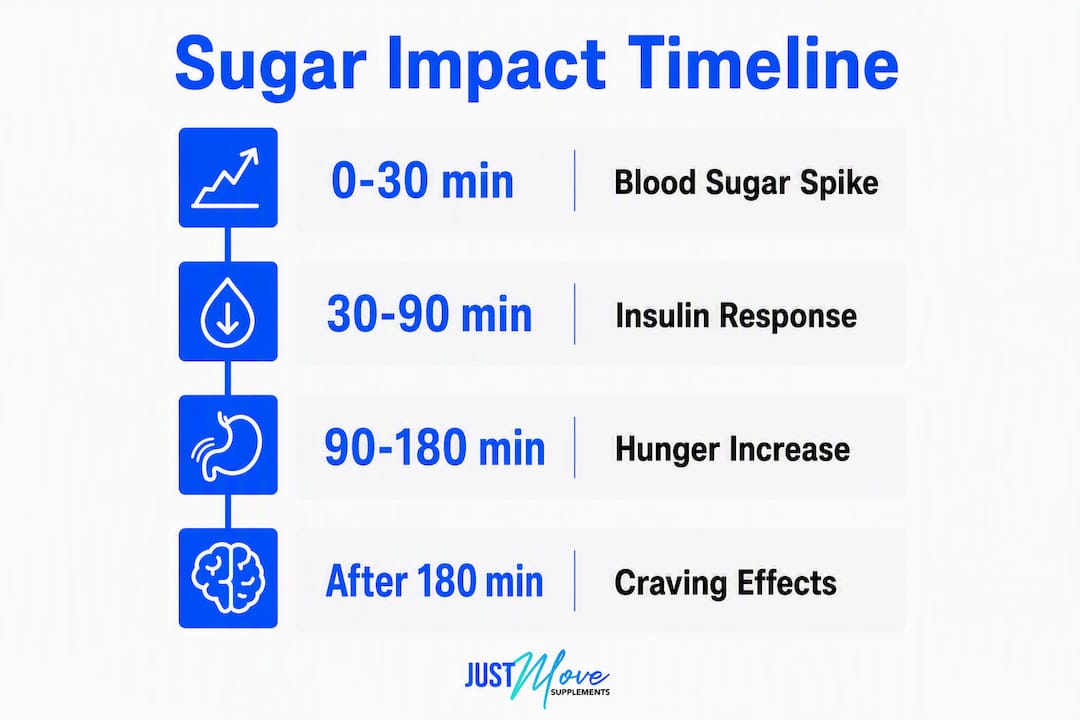
Simple sugars raise blood glucose faster than complex carbohydrates or fiber-rich carbohydrates, triggering a larger insulin response and shortening the window of satiety. Here is how that plays out in real time:
-
0–30 minutes: Blood glucose rises rapidly as simple sugars absorb quickly into the bloodstream. You feel an initial energy boost.
-
30–60 minutes: Insulin surges to clear glucose from the blood. The speed and magnitude of this response depend on the total sugar load and the presence (or absence) of fiber and protein to slow absorption.
-
60–120 minutes: Blood glucose can drop toward or below baseline, a rebound effect sometimes called reactive hypoglycemia. Hunger and cravings return, often stronger than before the shake.
-
2–3 hours: The brain’s reward pathway, activated by palatable sugar-fat combinations, can push you toward another high-sugar food or drink. This is not a willpower failure; it is a documented neurological response.
Liquid meal replacements are generally less filling than solid food at the same calorie count, which amplifies these effects. A high-protein, high-fiber shake slows gastric emptying and blunts the glucose spike. A low-protein, high-sugar shake does the opposite.
Clinical note: People using insulin or insulin secretagogues need to plan carefully around the blood-sugar effects of any meal replacement and should consult a clinician before making changes.

Long-term health outcomes tied to high added sugar in meal replacements
Regularly choosing high-added-sugar meal replacements can worsen blood-sugar control, increase total caloric intake, and raise cardiometabolic risk over time. The U.S. guidance is clear on the numbers.
| Guideline |
Added-Sugar Limit |
Context |
| American Heart Association (women) |
~25 g/day |
A shake high in added sugar uses a large portion of this daily limit |
| American Heart Association (men) |
~36 g/day |
A shake with substantial added sugar uses more than half of the daily limit |
| Dietary Guidelines for Americans |
<10% of daily calories |
On a 2,000 kcal diet, that is 50 g/day maximum |
| Recommended per-serving target |
≤10 g added sugar |
Ohio State Health guidance for meal replacements |
The AHA daily limit for women is approximately 25 g of added sugar. A single high-sugar meal replacement shake can contain a significant portion of the daily added sugar limit, leaving almost no room for any other added sugar across the rest of the day.
For people managing diabetes or insulin resistance, the stakes are higher. Meal replacements formulated for diabetes often use lower-carbohydrate profiles, but they are not automatically complete meals and should be paired with whole foods and clinician guidance. Sugar alcohols, common in bars marketed as low-sugar, can cause bloating and gastrointestinal discomfort in sensitive individuals at higher doses, a risk flagged by nutrition experts that does not always appear prominently on packaging.
How to read a meal-replacement label and spot hidden sugars
Labels contain everything you need. The challenge is knowing where to look and what the names mean.

The Nutrition Facts panel lists “Total Sugars” and, directly below it, “Added Sugars” with a gram count and a %DV. The %DV for added sugars is based on a 50 g daily reference value (from the Dietary Guidelines). A product showing 10 g added sugars per serving is already at 20% of that reference before you eat a single meal.
The ingredient list tells you the source. Sugar appears under many names: sucrose, evaporated cane juice, maltodextrin, brown rice syrup, honey, agave, and various syrups. If any of these appear in the first three ingredients, the product is built around sweetness, not nutrition. Sugar alcohols (sorbitol, xylitol, erythritol, maltitol) show up in “sugar-free” products; they contribute calories and can cause GI symptoms at higher doses.
Red flags on a label:
- More than 10 g of added sugar per serving
- “Sugar” or a sugar synonym listed among the top three ingredients
- Multiple different sugar names spread through the ingredient list (a formulation tactic to keep any single sugar lower on the list)
- Sugar alcohols as the primary sweetener in a bar
Green flags on a label:
- Added sugars ≤5–10 g per serving
- Protein ≥20 g per serving
- Fiber ≥3 g per serving
- A single whole-food carbohydrate source (oats, sweet potato powder) rather than multiple syrups
- Vitamins and minerals present, indicating a complete nutritional profile
Pro Tip: When a powder lists “natural flavors,” do not assume low sugar. Always check the Added Sugars line on the Nutrition Facts panel directly, since natural flavors can accompany significant sweetener additions.
For a deeper look at sweetener types and what they mean for your goals, the guide to artificial sweeteners in protein from Justmovesupplements breaks down the options clearly.
A 60-second scoring method for choosing the right meal replacement
Prefer options that hit these numeric benchmarks per serving to function as a real meal rather than an expensive snack.
Per-serving benchmarks:
- Added sugar: ≤10 g (aim for ≤5 g if managing blood sugar)
- Protein: ≥20 g
- Fiber: ≥3 g
- Total calories: 200–400 kcal
- Saturated fat: minimal
- Vitamins and minerals: present
60-second product score (run through this in order):
-
Check calories. Is it 200–400 kcal? Below 200 kcal is a snack, not a meal replacement.
-
Check protein. Is it ≥20 g? If protein is lower than total carbohydrates, flag it.
-
Check added sugar. Is it ≤10 g? If it is over 15 g, it fails the basic threshold.
-
Check fiber. Is it ≥3 g? WebMD guidance specifically calls out fiber as a key marker of a quality shake.
-
Check ingredient quality. Are the first three ingredients a protein source, a whole-food carbohydrate, and a fat source? Or are they a sugar and two more sugars?
A product that passes steps 1–4 but fails step 5 is worth a second look. A product that fails steps 2 and 3 together is a dessert drink, not a meal replacement. For practical guidance on turning a protein powder into a balanced meal, the how-to guide from Justmovesupplements walks through exactly that.
How palatability and reward responses can work against your goals
High-sugar meal replacements can contribute to overeating through a well-documented behavioral mechanism, not just excess calories. Palatable combinations of sugar, fat, and salt activate the brain’s pleasure center and are associated with higher intake and repeat consumption. The problem is not just the sugar itself; it is what the sweetness signals to your brain.
Dietitians note that consumers sometimes assume a meal replacement “compensates” for overindulging elsewhere, a belief that Today’s Dietitian identifies as a misleading behavioral pattern. Believing you have “earned” a treat because you had a shake earlier can reduce motivation for physical activity and other health behaviors. The shake becomes a psychological permission slip rather than a nutritional tool.
Practical mitigation strategies:
- Rotate flavors to prevent habituation to a single sweet profile
- Choose lower-added-sugar flavor options when available
- Add a tablespoon of nut butter, a handful of spinach, or a scoop of oats to increase satiety and slow glucose absorption
- Track total daily added sugar across all sources, not just the shake
- Try a whole-food-inspired shake recipe to get satisfying flavor without relying on added sugar
Pro Tip: Swap your current high-sugar flavor for a lower-sugar alternative for two weeks and track your cravings and total daily food intake. Most people notice a measurable reduction in mid-afternoon hunger and snack-driven calories.
Industry formulation research confirms that sweetness is a deliberate palatability driver in many ready-to-drink and powdered products, designed to encourage repeat purchase. Knowing that helps you shop with intention rather than instinct.
How sugar levels vary across meal replacement products
The range across the market is wider than most people expect. Today’s Dietitian describes some products as resembling desserts in their macronutrient profile, while others lack sufficient protein or calories to function as a genuine meal replacement at all.
A high-quality protein powder used as a meal replacement can have low total sugar with high protein. Some ready-to-drink shakes have higher added sugar with lower protein. Certain meal-replacement bars may contain sugar alcohols and saturated fat amounts that are not obvious without reading the full Nutrition Facts panel.
The variation is not random. Formulation choices reflect cost, texture, and shelf stability as much as nutrition. Sweeteners mask the bitterness of certain protein sources. Syrups improve texture in bars. Understanding this helps explain why two products with similar calorie counts can have dramatically different effects on hunger and blood sugar over the course of a day.
For people managing type 2 diabetes, peer-reviewed research supports structured meal replacement programs as a tool for glycemic control and weight reduction, but specifically notes that product selection matters: lower-carbohydrate, lower-added-sugar formulations show better outcomes in clinical settings.
Key Takeaways
Low added sugar, adequate protein, and sufficient fiber are the three non-negotiable markers of a meal replacement that genuinely supports weight management and blood-sugar control.
| Point |
Details |
| Added sugar per serving |
Target ≤10 g added sugar per serving; the AHA daily limit for women is ~25 g total. |
| Protein and fiber benchmarks |
Aim for ≥20 g protein and ≥3 g fiber to make a shake meal-worthy, not snack-worthy. |
| Label-reading priority |
Check the Added Sugars line and ingredient order before trusting front-of-pack claims. |
| Behavioral risk |
High-sugar palatability can trigger reward-driven overconsumption and a false compensation mindset. |
| Justmovesupplements options |
The Just MOVE Protein Sample Variety Pack lets you compare flavors and sugar profiles before committing to a full-size product. |
The case for taking sugar seriously in your supplement stack
The conventional wisdom in fitness circles tends to focus on calories in versus calories out, and that framing is not wrong. But it undersells how much sugar content shapes the experience of eating in a deficit. A shake that spikes your blood glucose and leaves you hungry 90 minutes later is not a neutral caloric event. It is an active obstacle to adherence.
What gets overlooked is the behavioral dimension. The reward response to sweetness is real and measurable, and it does not care about your goals. Choosing a lower-added-sugar option is not about deprivation; it is about removing a variable that works against you. The research on palatability-driven overconsumption makes this clear: the product that tastes the most indulgent is often the one that makes the overall plan harder to sustain.
The label-reading skills covered here take about 60 seconds per product. That investment pays off every time you open a new tub or grab a ready-to-drink option. And the selection criteria, protein first, fiber second, added sugar third, give you a fast, repeatable filter that does not require a nutrition degree to apply.
Justmovesupplements products that meet the low-sugar criteria
If you have been applying the selection rubric from this article, you already know what to look for. Justmovesupplements builds its protein line with performance and taste in mind, and the products below map directly to the benchmarks covered here.
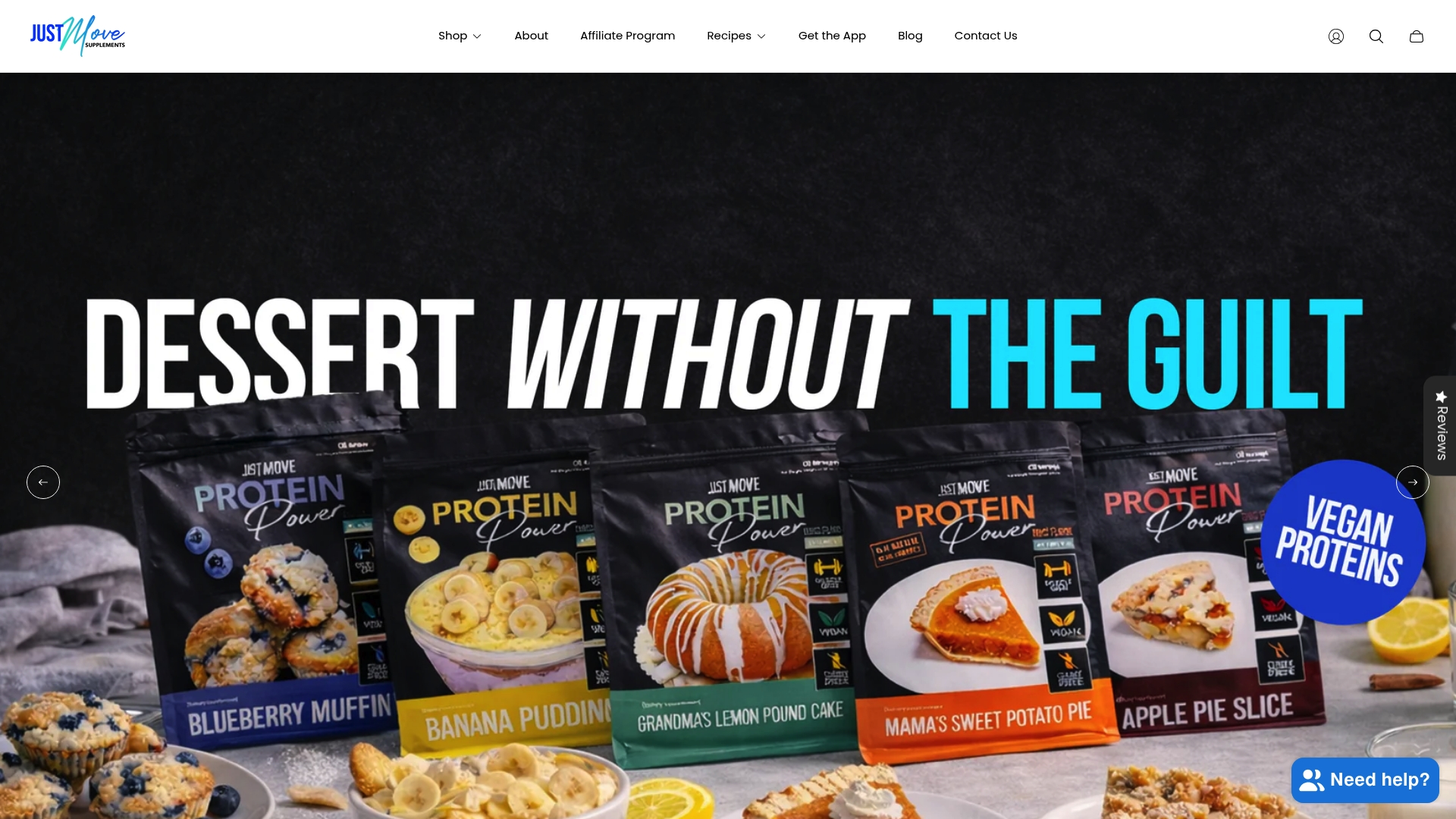
The Just MOVE Protein Sample Variety Pack (7 Flavors) is the practical starting point. Instead of committing to a full tub of a flavor you have never tried, you get seven samples to compare taste, mixability, and how each sits with your appetite. It is the lowest-risk way to find a high-protein, lower-added-sugar option that you will actually use consistently.
The Just Shred Green Apple Fat Burner is designed for people pairing a structured meal plan with a fat-loss goal. It complements a low-sugar meal replacement approach by supporting energy and metabolism without adding a significant sugar load to your day.
Browse the full protein samples collection to find the right fit for your goals and taste preferences.
This article is general nutrition information, not medical advice. If you are managing diabetes, insulin resistance, or any metabolic condition, consult a registered dietitian or clinician before changing your supplement routine.
Authoritative sources and further reading
Recommended


