Manufacturers add artificial sweeteners to protein powders primarily to make them taste good while keeping calories and sugar near zero, and to mask the natural bitterness that comes from processing. For most healthy fitness users, moderate consumption of FDA-approved sweeteners is considered safe within established limits. If you experience bloating, cravings, or GI discomfort, switching to an unsweetened protein for two weeks is the fastest way to know whether sweeteners are the cause.
- Taste is the top driver: without sweeteners, most protein powders taste chalky, bitter, or flat.
- Sweeteners let manufacturers hit “zero sugar” and low-calorie claims without sacrificing palatability.
- High-intensity sweeteners work at milligram levels, so they add almost no caloric load.
- Safety is well-established within Acceptable Daily Intake (ADI) limits, but long-term metabolic and microbiome effects are still being studied.
- Special populations, including people with PKU, pregnant women, and those with IBS or SIBO, should pay closer attention to which sweeteners they consume.
Statistic callout: The FDA’s ADI for sucralose is 5 mg per kilogram of body weight per day. A 70 kg person would need to consume roughly 15 scoops of typical protein powder in a single day to approach that limit.
Table of Contents
What counts as an artificial sweetener vs. a natural one?
The term “artificial sweetener” refers to synthetic high-intensity compounds that provide sweetness with little to no caloric contribution. On a protein label, you will see them listed individually by name or grouped under “sweeteners” or “other ingredients.” Understanding the three main categories helps you read any label quickly.
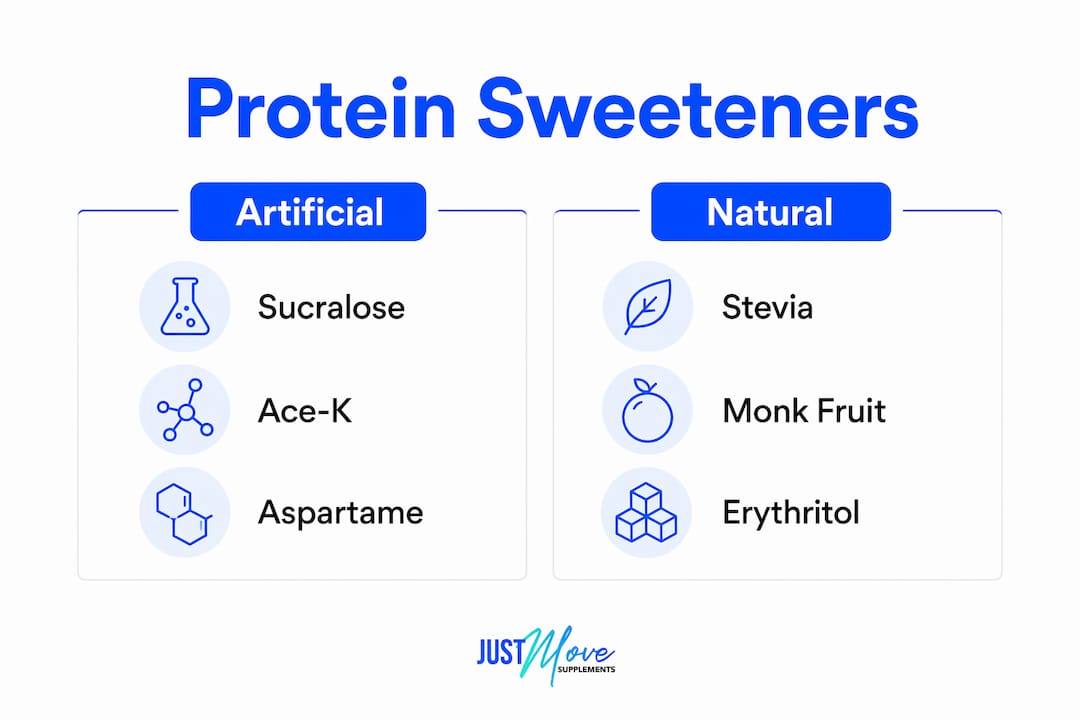
Artificial high-intensity sweeteners are chemically synthesized and approved by the FDA as food additives. Examples include sucralose, acesulfame potassium (Ace-K), aspartame, and saccharin. They are typically hundreds of times sweeter than table sugar.
Natural non-nutritive sweeteners come from plant sources and are often marketed as “clean label” alternatives. Stevia (derived from Stevia rebaudiana, standardized as steviol glycosides or Reb A/Reb M) and monk fruit (standardized as mogrosides) fall into this category. They are still high-intensity sweeteners, just not synthetically produced.
Sugar alcohols are a third class. Erythritol, xylitol, and sorbitol are partially absorbed by the body and provide fewer calories per gram than sugar. They appear on labels as individual ingredient names and are sometimes listed under “total carbohydrates” as “sugar alcohols.”
-
Artificial: sucralose, Ace-K, aspartame, saccharin
-
Natural non-nutritive: stevia (steviol glycosides), monk fruit (mogrosides)
-
Sugar alcohols: erythritol, xylitol, sorbitol, maltitol
Which sweeteners are actually in your protein powder?
Sucralose and Ace-K remain the most common artificial sweeteners in mass-market protein powders, though natural alternatives are growing. Each sweetener brings a distinct sensory profile and a set of formulation trade-offs that manufacturers weigh carefully.
Sucralose
Roughly 600 times sweeter than sugar, sucralose delivers a clean, sugar-like sweetness with minimal aftertaste at low doses. It is thermally stable enough for most shakes but can form chlorinated by-products when used in high-heat baking, which matters if you regularly make protein pancakes or muffins. A 2022 Cell study found microbiome changes and impaired glycemic responses in a small human trial, though the research is preliminary.

Acesulfame potassium (Ace-K)
About 200 times sweeter than sugar, Ace-K has a slightly bitter metallic note at higher concentrations. Manufacturers almost always pair it with sucralose rather than using it alone, because the blend smooths out aftertaste and reduces the total amount of each sweetener needed. Animal studies have flagged gut dysbiosis and sex-dependent inflammatory effects at elevated doses, though human evidence at typical serving levels is limited.
Aspartame
Aspartame is hundreds of times sweeter than sugar and breaks down at high temperatures, so it appears mainly in ready-to-drink protein beverages rather than dry powders. People with phenylketonuria (PKU) must avoid it entirely because it contains phenylalanine, which they cannot metabolize. The FDA considers it safe for the general population within its ADI.
Saccharin
One of the oldest approved sweeteners, saccharin is about 300 times sweeter than sugar but carries a noticeable metallic aftertaste. It appears less frequently in modern protein powders, largely replaced by sucralose and Ace-K.
Stevia (Reb A / Reb M)
Stevia extracts are a few hundred times sweeter than sugar and are popular with clean-label brands. The catch: roughly 20–25% of people detect a bitter or licorice-like aftertaste, particularly with Reb A. Reb M has a cleaner profile but generally costs more to produce.
Monk fruit (mogrosides)
Monk fruit sweetener is many times sweeter than sugar and has a mild, fruity finish. It is more expensive than stevia and significantly more expensive than sucralose, which limits its use to premium or specialty products.
Erythritol and other sugar alcohols
Erythritol is somewhat less sweet than sugar and is well-tolerated at moderate amounts compared to other sugar alcohols. Sorbitol and maltitol are more likely to cause GI distress at higher doses. Sugar alcohols add a slight cooling mouthfeel that some users enjoy and others find off-putting.
| Sweetener |
Relative Sweetness |
Sensory Notes |
Key Trade-Off |
| Sucralose |
~600× |
Clean, sugar-like |
Microbiome questions; avoid high-heat baking |
| Ace-K |
~200× |
Slightly bitter alone |
Usually blended; animal microbiome concerns |
| Aspartame |
~200× |
Clean, heat-sensitive |
Unsafe for PKU; degrades in dry powder |
| Saccharin |
~300× |
Metallic aftertaste |
Largely replaced in modern formulas |
| Stevia (Reb A) |
~200× |
Bitter/licorice note possible |
20–25% of users detect off-taste |
| Monk fruit |
~200× |
Mild, fruity |
Higher cost; limited to premium products |
| Erythritol |
— |
Cooling mouthfeel |
GI tolerance generally good at low doses |
Pro Tip: If a label lists both sucralose and Ace-K, the manufacturer is using a blend to balance sweetness onset and reduce aftertaste. This is standard practice, not a red flag, but it does mean two sweeteners instead of one.
Why do manufacturers add sweeteners to protein in the first place?
The short answer: protein powders are naturally bitter, and most consumers will not buy a product that tastes unpleasant. Filtration and hydrolysis processes expose hydrophobic amino acids on the protein surface, creating a pronounced bitter flavor that is especially strong in isolates and hydrolysates. High-intensity sweeteners, used at milligram levels, mask that bitterness without adding meaningful calories or bulk.
Beyond taste, there are clear commercial incentives. A “zero sugar” or “low-carb” claim on the front of a tub is a proven marketing asset, particularly for keto and weight-management audiences. Sweeteners make that claim possible while keeping the product palatable. They also extend flavor stability across a product’s shelf life, since sugar can interact with proteins through Maillard reactions and alter color and taste over time.
Cost is another factor. High-intensity sweeteners are effective at tiny quantities, so even premium options like monk fruit add less to the cost-per-serving than a meaningful amount of real sugar or fruit powder would. Manufacturers also use “natural flavors” alongside sweeteners to round out a flavor profile, which can obscure the full picture of what is contributing to taste.
You can learn more about the science of flavor masking and how different sweeteners affect the sensory experience of protein powders.
Are artificial sweeteners in protein powder actually safe?
Most FDA-approved sweeteners are considered safe for healthy adults when consumed within their ADI limits, and typical protein powder use stays well below those thresholds. That said, the evidence on long-term metabolic and microbiome effects is genuinely mixed, and researchers continue to call for more mechanistic, long-term randomized controlled trials.
Regulatory context matters here. The FDA has granted Generally Recognized as Safe (GRAS) status or formal food additive approval to sucralose, Ace-K, aspartame, saccharin, stevia, and monk fruit. Each carries a specific ADI. Sucralose’s ADI is 5 mg per kilogram of body weight per day, meaning a 70 kg person would need to consume a very large amount of a typical protein powder in one day to approach that limit. Real-world use is nowhere near that level.
Where the science gets more complicated is in longer-term observational data. Systematic reviews note that randomized trials often show neutral or modest short-term benefits for sugar and weight reduction, while long-term cohort studies show inconsistent and sometimes adverse associations. Confounding and reverse causation make those cohort findings hard to interpret. Animal studies, particularly for sucralose and Ace-K, show stronger microbiome disruption signals than human trials have confirmed.
A professional position statement from Diabetes UK recommends low- and no-calorie sweeteners as one tool for reducing free sugar intake, not as a stand-alone solution for weight control, and calls for more research on long-term outcomes.
Special populations to note:
-
PKU: Aspartame contains phenylalanine and is unsafe for people with phenylketonuria.
-
Pregnancy and children: Regulatory bodies advise caution; some guidelines recommend limiting intake.
-
IBS / SIBO: Sugar alcohols and some artificial sweeteners can worsen symptoms.
-
Migraine sensitivity: Some individuals report headache triggers with aspartame or Ace-K.
| Sweetener |
FDA Status |
ADI (mg/kg body weight/day) |
| Sucralose |
Approved food additive |
5 |
| Acesulfame-K |
Approved food additive |
15 |
| Aspartame |
Approved food additive |
— |
| Saccharin |
GRAS |
15 |
| Stevia (steviol glycosides) |
GRAS |
4 (as steviol equivalents) |
| Monk fruit |
GRAS |
Not established (considered safe) |
What do sweeteners actually mean for your training and digestion?
For most healthy fitness users, moderate consumption of sweetened protein powders has no meaningful negative impact on training performance or body composition. The sweeteners themselves contribute negligible calories, so they do not interfere with caloric targets. Appetite and craving responses, however, are more individual. Some research suggests that highly sweet flavors, even without calories, can sustain preferences for sweet foods, though the evidence is not strong enough to make a universal recommendation.
GI tolerance is where individual variation matters most. Sugar alcohols like sorbitol and maltitol are the most common culprits for bloating and loose stools, especially at higher serving sizes. Erythritol is generally better tolerated. Artificial sweeteners like sucralose and Ace-K rarely cause acute GI issues at typical doses, but people with IBS or SIBO may be more sensitive. If you notice bloating, cramping, or changes in digestion after starting a new protein powder, the sweetener blend is a reasonable first suspect.
Switching to an unsweetened protein for two weeks is a practical and low-cost way to test whether sweeteners are driving symptoms. Track your digestion, energy, and cravings during that period. If symptoms resolve, you have your answer.
Practical do/don’t list:
-
Do try a sample size or small bag before committing to a full tub of any new protein.
-
Do track GI symptoms for the first two weeks with any new product.
-
Do consult a registered dietitian if you have IBS, SIBO, or a diagnosed metabolic condition.
-
Don’t assume “natural sweeteners” are automatically better tolerated; stevia and monk fruit can still cause reactions in sensitive individuals.
-
Don’t rely on sweetened protein powders as a primary strategy for weight loss; whole-food nutrition remains the foundation.
How to read a label and choose the right protein for you
The fastest check: scan the ingredient list for any of the names below. If you want to avoid artificial sweeteners, look for a “no artificial sweeteners” claim on the front panel and then verify it in the ingredient list.
Ingredient names to watch for:
-
Artificial: sucralose, acesulfame potassium, acesulfame-K, Ace-K, aspartame, saccharin
-
Natural non-nutritive: steviol glycosides, stevia leaf extract, Reb A, Reb M, monk fruit extract, luo han guo
-
Sugar alcohols: erythritol, xylitol, sorbitol, maltitol, mannitol, isomalt
Once you know what is in a product, here is a practical shopping process:
-
Check the front panel first. Claims like “no artificial sweeteners,” “naturally sweetened,” or “unsweetened” narrow your options quickly, but always verify in the ingredient list.
-
Read the full ingredient list. Sweeteners appear near the end, after protein sources and flavoring agents. Look for any of the names above.
-
Prefer single-sweetener formulas if you have sensitivity. Blends make it harder to identify which ingredient is causing a reaction.
-
Use sample packs or small sizes. Committing to a 5-pound tub before you know how your body responds is unnecessary. Many brands, including Justmovesupplements, offer sample options so you can test flavors and tolerance first.
-
Try the low-sugar protein options guide for a deeper breakdown of label claims and what they actually mean.
-
If you choose unsweetened protein, customize it yourself. A small amount of raw honey, a ripe banana blended in, a pinch of cinnamon, or a teaspoon of cocoa powder can add flavor without synthetic additives. A pinch of salt also enhances perceived sweetness.
-
For baking with protein powder, avoid sucralose-containing products at high heat. Choose a stevia- or monk-fruit-sweetened powder, or use the unflavored version and add your own sweetener.
The environmental impact of artificial sweeteners in protein powders is a growing area of concern, though it remains less studied than other food additives. Synthetic sweeteners like sucralose and Ace-K are produced through multi-step chemical synthesis processes that require significant energy inputs and generate chemical waste streams. Sucralose, in particular, is highly resistant to biodegradation and has been detected in wastewater treatment plant effluents and surface water systems across the United States, raising questions about aquatic ecosystem effects.
Natural sweeteners like stevia and monk fruit have a different profile. Stevia cultivation is relatively low-input compared to sugar cane, and the extraction process is less chemically intensive than synthesizing sucralose. Monk fruit is grown primarily in southern China, so the carbon footprint of transport to US markets is a factor worth considering.
Sugar alcohols like erythritol are typically produced through fermentation of glucose, which is a more biologically grounded process, though the glucose itself often comes from corn, connecting it to the broader environmental footprint of commodity crop agriculture.
From a packaging and waste perspective, protein powder tubs represent a meaningful source of plastic waste. Choosing brands that use recyclable or reduced-plastic packaging compounds the benefit of any ingredient-level sustainability preference. The sweetener choice alone is a small piece of a larger picture, but for fitness users who care about both performance and environmental responsibility, it is worth factoring in.
Key Takeaways
Artificial sweeteners are added to protein powders primarily to improve taste and support low-calorie claims, and most FDA-approved options are safe within ADI limits for healthy adults, though individual tolerance and long-term effects vary.
| Point |
Details |
| Core reason for use |
Sweeteners mask bitterness from protein processing and enable zero-sugar claims without adding calories. |
| Safety within ADI |
FDA-approved sweeteners are considered safe at typical serving levels; a 70 kg person would need to consume a very large amount daily to approach the sucralose ADI. |
| Who should be cautious |
People with PKU, IBS, SIBO, or pregnancy should review specific sweetener choices with a healthcare provider. |
| Testing tolerance |
A two-week switch to unsweetened protein is the most practical way to identify sweetener-related GI or craving issues. |
| Justmovesupplements options |
Justmovesupplements offers flavored proteins and a Plain And Simple Unflavored Protein for users who prefer to control their own sweetening. |
The case for knowing what you are actually consuming
The conversation around sweeteners in protein powders gets distorted at both ends. On one side, social-media amplification turns preliminary animal studies into sweeping health warnings. On the other, some brands use “natural” sweetener marketing to charge a premium for products that are not meaningfully different in terms of metabolic impact. Neither framing serves you well.
The honest picture is this: approved sweeteners are safe tools for making a functional food product palatable. They are not health-promoting ingredients, and they are not poison. Treating them as either misses the point. What actually matters for your fitness goals is the protein quality, the amino acid profile, your total dietary pattern, and whether the product you choose sits well with your digestion and your preferences.
If you have no GI symptoms and no special health conditions, a sucralose-sweetened protein powder is a perfectly reasonable choice. If you do have symptoms, or if you simply prefer knowing exactly what is in your shake, an unflavored protein gives you full control. The two-week swap test is worth doing at least once, not because sweeteners are dangerous, but because it gives you real data about your own body.
Pro Tip: Track three things during a two-week unsweetened trial: bloating frequency, sweet-food cravings, and energy levels around workouts. Most people notice a clear pattern within the first week.
Justmovesupplements has options for every preference
Whether you want a bold flavor experience or complete control over what goes into your shake, Justmovesupplements has you covered. The Sweet Potato Pie Protein delivers a warm, dessert-inspired flavor that makes hitting your protein targets genuinely enjoyable. The Salted Caramel Protein is available for pre-order and brings a rich, balanced sweetness for users who want variety without going unflavored. For those who prefer to skip added sweeteners entirely, the Plain And Simple Unflavored Protein lets you customize every shake with your own ingredients.
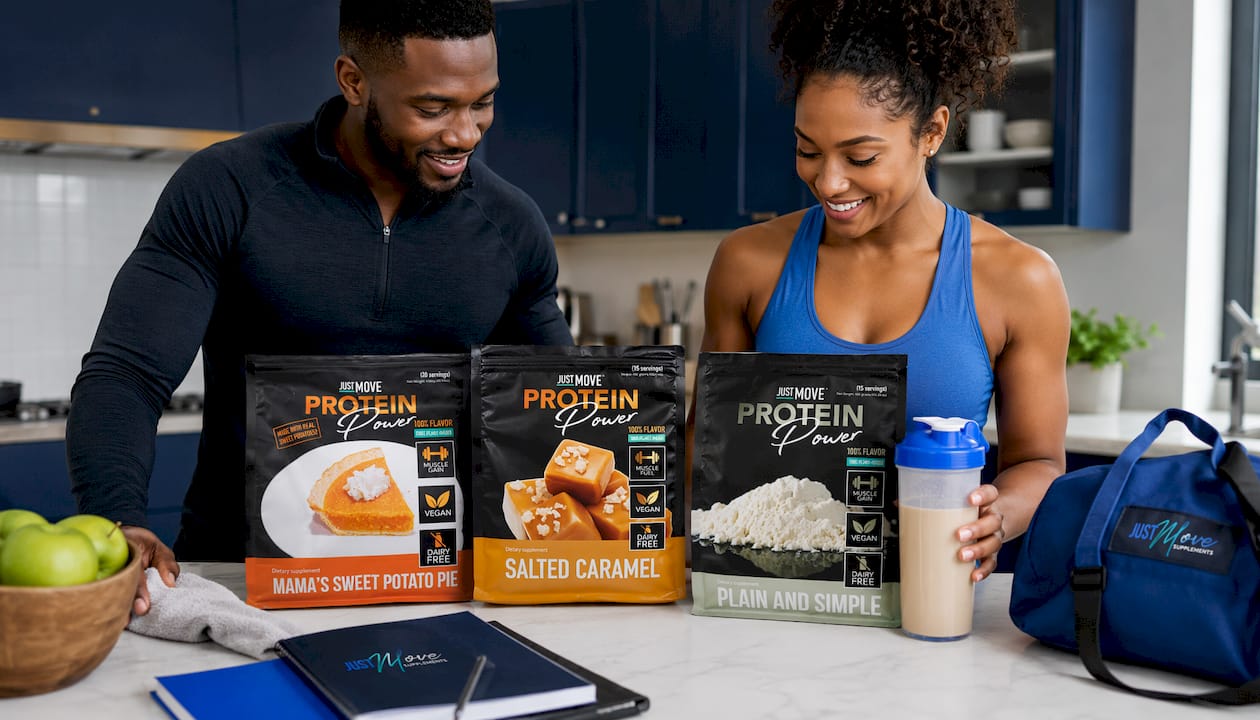
Not sure which direction suits you? Justmovesupplements offers a sample pack so you can try multiple options before committing to a full-size purchase. It is the lowest-risk way to find what works for your taste, your digestion, and your goals. Visit justmovesupplements.com to browse current options and get started.
Useful sources and further reading
-
FDA: High-Intensity Sweeteners — Regulatory approval status and ADI figures for sucralose, Ace-K, aspartame, saccharin, stevia, and monk fruit (US-focused; supports the Safety section).
-
FDA: Aspartame and Other Sweeteners in Food — Specific FDA position on aspartame safety and PKU labeling requirements.
-
Mayo Clinic: Artificial Sweeteners and Sugar Substitutes — Consumer-facing summary of ADI limits and practical guidance; supports the sucralose ADI callout.
-
ScienceDirect: Low- and No-Calorie Sweeteners and Health — Systematic review of randomized trial and cohort evidence; supports the mixed-evidence discussion in the Safety section.
-
SAGE Journals: Expert Perspective on Sweetener Controversy — Expert commentary on social-media distortion and practical framing of sweeteners as a short-term tool.
-
Diabetes UK: Position Statement on Low- or No-Calorie Sweeteners — Professional guidance on LNCS as a stepwise sugar-reduction tool, not a stand-alone health strategy (UK-based; cited for professional consensus context).
-
Harvard Health: Artificial Sweeteners — Sugar-Free but at What Cost? — Evidence overview from Harvard Medical School; useful background on metabolic and appetite research.
-
PMC: Gut Microbiota and Artificial Sweeteners — Peer-reviewed review of microbiome interaction evidence; supports the microbiome discussion in the Safety section.
Recommended


