Keep your protein powder sealed in its original tub or an airtight container, placed in a cool, dry, dark spot below about 70°F (21°C), away from your stove, sink, or any sunny counter. Skip the refrigerator and freezer entirely; temperature swings invite condensation and clumping. Check “best by” dates, but trust your nose and eyes over the calendar if something seems off.
TL;DR:
- Storing protein powder in a cool, dark, airtight container away from heat sources prolongs its freshness and prevents moisture and nutrient degradation.
- Maintaining storage at or below 70°F with low humidity can extend shelf life by nearly ten months compared to warmer, humid conditions.
- An opened tub typically stays good for several months if properly sealed and stored, but visible odors, discoloration, or mold indicate it should be discarded.
- Portioning powder into small, airtight containers and including silica gel packets helps reduce exposure to humidity and prolong freshness during daily use and travel.
- Relying on sensory cues like smell, taste, and appearance is more reliable than the “best by” date for determining if protein powder remains safe and effective.
Table of Contents
Where To Store Protein Powder At Home
Your pantry or a kitchen cabinet away from major appliances is the best spot for protein powder in most homes. A closet shelf works too, as long as it stays dry and doesn’t sit near a heating vent. What you’re really looking for is consistency: a place that doesn’t swing between hot and cold, doesn’t collect moisture, and doesn’t get blasted by sunlight every afternoon.
That rules out a few spots people default to without thinking. Bathrooms trap humidity every time someone showers, which is exactly the environment that speeds up clumping and bacterial growth in a powdered product. Storing protein powder near the dishwasher or stove exposes it to heat and steam every time you cook. A sunny windowsill or open shelf near a window bathes the tub in UV light and heat, both of which degrade flavor compounds and nutrients faster than a shaded cabinet ever would.
Before you settle on a permanent spot, run through this quick checklist:
- Keep the container at least a few feet from any heat source, including the oven, stove, and dishwasher.
- Store it somewhere with no direct sunlight, ideally inside a closed cabinet or pantry.
- Set it on a shelf rather than the floor, where temperature and humidity tend to fluctuate more.
- Make sure the lid seals tightly every time you close it, not just loosely rests on top.
- Avoid storing it directly above the stove or refrigerator, since both radiate heat upward.
A dedicated supplement shelf in a pantry solves most of this in one move. It’s shaded, it’s away from cooking heat, and it keeps your protein powder, creatine, and pre-workout in one predictable place instead of scattered across the kitchen.
What Temperature And Humidity Actually Do To Your Protein Powder
Room temperature, roughly 70°F (21°C) or a bit cooler, gives protein powder the best shot at holding its taste and nutritional value over time. Humidity matters just as much. Moist air seeps into a tub every time it’s opened in a steamy kitchen, and that moisture is what turns smooth powder into hard, unusable clumps.
Heat accelerates oxidation. Fats and flavor compounds in protein powder break down faster as temperature rises, and shelf-life research on oxidation shows the effect isn’t gradual; it accelerates as storage conditions get warmer. That’s the same chemistry that turns oil rancid on a hot counter, just playing out more slowly inside a sealed tub.
Statistic to remember: Whey protein stored at cool room temperature with low humidity held up significantly longer in shelf-life testing compared to powder stored at higher heat and humidity levels. That’s a difference of nearly ten months from temperature alone.
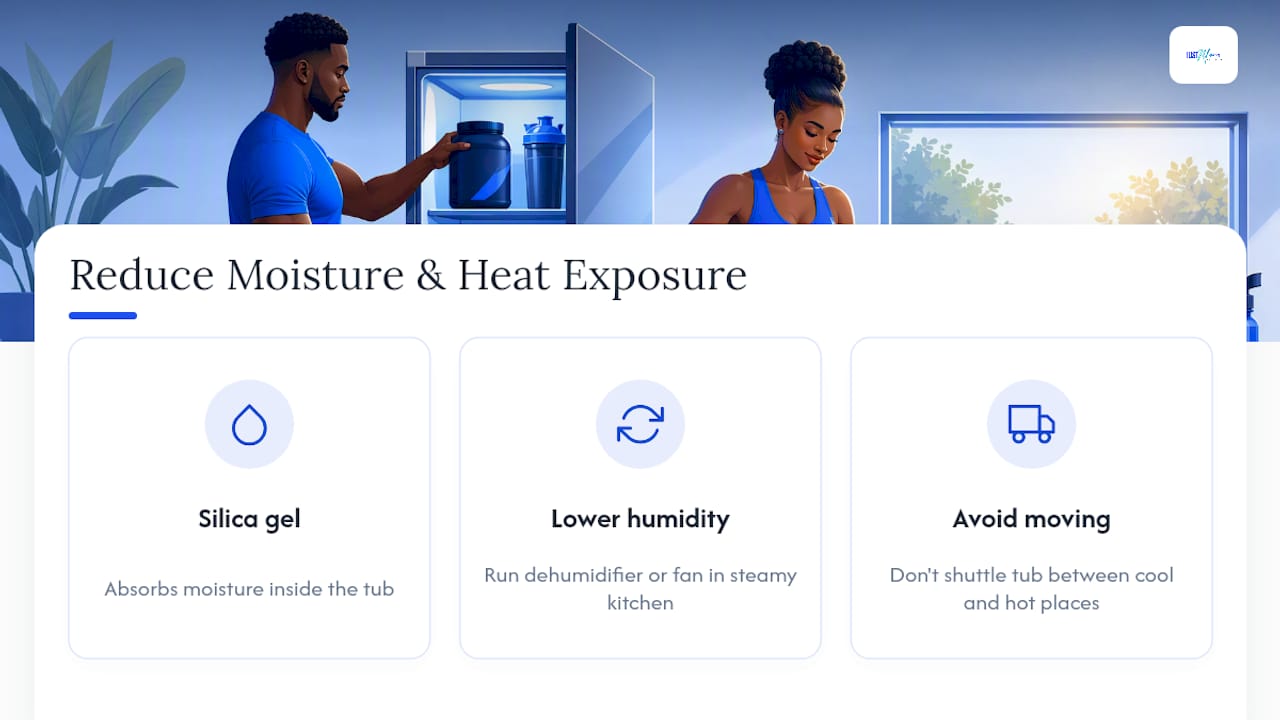
A few practical fixes handle most of this. Including a silica gel packet inside the tub can help absorb moisture. Run a dehumidifier or fan in a kitchen that tends to stay steamy. And resist the urge to move your tub between a cool pantry and a warm car trunk or a hot garage shelf; that kind of heat exposure quietly damages protein quality even when nothing looks different on the outside.
How Long Does Protein Powder Last, Opened Or Not?
An unopened tub of protein powder typically carries a “best by” date one to two years out from when it was manufactured, and that date reflects quality, not a hard safety cutoff. Once you break the seal, the clock changes. An opened container commonly stays good for several months, though the exact window depends heavily on how and where you’re storing it.
That “best by” label is worth understanding correctly. Under USDA food dating guidance, most shelf-stable products use quality-based dating rather than a safety deadline, which is why a tub that’s a month past its date isn’t automatically bad. It just means the company can’t guarantee peak flavor and potency past that point.
A few habits stretch that window further:
- Rotate older tubs to the front of your shelf and use them before opening a new one.
- Portion a week or a month’s supply into a smaller container instead of repeatedly opening the large tub.
- Reseal the lid firmly after every scoop, and wipe away any powder stuck in the threads.
- Discard anything with visible moisture inside the tub, regardless of the printed date.
If you’re staring at a container and genuinely unsure whether it’s still fine, a deeper look at what expiration dates actually mean for protein powder walks through the reasoning in more detail.
How To Tell When Protein Powder Has Gone Bad
Trust your senses before you trust the calendar. A tub that’s past its “best by” date but smells and tastes normal is usually still fine to use. One that smells off well before the date printed on the label should go straight in the trash.
-
Smell it first. A rancid, sour, or otherwise off odor is the clearest early warning sign, and it usually shows up before anything else changes.
-
Check for a bitter or sour taste. If a scoop tastes noticeably different from what you remember, don’t finish the shake.
-
Look at the color. Any darkening, yellowing, or uneven discoloration compared to a fresh tub points to degradation.
-
Feel for clumps. Soft clumps that break apart easily are often just moisture exposure, more of a texture issue than a safety one. If you’re seeing this often, a closer look at what causes protein powder texture changes explains the fix.
-
Watch for hard, solid caking or visible mold. Either one means the tub gets discarded immediately, no exceptions.
The printed date matters far less than what’s actually in front of you. A tub two weeks past “best by” with no odor, no discoloration, and normal texture is almost certainly safe. A tub still within date that smells rancid is not.
Containers, Portioning, And Travel Storage That Actually Work
Keep the bulk tub sealed as much as possible, and let a smaller container take the daily wear and tear instead. Scooping straight from a five-pound tub every morning means it’s open to air, humidity, and temperature swings dozens of times a month. Portioning out a week’s or a month’s supply into a separate airtight container cuts that exposure dramatically, and it’s one of the simplest habits for extending how long an opened product stays good.
Look for food-safe plastic containers or glass jars with a tight rubber or silicone seal, not a container that just has a snap-on lid. Airtight matters more than material. And once you’ve portioned powder into a smaller container, avoid moving it repeatedly between a cold gym bag and a warm car, since that kind of cycling is what causes condensation and clumping inside the container.
For travel, stackable jars and shaker bottles built with storage compartments solve the “how do I bring a week of shakes to the gym” problem without opening the main tub at all. A few habits round out the setup:
- Portion single servings into stackable travel jars before a trip or a busy week.
- Keep a silica packet in every container, including the small travel ones.
- Wash and fully dry your scoop between uses instead of leaving it damp inside the tub.
- Check the seal on your shaker’s storage compartment before assuming it’s airtight.
Pro Tip: Leave the silica gel packet that came in your original tub inside whatever smaller container you portion into. It does more work fighting humidity than most people give it credit for.
Scoop hygiene matters more than most people realize, too. A damp scoop left inside the tub introduces moisture directly into the powder every single time, which quietly shortens the shelf life of an otherwise well-stored product.
Why These Storage Rules Actually Hold Up
The FDA’s oversight of dietary supplements puts the responsibility for labeling and quality control on manufacturers, which is exactly why the storage instructions printed on your tub deserve to be followed rather than guessed at. That guidance exists because storage conditions affect more than just spoilage risk; they affect flavor, texture, and how well the protein holds up nutritionally over months on a shelf.
Storage environment tends to matter more than small differences in formulation. A tub kept in a stable, cool, dry spot will consistently outlast one that gets moved between hot and cold conditions, regardless of the specific protein blend inside.
That’s the reasoning behind Just Move Supplements’ approach to sample packs and smaller-format options: giving people a way to test flavors and portion sizes without committing to a bulk tub that sits open for months, accumulating exposure with every scoop.
Our Take: The Storage Advice Most People Get Wrong
Most storage advice online treats every tub the same way, as if a $20 whey blend and a specialty protein need identical handling. They don’t need to be identical, but the fundamentals rarely change: cool, dry, sealed, away from light. What we think gets underweighted is portion control. People obsess over the exact temperature of their pantry while leaving a five-pound tub open on the counter for six weeks straight, which does more damage than a few degrees of ambient warmth ever will.
The bigger mistake is treating “best by” dates as a safety cutoff instead of a quality estimate. A tub that smells and tastes normal a few weeks past its date is not dangerous. Trust your senses over the label. And if you’re buying protein in bulk purely out of habit rather than need, you’re increasing your own spoilage risk every time that tub sits open on the counter. Smaller, more frequent purchases, or a sample pack to start, solve more storage problems than any container upgrade will.
— Just
Skip The Guesswork With Smarter Portion Sizes
The easiest way to avoid protein powder storage problems isn’t a better container. It’s a smaller tub. Buying in bulk out of habit means more open-air exposure, more scooping with a damp spoon, and more chances for humidity to creep in before you’ve used it all.
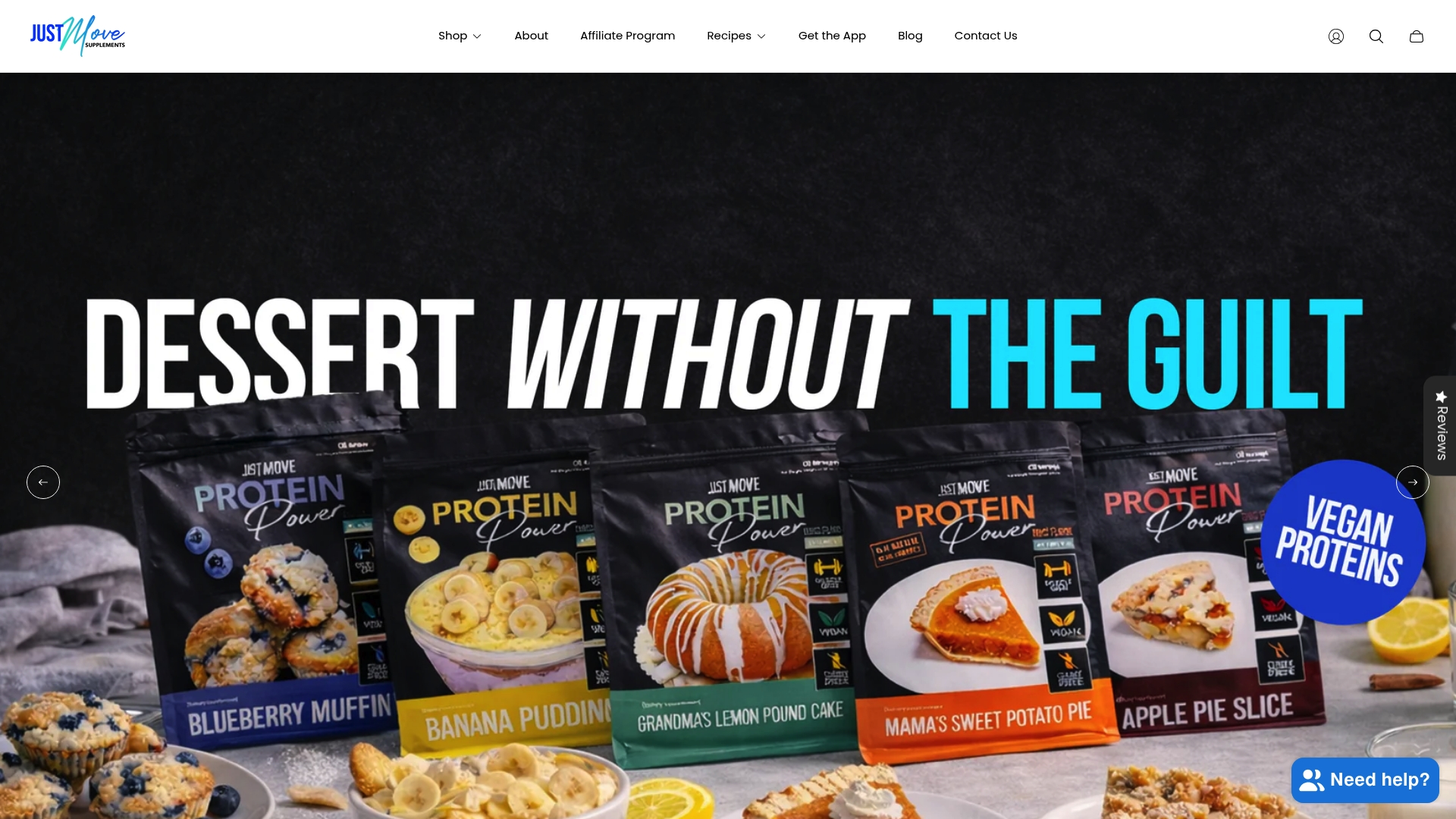
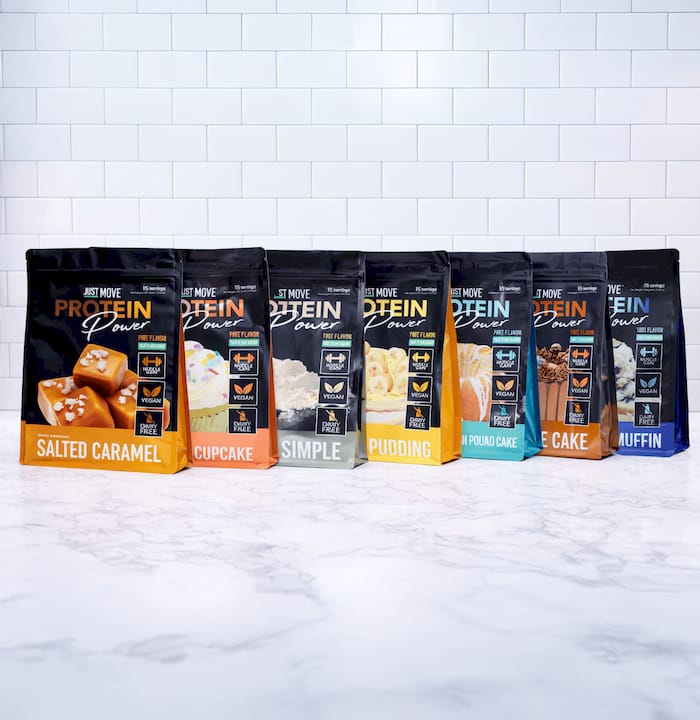
Justmovesupplements built its lineup around exactly this problem. The Plain And Simple Unflavored Protein gives you a flexible base you can mix into recipes without committing to a huge flavored tub sitting open for months. And if you’re still figuring out which flavor fits your routine, the Just MOVE Protein Sample Variety Pack with 7 flavors lets you try smaller portions across the lineup, including options like Banana Pudding and Chocolate Cake, before you ever open a full-size container. Less exposure, less waste, and no guessing whether last month’s tub is still good. Grab a sample pack and see which flavor earns a permanent spot on your shelf.
Sources
Recommended


