Most protein powder servings weigh between twenty and thirty-five grams of powder and deliver roughly twenty to twenty-seven grams of protein per scoop. The fastest action you can take right now: place your container on a kitchen scale, tare it to zero, add one level scoop, and confirm the reading matches the gram weight printed on your nutrition facts label. That single habit eliminates the most common source of under- or over-dosing. Research from Harvard Health confirms that protein powders work best as a top-up to whole-food intake, with active individuals typically targeting 1.4–2.0 g of protein per kilogram of body weight daily. A published label in the NIH Dietary Supplement Label Database shows exactly how this looks in practice: a 32 g scoop delivering 24 g protein, with the remaining 8 g split across carbs, fats, flavoring, and additives.
Quick reference: Most scoops fall in the 25–35 g powder range and yield roughly 20–25 g of protein per serving for typical whey or plant blends.
Key Takeaways
Measuring your protein powder serving in grams against the label is the single most reliable way to hit your daily protein target without overcounting or undercounting, as shown by products like the BAM Protein pudding Vanilla, with sweetener which demonstrate alternative protein formats and serving sizes.
| Point |
Details |
| Standard serving range |
Most scoops weigh 25–35 g of powder and deliver 20–27 g of protein per serving. |
| Measure in grams |
Weigh each scoop on a kitchen scale and match it to the gram serving size on your label. |
| Match servings to goals |
Active adults typically target 1.4–2.0 g protein per kg of body weight; 1–2 scoops per day fills most gaps. |
| Per-meal target |
Aim for 20–30 g protein per meal to support muscle protein synthesis effectively. |
| Justmovesupplements sample pack |
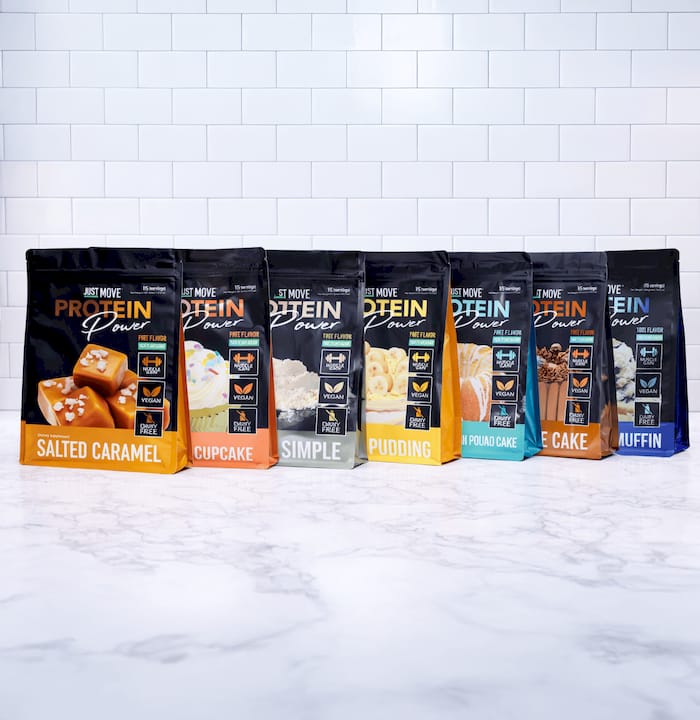
The Just MOVE Protein Sample Variety Pack lets you measure real servings across 7 flavors before buying a full tub. |
Table of Contents
What does “serving size” on your tub actually mean?
The phrase “1 serving” on a protein tub sounds simple, but it bundles together three different things: the scoop itself, the gram weight of powder that scoop holds, and the grams of protein that weight provides. Knowing which number to trust matters.
The nutrition facts panel is your authority. Look for two lines near the top: Serving Size (listed in grams and usually noted as “1 scoop”) and Protein (listed in grams per serving). The gram weight is the number you want to match on a scale. The scoop is just a delivery tool, and it can vary.
Why does scoop volume differ between brands? Powder density changes with formulation. A whey isolate is denser than a plant-based blend, so the same physical scoop size can hold meaningfully different weights. Flavor variations within the same brand can also shift density slightly. Protein Jug’s serving-size guide notes that most brands design their included scoop so one level fill matches the serving on the label, but the only reliable way to confirm yours is to weigh it.
What a single serving typically represents:
- A supplement, not a complete meal (unless the label specifically says “meal replacement”)
- Roughly 20–27 g protein, 100–160 calories, and a small amount of carbs and fats
- One contribution toward your daily protein target, not the whole target
- A meal-replacement serving is larger and formulated differently, often 300–400 calories with added vitamins and fiber
Reading the nutrition label carefully before you scoop is the single best habit you can build.
Typical serving sizes by powder type: what the numbers look like
Powder weight per scoop and protein per serving vary by category. The table below maps common ranges across the most widely used powder types.
| Powder Type |
Typical Powder Weight per Scoop |
Typical Protein per Serving |
| Whey concentrate |
30–35 g |
20–24 g |
| Whey isolate |
25–30 g |
20–27 g |
| Plant-based blend |
30–40 g |
20–25 g |
| Collagen peptides |
10–15 g |
8–12 g |
| Mass gainer |
100–160 calories |
25–50 g |
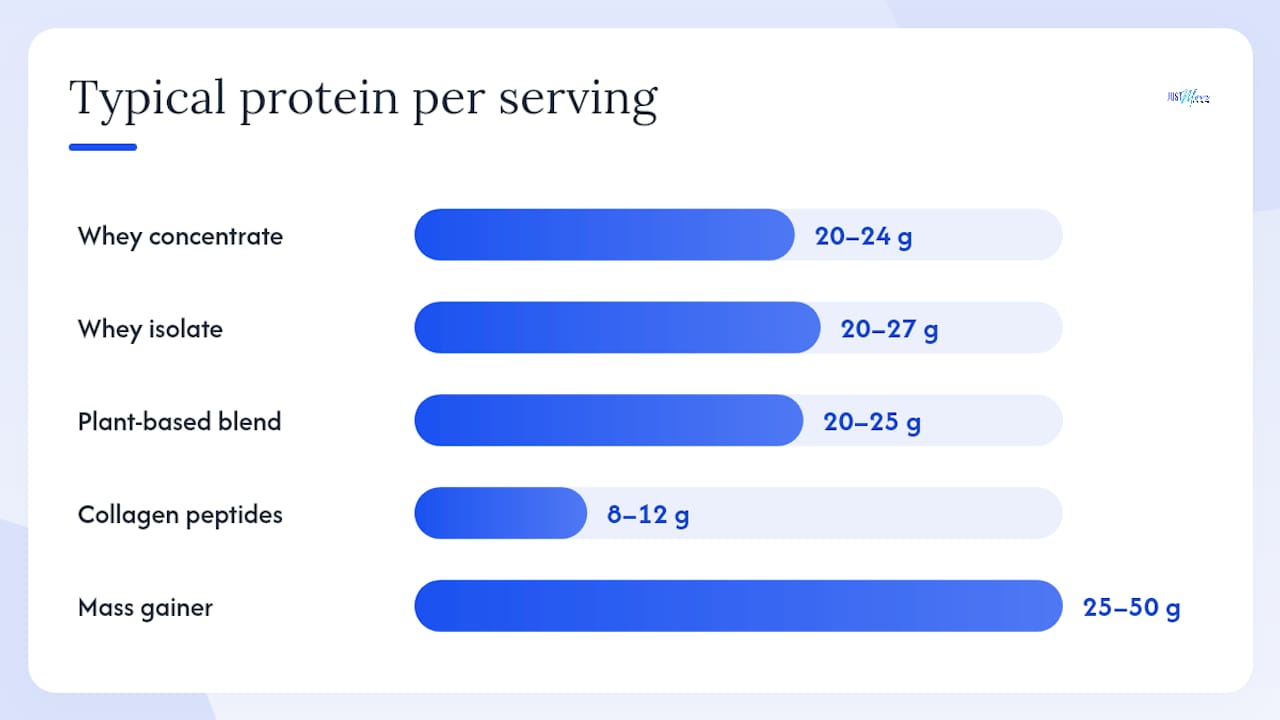
A real-world example makes this concrete. The Gold Standard 100% Whey label in the NIH DSLD lists a 32 g serving size (1 scoop) that provides 24 g protein. The remaining 8 g accounts for cocoa, natural flavors, lecithin, sweeteners, and a small amount of carbohydrates and fat. That 30 g powder/24 g protein ratio sits squarely in the sweet spot that sports nutrition researchers target, which is why manufacturers cluster their formulas in that band.
Plant-based powders tend to run heavier per scoop because pea, rice, or hemp protein is less dense than whey isolate. Collagen is a notable outlier: a 10–12 g scoop delivers far less protein per gram of powder than whey, so comparing scoops across types without checking the label leads to real miscalculations.
How to measure a serving accurately every time
Guessing by eye is the most common reason people either waste powder or fall short of their protein target. Three methods work reliably, ranked from most to least precise.
Method 1: Kitchen scale (recommended)
- Place your shaker cup or bowl on the scale.
- Press tare to zero out the container’s weight.
- Add one level scoop of powder.
- Read the gram display and compare it to the Serving Size (g) line on your label.
- Add or remove powder until the reading matches.
That’s it. A $10–$15 digital kitchen scale pays for itself in accuracy within the first week.
Method 2: Using the included scoop correctly
The scoop that comes with your tub is calibrated for a level fill, not a heaped one. A heaped scoop can add 5–8 g of extra powder, which translates to roughly 3–5 g of extra protein and additional calories you may not be tracking. Drag a straight edge (a butter knife works perfectly) across the top of the scoop to level it off.
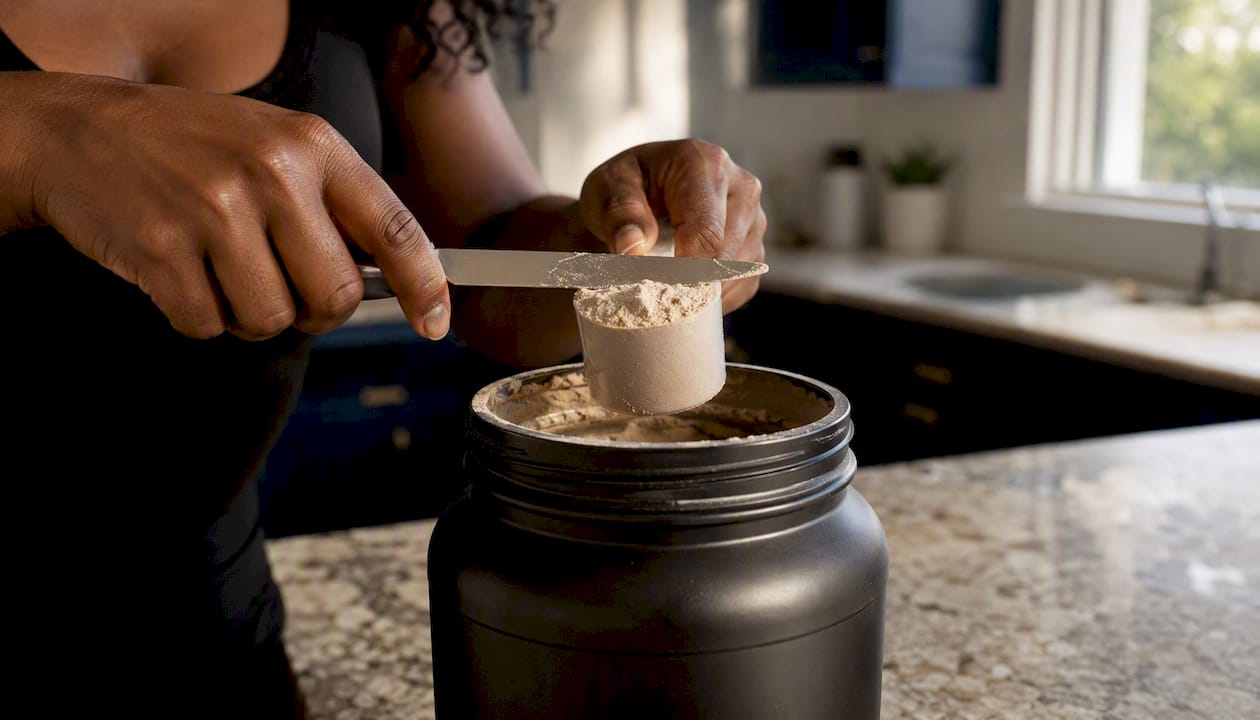
Pro Tip: Weigh three consecutive level scoops from the same tub and average the results. This gives you a reliable “house weight” for that specific flavor, since density can shift slightly between batches or flavors.
Method 3: Spoon/volume conversions (approximate only)
Volume-to-gram conversions are imprecise because powder density varies, but they are useful when a scale is not available.
| Approximate Volume |
Approximate Powder Weight |
| 1 tablespoon |
7–10 g |
| 2 tablespoons |
14–20 g |
| 3 tablespoons |
20–30 g |
| 4 tablespoons |
30–40 g |
These ranges are wide because a tablespoon of dense whey isolate weighs more than a tablespoon of fluffy plant powder. Use spoon conversions as a starting point, then verify with a scale at least once per new tub.
How to pick the right serving size for your goals
The right protein powder dosage is not one-size-fits-all. It depends on your body weight, activity level, and how much protein you are already getting from food.
Step 1: Find your daily protein target.
Harvard Health guidance places active individuals in the 1.4–2.0 g/kg range. A sedentary adult may need closer to 0.8 g/kg (the USDA RDA baseline). Use the USDA/NAL DRI calculator to get a personalized starting number.
Step 2: Subtract what you already eat.
Whole foods come first. If your meals already supply 80–100 g of protein daily, you may only need one small shake to close the gap.
Step 3: Divide into per-meal targets.
Research published in the Journal of the International Society of Sports Nutrition supports distributing protein across meals, with roughly 20–30 g per meal stimulating muscle protein synthesis effectively for most adults.
Worked example:
- Body weight: 75 kg (165 lb) active lifter
- Daily target at 1.6 g/kg: 120 g protein
- Protein from food (3 meals): ~90 g
- Gap to fill with powder: ~30 g
- Scoop delivers 24 g protein: 1–2 scoops per day covers the gap
Healthline’s whey protein guide puts the commonly recommended range at 1–2 scoops per day (roughly 25–50 g total from powder), timed around workouts. That aligns directly with the worked example above.
-
Smaller serving (15–20 g): ideal when food intake is already high and you just need a top-up
-
Standard serving (20–30 g): fits most active adults and aligns with per-meal synthesis targets
-
Larger serving (30–40 g): reasonable for hard gainers, very active athletes, or long gaps between meals, per practical serving-size guidance
MD Anderson’s dietitian guidance reinforces the whole-foods-first approach: use powder to complement meals, not replace the variety and micronutrients that whole foods provide.
Safety: how much protein powder is too much?
For most healthy adults, protein intake in the ranges described above is well-tolerated. Problems tend to arise when powder servings are stacked on top of an already high-protein diet without accounting for total daily intake.
Common side effects of overconsumption:
- Digestive discomfort (bloating, gas, loose stools), especially with lactose-containing whey concentrate
- Excess calorie intake leading to unintended weight gain
- Dehydration, since protein metabolism requires more water for nitrogen excretion
Staying well-hydrated is straightforward: aim for at least 8–10 oz of water with every shake, and increase total daily fluid intake on high-protein days.
When to consult a clinician before increasing protein intake: If you have pre-existing kidney disease, are pregnant or nursing, are managing a major illness, or are taking medications that affect kidney or liver function, get personalized guidance from a physician or registered dietitian before changing your protein intake. Healthy adults without these conditions generally tolerate higher protein intakes well, but individual needs vary.
The protein-vs-whole-food comparison on the Justmovesupplements blog covers the practical trade-offs between shakes and food-based protein in more detail.
Practical tips and quick answers to common questions
Measuring without your scoop:
- Use a kitchen scale with the tablespoon conversion table above as a starting estimate
- A standard coffee scoop (2 tablespoons) approximates 14–20 g of powder for most whey blends
-
Adding powder to oatmeal or recipes works well with a scale for precision
Timing and mixing:
- Post-workout is the most studied timing window, but total daily protein matters more than exact timing for most people
- Mix powder into cold or room-temperature liquid first, then add ice; hot liquid can denature some proteins and cause clumping
- A shaker ball or blender breaks up clumps more reliably than stirring
Quick answers to common questions:
-
Is 1 scoop one serving? Usually yes, but confirm by checking that the scoop weight matches the gram serving size on the label. Some products include a scoop sized for half a serving.
-
How many scoops per day is OK? For most people, 1–2 scoops (roughly 20–50 g protein from powder) per day is a reasonable range, per Healthline’s whey guide. Total daily protein from all sources matters most.
-
What if your scoop weight differs from the label? Trust the label gram weight, not the scoop. Add or remove powder until the scale matches the serving size listed.
-
When is a smaller serving better? When your food intake is already close to your daily target, a 15–20 g top-up avoids unnecessary calories while still closing the gap.
A practical note from Justmovesupplements
Precise measurement is not about being obsessive. It is about getting the value you paid for and the results you are working toward. When you consistently hit the gram weight on the label, you know exactly what you are consuming, and your nutrition tracking actually reflects reality.
One thing Justmovesupplements hears from customers regularly: they bought a full tub of a flavor they had never tried, used it twice, and let it sit. That is an avoidable problem. Trying a serving from a sample before committing to a full tub is the smarter path. The Just MOVE Protein Sample Variety Pack exists precisely for this reason. You measure a real serving, taste the flavor, and decide with confidence.
Store your scoop inside the tub after each use, and check the gram weight on the label every time you open a new flavor. Density varies, and a quick scale check takes five seconds.
Try real servings before you commit to a full tub
Knowing your protein powder serving size is one thing. Finding a flavor you will actually use every day is another.
The Just MOVE Protein Sample Variety Pack gives you 7 flavors in single-serving portions, so you can weigh a real scoop, taste the result, and confirm it fits your routine before buying a full container. No guessing, no wasted powder, no buyer’s remorse. Each sample reflects the same formula and serving weight as the full-size tub, making it a trusted way to calibrate your measuring habits across different flavors. If you are also working on body composition goals, the Just Shred Green Apple Fat Burner pairs well as a complement to a structured protein routine. Browse the full protein samples collection and pick the pack that fits your goals.
Sources
The following sources were used throughout this article and are worth bookmarking for deeper research or personalized guidance.
This article is general information, not a substitute for advice from a qualified doctor. Consult a qualified healthcare professional about your own circumstances before acting on anything here.
Recommended


