Yes, you can absolutely put protein powder in oatmeal, and the single best method is straightforward: cook your oats fully, let them cool for 30–60 seconds, then fold in a pre-mixed protein slurry. That slurry is simply your protein powder whisked with 1–2 tablespoons of room-temperature liquid until smooth. UPMC HealthBeat recommends this approach specifically to prevent the clumping and chalky texture that happens when dry powder hits piping-hot cereal.
-
Cook oats first. Never add dry powder to boiling or very hot oats.
-
Cool briefly. Let oats rest 30–60 seconds off heat before adding anything.
-
Make a slurry. Whisk 1 scoop (15–25 g protein) with 1–2 tablespoons of room-temperature water, milk, or almond milk until lump-free.
-
Fold it in. Stir gently rather than vigorously to keep the texture creamy.
Pro Tip: If your oats feel thick after adding the slurry, stir in a splash of warm milk. Protein powder absorbs liquid fast, and a little extra goes a long way toward a smooth, spoonable bowl.
Table of Contents
Why does adding protein powder to oatmeal actually help?
Protein slows how quickly your body processes carbohydrates, which means a protein-boosted bowl keeps you fuller longer and blunts the blood-sugar spike that plain oats can cause. That mid-morning energy crash becomes much less likely when your breakfast carries a solid protein load alongside oats’ soluble fiber.
“Oatmeal is already a heart-healthy choice thanks to its beta-glucan fiber, which is linked to lower LDL cholesterol. Pairing it with whey protein may add another layer of benefit — research summarized by Verywell Health shows whey can raise HDL cholesterol in some studies, making the combination potentially synergistic for cardiovascular health.”
Beyond heart health, protein supports muscle repair and maintenance, which matters whether you train hard or simply want to preserve lean mass as you age. A breakfast that delivers both beta-glucan and a meaningful protein dose covers a lot of nutritional ground in one bowl.
How much protein do oats actually have, and what does a scoop add?
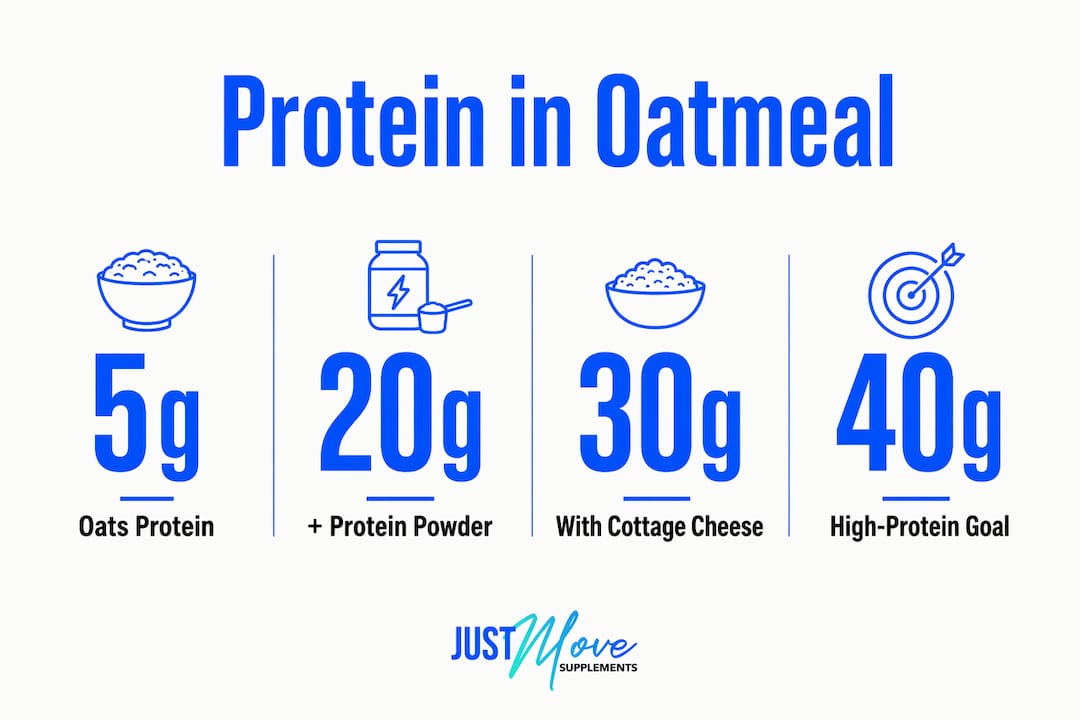
Plain oats are not a high-protein food on their own. A half-cup of dry rolled oats (which yields roughly one cup cooked) provides about 5 grams of protein. Add one scoop of protein powder, and that number jumps by 15–25 grams, depending on the product. Combined, a single bowl typically delivers 20–30 grams of protein before you add any toppings.
| Oat Serving |
Oats’ Protein |
+ 1 Scoop Powder |
Total Protein |
| 1/2 cup dry rolled oats |
~5 g |
15–25 g |
~20–30 g |
| 1 cup instant oats (prepared) |
~5–6 g |
15–25 g |
~20–30 g |
| 1/2 cup dry oats + cottage cheese (1/4 cup) |
— |
15–25 g |
— |
Adding cottage cheese alongside your powder is one of the fastest ways to push that total even higher without changing the cooking method at all.
Which protein powders work best in oatmeal?
Not all powders behave the same way in a warm bowl of oats. Here is a practical breakdown by type:
-
Whey concentrate/isolate: Mixes smoothly, dissolves quickly, and delivers a clean flavor. Whey isolate is lower in lactose, making it a better pick for anyone with mild dairy sensitivity. The main watch-out is that it can dry out oats fast if you skip the slurry step.
-
Casein: Thickens oatmeal noticeably, which some people love and others find too dense. Works well in overnight oats where thickening is a feature, not a bug.
-
Plant blends (pea, rice, soy): Plant-based powders tend to be less liquid-absorbent than whey concentrates and often produce a creamier result. A good choice for vegans or anyone avoiding dairy. If your oats still dry out, increase your liquid by 20–30%.
-
Collagen peptides: Unflavored and nearly invisible in oatmeal. They dissolve easily in warm liquid and add protein without changing taste or texture. Note that collagen is not a complete protein, so pair it with a complete source elsewhere in your diet.
Flavored powders (vanilla, chocolate, cinnamon) do double duty: they add protein and act as a sweetener, so you can reduce added sugar without sacrificing taste. Check out Justmovesupplements’ mix protein powder flavors guide for pairing ideas that translate directly to oatmeal.
Pro Tip: If a powder has a strong, artificial aftertaste in your oats, blend it with plain Greek yogurt or cottage cheese before folding it in. The dairy proteins mellow the flavor and improve texture at the same time.
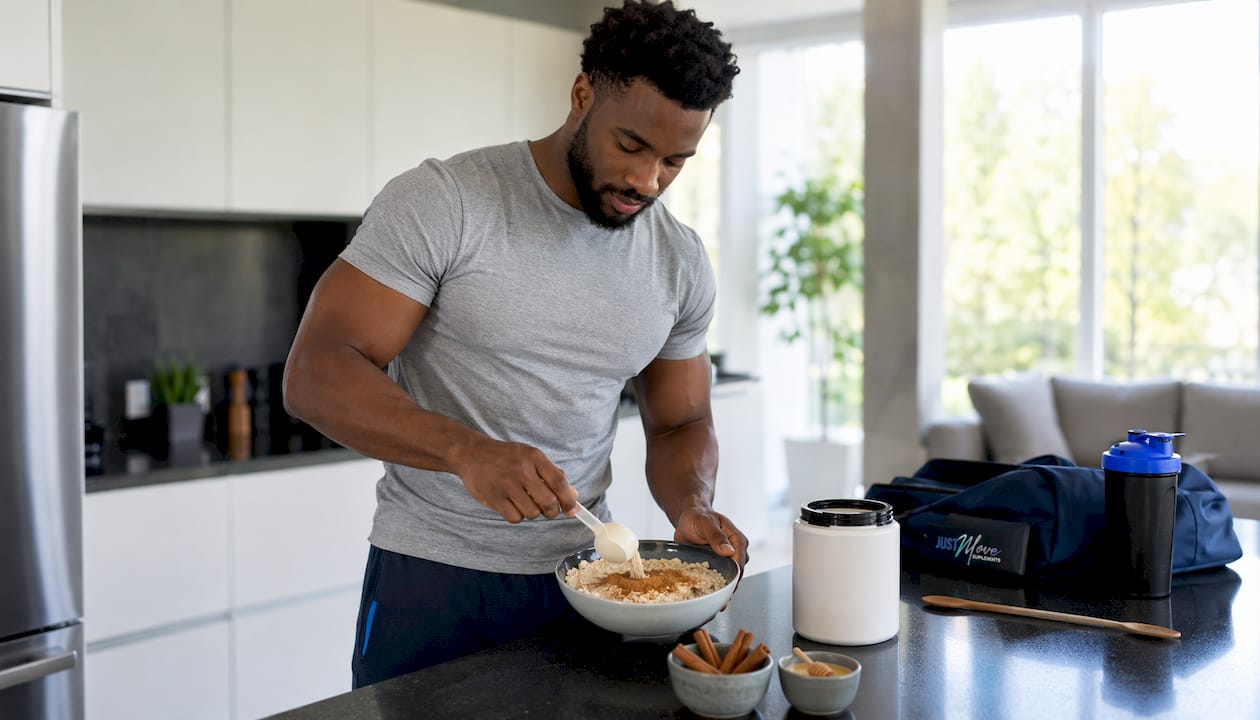
How do you add protein powder to oatmeal step by step?
Stovetop method
- Combine 1/2 cup rolled oats with 1 cup of your preferred liquid (water, milk, or oat milk) in a small saucepan.
- Cook over medium heat, stirring occasionally, until oats reach your preferred consistency (about 5 minutes).
- Remove from heat and let the oats rest for 30–60 seconds.
- In a small bowl or cup, whisk 1 scoop of protein powder with 1–2 tablespoons of room-temperature liquid until completely smooth.
- Pour the slurry over the oats and fold gently with a spoon until fully incorporated.
- Taste before adding sweetener. Flavored powders often make extra sugar unnecessary.
Microwave method
- Combine 1/2 cup quick oats with 1 cup liquid in a microwave-safe bowl.
- Microwave on high for 90 seconds, stir, then microwave for another 30 seconds. Rest for 60 seconds.
- While oats rest, whisk your protein slurry in a separate cup.
- Fold the slurry into the oats and stir until smooth.
Troubleshooting:
-
Clumps: Whisk the slurry more thoroughly, or use a small blender. Adding a tablespoon of extra liquid also helps.
-
Dry, thick texture: Stir in warm milk or a spoonful of yogurt after adding the slurry.
-
Chalky taste: Switch to a flavored powder, or blend the powder with cottage cheese before adding. Justmovesupplements’ guide on protein flavor masking covers this in detail.
Pro Tip: Never add protein powder to oats that are still bubbling. The sudden heat can cause proteins to denature instantly, creating a grainy, clumped texture that no amount of stirring will fix.
Quick high-protein oatmeal recipes you can make right now
Each recipe below uses the slurry method. Nutrition estimates are approximate and based on standard ingredient values.
| Recipe |
Key Ingredients |
Protein (est.) |
Calories (est.) |
| Vanilla-Cinnamon Protein Oats |
1/2 cup rolled oats, 1 scoop vanilla protein, 1 tsp cinnamon, 1 cup milk |
— |
— |
| Chocolate-Peanut Butter Protein Oats |
1/2 cup oats, 1 scoop chocolate protein, 1 tbsp peanut butter, 1 cup milk |
27–30 g |
— |
| Fruity Yogurt Protein Overnight Oats |
1/2 cup oats, 1 scoop vanilla protein, 1/2 cup Greek yogurt, 1/2 cup berries, 1/2 cup milk |
~30–35 g |
— |
| Cottage Cheese Protein Bowl |
1/2 cup oats, 1/4 cup blended cottage cheese + 1 scoop protein, 1 tbsp honey |
~24 g
|
— |
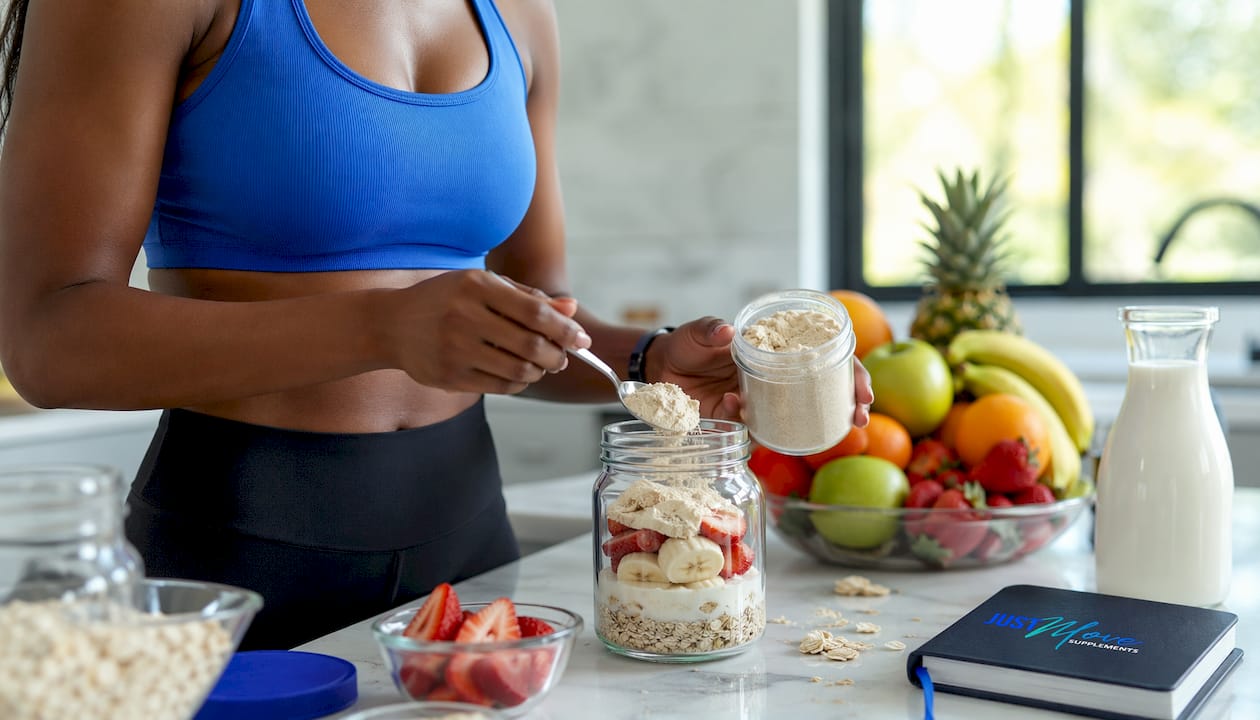
For the overnight oats version, combine all ingredients in a jar the night before and refrigerate. No cooking needed. Top with fresh fruit, a drizzle of nut butter, or a handful of granola in the morning. Justmovesupplements’ fruity protein powder picks pair especially well with berry-topped bowls.
How much protein should your breakfast actually have?
A commonly used target for active adults is 20–40 grams of protein per meal, with breakfast often being the meal where most people fall shortest. Standard athletic guidance places daily protein needs at roughly 1.2–1.6 g per kilogram of body weight for people engaged in regular exercise.
A 70 kg person targeting 1.4 g/kg/day needs about 98 grams of protein daily. Spreading that across three meals suggests roughly 30–35 grams at breakfast, which one bowl of protein oatmeal (oats plus one scoop of powder) can realistically deliver. If your target is higher, a second scoop or a side of Greek yogurt closes the gap without adding much prep time.
Protein powder is a tool, not a replacement for whole-food protein sources. Eggs, Greek yogurt, cottage cheese, and legumes all contribute amino acid profiles and micronutrients that powders alone cannot replicate. For anyone managing kidney disease, liver conditions, or other medical situations that affect protein metabolism, a registered dietitian should set the specific targets. This article is general nutrition information, not medical advice.
Is it safe to eat protein powder in oatmeal every day?
For generally healthy adults, daily consumption is considered safe as long as total daily protein stays within recommended ranges and powder supplements rather than replaces whole-food protein sources.
A few practical checks worth building into your routine:
-
Read the label. Some powders carry significant sodium, artificial sweeteners, or additives. If you are eating protein oatmeal daily, those amounts accumulate.
-
Vary your protein sources. Relying on a single powder type every day limits amino acid diversity. Rotate between whey, plant blends, and whole-food proteins across the week.
-
Watch total daily protein. More is not always better. Consistently exceeding your target by a large margin adds calories without proportional benefit.
-
Consult a clinician if you have kidney disease, are pregnant, or are managing any condition that affects how your body processes protein.
Why the slurry method works (the science behind it)
Protein powders are highly porous and liquid-absorbent by design. When dry powder hits hot oats, it absorbs surface moisture instantly and forms dense clumps before it can disperse evenly through the bowl. Pre-hydrating the powder in room-temperature liquid saturates those pores first, so when the slurry meets the oats, it folds in smoothly rather than seizing up.
“Mixing powder with room-temperature liquid before adding it to cooked oats prevents instant protein denaturation and the chalky clumps that occur when powder hits piping-hot cereal — a technique backed by UPMC HealthBeat and confirmed by practical cook testing.”
Heat is the other factor. Proteins begin to denature (change structure) when exposed to high temperatures rapidly. Letting oats cool for even 30–60 seconds before adding the slurry meaningfully reduces that risk. If you want to experiment with different flavors and textures before committing to a full tub, Justmovesupplements offers a sample pack that lets you test multiple options in your morning bowl.
Key Takeaways
Adding protein powder to oatmeal works best when you cook the oats fully, cool them briefly, and fold in a pre-mixed slurry, which prevents clumping and delivers a smooth, high-protein bowl every time.
| Point |
Details |
| Use the slurry method |
Whisk powder with 1–2 tbsp room-temperature liquid before folding into cooled oats. |
| Per-scoop protein boost |
One scoop adds 15–25 g protein, bringing a typical bowl to 20–30 g total. |
| Adjust liquid by powder type |
Plant-based powders may need 20–30% more liquid; casein thickens oats noticeably. |
| Daily use is generally safe |
Safe for healthy adults when powder supplements whole-food protein rather than replacing it. |
| Justmovesupplements for oatmeal |
Flavor-forward powders like Sweet Potato Pie and Banana Pudding mix smoothly and pair well with oatmeal recipes. |
What Justmovesupplements actually recommends for protein oatmeal
The slurry technique is the approach Justmovesupplements stands behind, and it is the foundation of the brand’s recipe content and mixing guidance. The reasoning is simple: a method that works consistently across powder types and oat styles is more useful than a recipe that only succeeds with one specific product.
What makes this worth paying attention to is that Justmovesupplements tests its powders specifically for mixability in warm foods, not just cold shakes. Flavors like Sweet Potato Pie and Banana Pudding were developed with breakfast applications in mind, which means they dissolve cleanly in a slurry and complement oatmeal’s natural sweetness without overpowering it.
The brand’s blog covers the full picture: how to pair flavors, how to mask off-notes, and how to build a breakfast that actually hits your protein targets. That educational depth reflects a genuine commitment to helping you get results from every scoop, not just selling you a product.
Try Justmovesupplements’ oatmeal-ready flavors and free recipe PDF
Ready to put the slurry method to work with powders built for it? Justmovesupplements makes it easy to start without guessing.
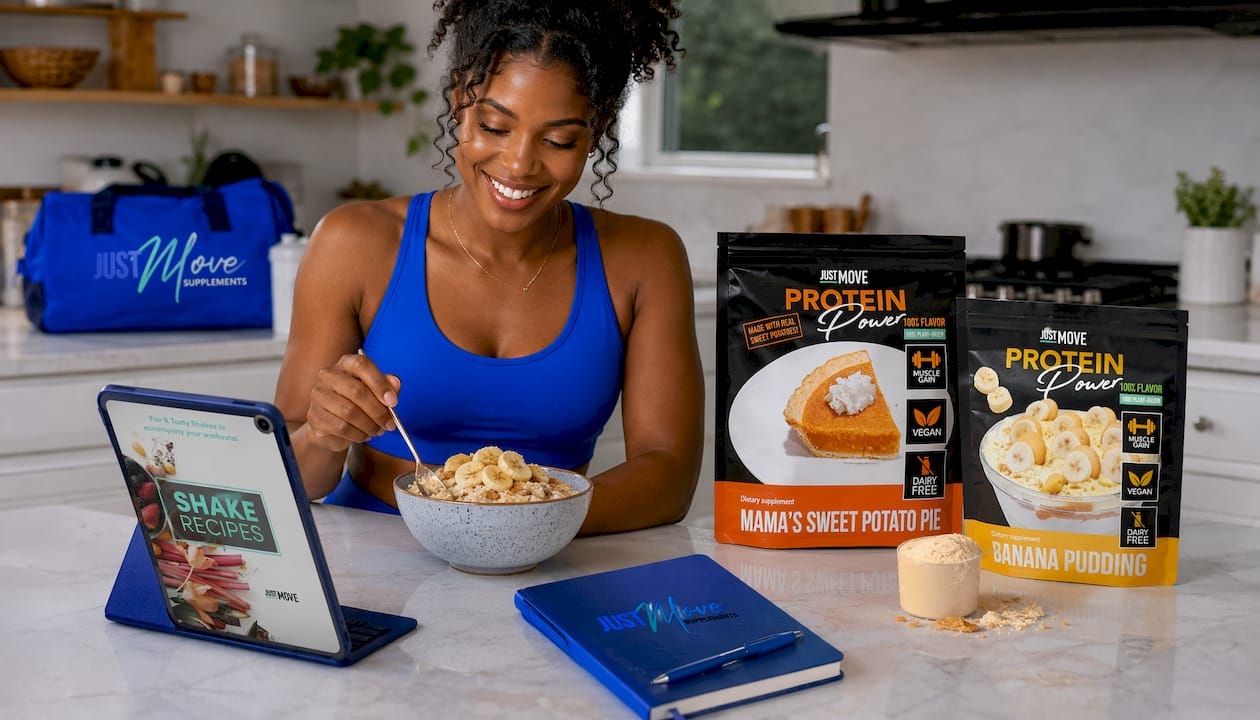
Grab the Protein Shake Recipes PDF for a full collection of ready-to-use oatmeal recipes, scoop-to-gram conversion charts, and flavor-pairing guides you can print and keep on your counter. Two flavors worth trying first in your morning bowl: Sweet Potato Pie Protein, which pairs naturally with cinnamon and brown sugar oats, and Banana Pudding Protein, which works beautifully with sliced banana and a drizzle of honey. Both mix cleanly using the slurry method and add sweetness without extra sugar. Not sure which flavor fits your taste? The Justmovesupplements sample pack lets you try multiple options before committing to a full tub. Visit justmovesupplements.com to browse the full lineup and download your recipe guide today.
Useful sources and further reading
-
UPMC HealthBeat: Primary source for the slurry technique, per-scoop protein ranges, and flavored powder guidance.
-
Verywell Health: Covers the cardiovascular and metabolic effects of combining oats with protein powder, plus daily-use safety guidance.
-
Wholesome Yum: Practical recipe source demonstrating the cottage cheese blending technique and per-bowl protein totals.
-
EatingWell: Recipe examples showing realistic per-serving protein when combining multiple protein sources in one bowl.
-
The Conscious Plant Kitchen: Plant-based powder behavior in oatmeal, including liquid-ratio adjustments and creaminess tips.
-
Justmovesupplements.com: Brand recipes, the downloadable PDF, flavor-mixing guides, and the how to use protein powder as a meal resource.
Recommended


