Protein powder helps runners hit daily protein targets around 1.8 grams per kilogram, which is recommended for many endurance athletes, especially after hard sessions or when appetite disappears post long run. It is a convenience tool, not a substitute for real food. Build your diet around whole-food protein first, use powder to close the gap, and always pair your post-run shake with carbohydrates. Some brands offer flavored options and a sample pack built for exactly this kind of trial-and-error-free decision.
TL;DR:
- Runners need around 1.8 grams of protein per kilogram of body weight daily, especially during intense training or when restricting carbohydrates.
- Fast-digesting whey isolate is best immediately after running, while slower casein supports overnight recovery, and plant blends can be a complete alternative if chosen carefully.
- Check protein powders for at least 15 grams of protein per 100 calories, third-party verification, and ingredients free of excess sugar and thickeners.
- Protein powder is most useful after hard workouts, during high-volume training, or when appetite is low post-long runs, but whole foods should still form the foundation of intake.
- Incorporate protein into food (like oatmeal, pancakes, or yogurt) to improve variety and reduce shake fatigue, while focusing on hitting daily targets first and flavor later.
Table of Contents
How Much Protein Do Runners Need Each Day?
Many runners may not consume enough protein to meet their needs during training. A 2025 meta-analysis on endurance nutrition puts the target at roughly 1.8 grams per kilogram of body weight per day for endurance athletes, with needs potentially higher during especially intense training blocks or when you’re restricting carbohydrates. That is meaningfully higher than the general population recommendation, and it is the number worth building your nutrition around if you’re logging real weekly mileage.
The reasoning holds up under scrutiny. A 2025 systematic review found that protein supplementation during endurance training produced a modest, statistically insignificant bump in lean body mass, but a significant improvement in time to exhaustion. Runners aren’t primarily chasing muscle mass. They’re chasing durability, and that’s where the protein payoff actually shows up.
A separate Bayesian meta-analysis adds an important caveat: many of the positive findings on protein supplements came from studies where total energy intake wasn’t matched between groups. In practice, that means protein alone doesn’t work miracles if you’re underfueling overall. The same analysis suggested that an additional intake of about 1 g/kg/day from supplements, increasing total intake toward 2 g/kg/day, was most effective in some studies.
Here’s how that translates to a plate, or a shaker bottle:
-
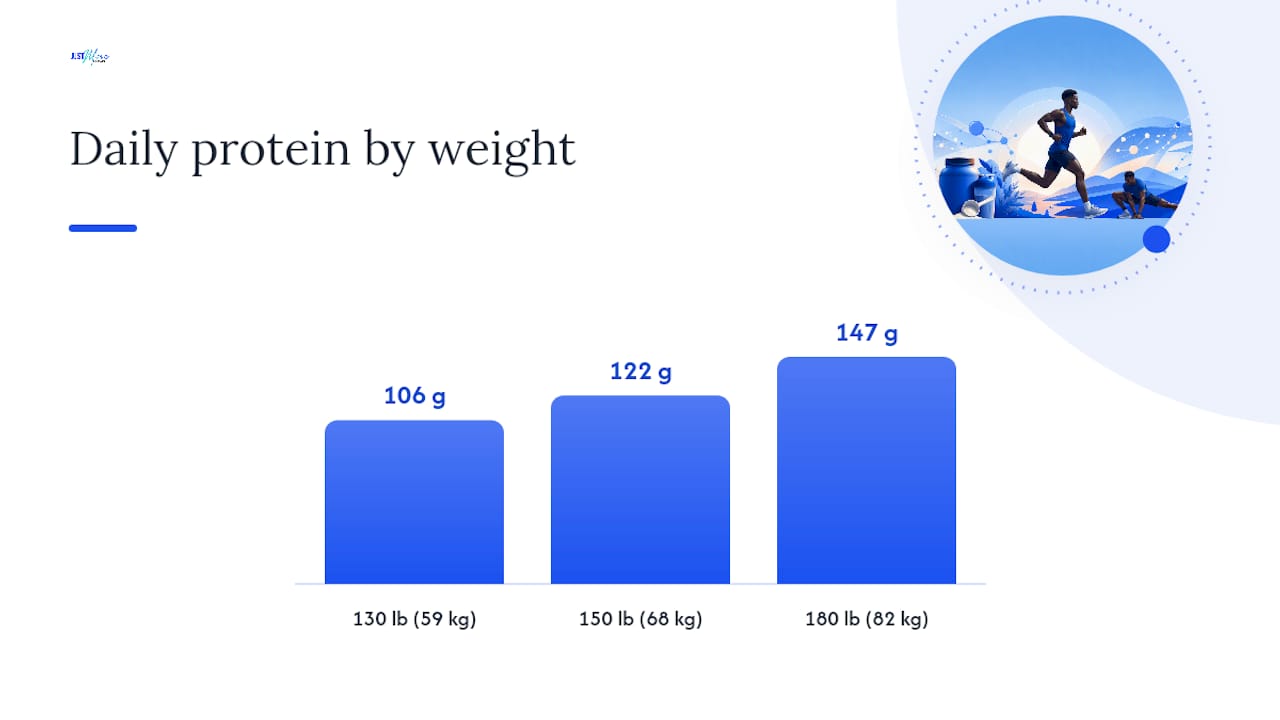
130-pound runner (59 kg): about 106 grams of protein daily, or roughly 26 grams per meal across four meals.
-
150-pound runner (68 kg): about 122 grams daily, or 30 grams per meal.
-
180-pound runner (82 kg): about 147 grams daily, or 37 grams per meal.
Spread that intake across the day rather than loading it into one meal. Feeding your muscles every 3 to 4 hours keeps amino acids available for repair, and post-exercise, aim for 20 to 40 grams of protein along with roughly 0.5 g/kg of body weight when you can manage it. Age matters too: runners over 50 tend to face anabolic resistance, meaning muscle protein synthesis responds more sluggishly to the same dose, so nudging per-meal targets toward 30 to 40 grams helps close that gap. Female runners may also want to pay closer attention to intake during the luteal phase, when protein turnover shifts slightly and recovery demands can rise.
Which Protein Type Actually Fits Your Training?
The protein aisle is loud, and most of the noise is marketing. What actually matters for runners comes down to digestion speed, amino acid completeness, and how your gut handles it mid-training block.
Whey isolate absorbs fast and carries a high leucine content, the amino acid most responsible for triggering muscle repair. That makes it the strongest choice for the 30 to 60 minute window right after a run, unless you’re dairy-intolerant, in which case it can trigger bloating that has nothing to do with the running itself.
Casein, whey’s slower-digesting cousin, releases amino acids gradually over several hours. That makes it a smart choice before bed, feeding overnight muscle repair while you sleep instead of leaving a long fasting gap between dinner and breakfast.
Plant-based blends, usually pea and rice combined, can deliver a complete amino acid profile when paired correctly, though they often require a larger scoop size to match whey’s protein density. Look for blends with added leucine to close that gap. Runners curious about plant-based timing can dig deeper into when to drink vegan protein relative to training.
Collagen and bone broth protein get marketed hard to runners, but they’re not a primary muscle-building tool. Collagen lacks the full amino acid spread needed for robust muscle protein synthesis. It has a place for connective tissue support and dietary variety, just not as your main recovery protein.
If your stomach turns on you after long runs, look for formulas with added protease or papain. These digestive enzymes help break protein down before it reaches your gut, which matters if lactose or dense whey concentrate tends to leave you uncomfortable mid-run or during a cooldown walk.
Pro Tip: If you’ve never tried a slow-digesting protein before bed, start with a half scoop. Casein can sit heavy for runners used to fast-absorbing whey, and easing in avoids an unpleasant surprise the night before a key workout.
For a deeper breakdown of blend types and when each one fits your training calendar, the protein blend guide for athletes walks through the tradeoffs in more detail.
How Do You Check If a Protein Powder Is Actually Safe and Worth Buying?
Reading a supplement label is mostly arithmetic, and most runners skip the math entirely. Here’s the sequence that actually tells you what you’re buying:
-
Check protein per 100 calories. Divide grams of protein by total calories per serving, then multiply by 100. A powder delivering less than 15 grams of protein per 100 calories is diluted with fillers, sugar, or fat you don’t need.
-
Confirm grams per scoop match the label claim. Some brands round generously. If a “25 gram protein” scoop only weighs 30 grams total, something else is padding the mix.
-
Look for third-party testing seals. NSF Certified for Sport and Informed Sport/Protein certifications mean an independent lab has verified the product against a banned-substance list and confirmed label accuracy, not just the manufacturer’s own word.
-
Scan for heavy metal transparency. Consumer Reports testing has found elevated lead levels in some protein powders, particularly in plant-based products where soil absorption concentrates metals in the raw ingredient. Brands that publish batch testing results or certificates of analysis are giving you real transparency, not a marketing claim.
-
Read the ingredient list for red flags. “Proprietary blend” language hides exact amino acid ratios. Excess added sugar, sugar alcohols like maltitol, and thickeners such as xanthan gum or carrageenan can all contribute to GI distress on a training day when your gut is already stressed from mileage.
Third-party testing is important for competitive runners subject to drug testing and advisable generally for supplement safety. Supplement contamination has been documented enough times that skipping this check is a real gamble, not a minor convenience trade-off.
If you’re sensitive to bloating or cramping after a shake, formulas built with digestive enzymes or lower-FODMAP ingredient profiles tend to sit easier, particularly after a long run when your gut is already running on fumes. Trial any new formula on an easy training day, never for the first time before a race.
How Should You Time Protein Powder Around a Run?
Timing is where most runners either get real value from protein powder or waste it entirely.
Post-run is the highest-value window. Aim to consume protein post-exercise alongside carbohydrates to support recovery, with protein amounts varying by body weight and situation. A shake blended with a banana and oats hits both targets in one glass. If shakes aren’t appealing immediately post-run, whole food options combining protein and carbohydrates provide effective recovery nutrition.
Before a run, skip the full shake, particularly ahead of a speed session. A heavy protein load sitting in your stomach during hard efforts invites cramping. Small, easily digested carbohydrates work better in that window; save protein for after.
During long runs and ultras, some athletes benefit from small protein doses alongside carbohydrate fueling, but this needs testing in training first, never introduced cold on race day. Try a half-strength shake, around 0.3 to 0.4 g/kg protein, during a long training run to check tolerance before committing to a race-day version.
A simple post-run shake formula: one scoop of protein powder, a banana or a cup of berries, a splash of milk or a plant-based alternative, and a pinch of salt for electrolytes lost in sweat. Adjust the scoop size to your bodyweight target from the calculations above, not a flat serving size that ignores whether you’re 130 pounds or 180.
Pro Tip: Keep a single-serving packet of protein powder in your gym bag or car. The gap between finishing a run and actually eating is where most runners miss their recovery window entirely, not because they don’t know the target, but because nothing’s available.
For more on how this timing window affects long-term recovery quality, a recovery nutrition plan breaks the sequencing down step by step.
Why Runner-Specific Protein Design Matters
Just, author at Justmovesupplements, has spent years watching runners treat protein as an afterthought to mileage, then wonder why recovery stalls. The formulation choices behind a runner-friendly powder aren’t cosmetic. Flavor variety and scoop-size accuracy directly affect whether someone actually drinks the shake three times a week or lets the tub go stale in a cabinet.
That’s the logic behind offering a sample pack: instead of committing to a full tub of a flavor you might not tolerate or enjoy, you can test a few options and find the one that actually fits your gut and your palate before spending more. It’s a small design decision that removes a real barrier to consistency.
For runners who want to go deeper into blend selection and timing science, the timing and recovery breakdown and the fruity flavor rankings are both worth a read before you buy.
When Should Runners Actually Reach for Protein Powder?
Protein powder earns its place in three specific scenarios, not as a daily default regardless of circumstance.
Recovery after hard sessions is the clearest use case. Interval workouts, tempo runs, and long runs create more muscle micro-damage than easy mileage, and getting 20 to 40 grams of protein in within an hour supports the repair process more reliably than waiting for your next full meal.
Intense training blocks raise your total protein need toward that 2.0 g/kg ceiling mentioned earlier, and hitting that number from whole food alone gets genuinely difficult when you’re also managing higher calorie needs, cooking fatigue, and tighter schedules around double sessions or race prep.
Low-appetite days after long runs are the third scenario, and probably the most underrated. Anyone who has finished an 18-miler knows the specific kind of nausea that kills your interest in a full meal. A shake goes down easier than a plate of chicken and rice when your stomach hasn’t caught up with your legs yet. That’s precisely the situation protein powder was designed to solve: not to replace food, but to make sure a poor appetite doesn’t turn into a missed recovery window.
Outside those three scenarios, whole food should carry most of the load. Powder is a bridge, not a foundation.
Protein Powder vs. Whole Food: What Are You Actually Trading Off?
Powder wins on speed and precision. You know exactly how many grams you’re getting, it digests fast, and it takes under two minutes to prepare, which matters after a run when cooking is the last thing you want to do. That precision is genuinely useful when you’re trying to hit a specific per-meal target like the 26 to 37 grams calculated earlier.
Whole food wins on everything else. A dietitian’s usual guidance, echoed across Runner’s World’s coverage of post-workout nutrition, is that whole foods deliver protein alongside micronutrients, fiber, and satiety that a shake simply doesn’t replicate. Eggs, Greek yogurt, chicken, lentils, and fish bring iron, B12, zinc, and other nutrients runners tend to run low on, especially those cutting animal products or managing tight calorie budgets.
The limitation of relying too heavily on powder is that it’s easy to treat it as nutritionally complete when it isn’t. A shake alone after every run, with no real food alongside it, leaves gaps a multivitamin won’t fully fix. The strongest approach uses both: whole food as the base of your daily protein intake, powder as the fast, portable tool for the specific windows where whole food isn’t practical.
Choosing Protein Powder Based on What You Actually Run
A marathoner training at 60 miles a week has different protein needs than a sprinter doing short, explosive intervals twice weekly, even though both are technically “runners.”
Endurance runners logging high weekly mileage benefit most from a protein strategy built around frequent, moderate doses, roughly every 3 to 4 hours, with emphasis on that post-long-run window where muscle glycogen and protein stores are both depleted. Whey isolate’s fast absorption fits this pattern well because recovery needs to start quickly and repeat often across a demanding week.
Sprinters and shorter-distance runners doing high-intensity, lower-volume work lean more on the muscle-repair side of protein’s job, since sprint training creates more localized, intense muscle damage per session even with less total mileage. A slightly higher per-meal protein target, paired with casein before bed, supports that repair cycle without needing the same daily volume an endurance athlete requires.
Runners returning from injury or managing a heavier strength-training load alongside running should lean toward the higher end of the 1.8 to 2.0+ g/kg range, since tissue repair and muscle rebuilding both compete for the same amino acid pool.
Match the protein type and timing to what your training week actually looks like, not a generic recommendation built for an average that doesn’t describe your mileage.
Adding protein powder adds calories that should be accounted for within your daily calorie goals to avoid unintended weight changes. A standard scoop runs anywhere from 100 to 150 calories depending on the blend, and if that shake is layered on top of meals you’re already eating rather than replacing part of one, those calories accumulate over weeks.
The fix is straightforward: think of protein powder as part of your daily calorie budget, not an addition outside it — see more on why nutrition influences training success for context. If you’re trying to maintain weight, use powder to replace some protein you’d otherwise get from a meal or snack, rather than stacking it on top. If you’re in a deliberate calorie surplus to support a heavy training block or muscle recovery after injury, the extra calories from a shake can be exactly what’s needed, just make sure that’s an intentional choice, not an accident.
Runners trying to lose weight while training should be especially deliberate here. Protein needs typically stay high, sometimes even trend higher, during a calorie deficit to preserve lean mass, but total calories still need to drop. A lower-calorie, high-protein powder becomes genuinely useful in that scenario, letting you hit protein targets without also hitting your calorie ceiling.
Beyond Shakes: Practical Ways to Use Protein Powder
Shakes get all the attention, but protein powder works just as well mixed into food you’re already eating, which helps if you’re tired of drinking your protein every day.
Stir a scoop into plain oatmeal after it’s cooked and cooled slightly, so the protein doesn’t clump. Mix it into pancake or waffle batter for a weekend breakfast that doubles as recovery food after a long Saturday run. Blend it into plain yogurt with fruit for a thicker, more satisfying snack than a thin shake. Bake a scoop into muffins or energy balls for a grab-and-go option on busy training weeks when cooking a full meal after a run isn’t realistic.
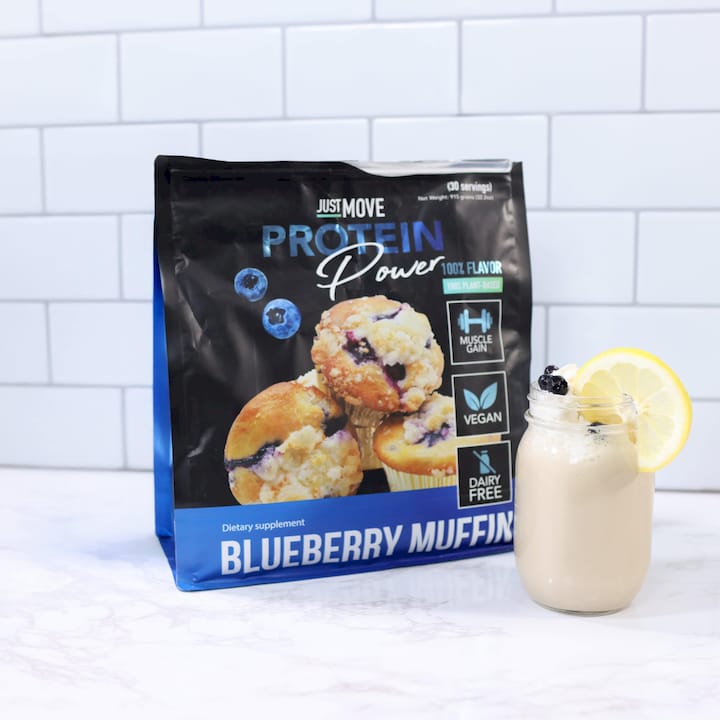
A flavor like a Banana Pudding or Blueberry Muffin profile fits naturally into baked recipes and breakfast bowls without tasting like an obvious supplement addition, which matters if shake fatigue has set in after months of the same routine. Rotating how you consume protein, not just which brand you buy, is often the difference between sticking with a nutrition plan and abandoning it by week three.
Our Take: Stop Overthinking the Powder, Start Fixing the Basics
The research doesn’t support protein powder as a performance enhancer in the way it gets marketed. What it supports is something less exciting but more useful: powder helps runners consistently hit a protein target that whole food alone often misses, especially during high-mileage weeks or when appetite tanks after a long effort.
Where conventional running advice falls short is treating protein as an afterthought to carbohydrate and hydration strategy. Most runner-focused nutrition content obsesses over pre-run fueling and ignores the fact that a 20 to 30 gram protein gap, repeated daily across a training block, adds up to a real recovery deficit by week six.
Prioritize this first: calculate your actual daily gram target based on bodyweight, not a flat “one scoop a day” habit. Then figure out where your real gaps are, usually right after hard sessions or on days appetite craters, and use powder specifically there. Everything else, the flavor, the blend type, the brand, matters far less than getting that foundational math right.
— Just
Which Justmovesupplements Flavor Fits Your Training Week?
Choosing a protein powder shouldn’t mean guessing which flavor you’ll actually tolerate for the next thirty scoops. Justmovesupplements built its lineup around solving that specific frustration, giving runners a way to match flavor and function to their actual training schedule instead of committing blind to a full tub.
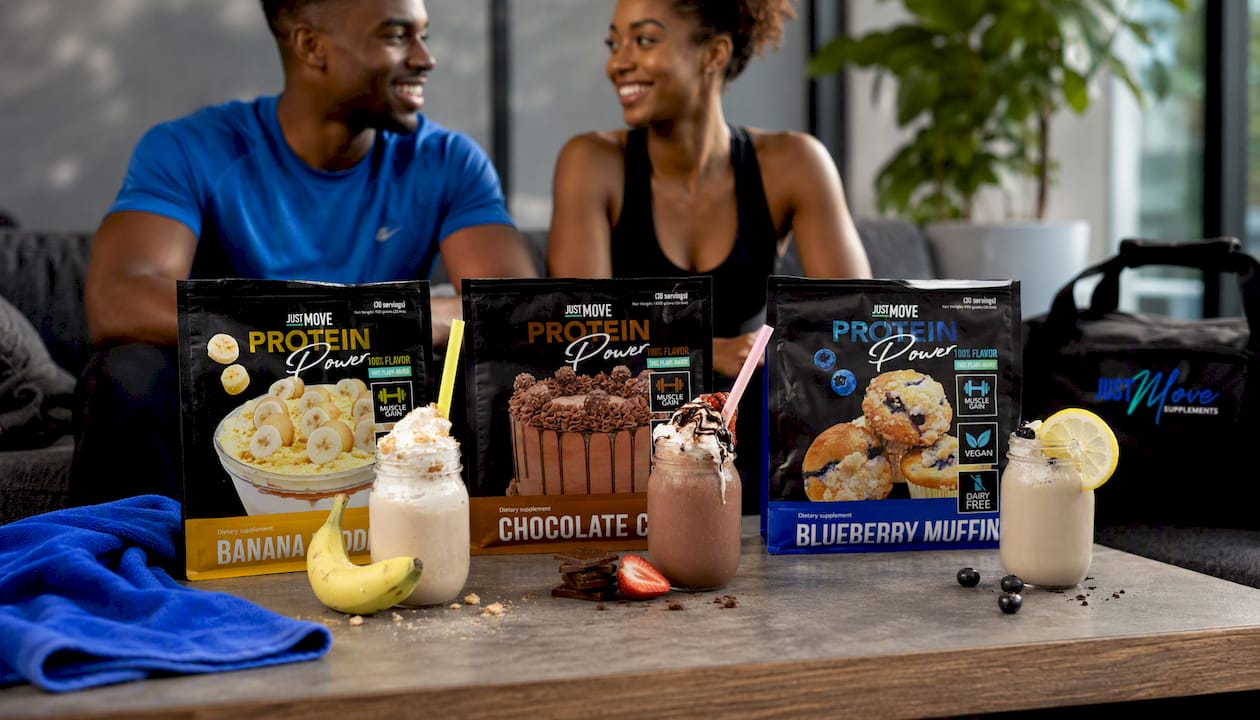
Banana Pudding Protein delivers a dessert-style flavor profile suited to post-run shakes when you want recovery to feel like a reward, not a chore, especially after a long Sunday run when motivation to eat clean runs low. Chocolate Cake Protein works well mixed into oatmeal or baked into a quick muffin, giving you a flavor rich enough to double as a treat while still hitting your per-meal protein target. Blueberry Muffin Protein leans lighter and fruit-forward, a solid pick for morning shakes or blended into yogurt before an early workout when a heavy dessert flavor doesn’t sound appealing yet.
If you’re not sure which one fits your palate or your gut, the sample pack lets you try multiple flavors before committing to a full-size purchase, which cuts down on the wasted money and pantry clutter that comes from guessing wrong. Head to the Banana Pudding Protein, Chocolate Cake Protein, or Blueberry Muffin Protein product pages to see current options and place an order today.
Sources
Recommended


