Most protein powders are still safe to use weeks or months past the printed date if they show no signs of spoilage, though their quality can slip. That date on the tub is almost always a manufacturer’s quality guarantee, not a federal safety cutoff, according to FDA labeling guidance. Here’s what actually matters:
-
Unopened: typically good for up to a couple of years past packaging.
-
Opened: often best used within several months, depending on how you store it.
-
Before every scoop: smell it, look at it, and if something’s off, toss it.
Key Takeaways
Protein powder stays safe well past its printed date in most cases, but its flavor and nutrient potency depend on how you store it and how quickly you use it.
| Point |
Details |
| Dates signal quality, not danger |
The FDA doesn’t require supplement expiration dates, so treat them as a freshness guide, not a safety wall. |
| Typical shelf life runs 1 to 2 years |
Unopened tubs generally last that long; opened tubs are best used within 6 to 12 months. |
| Trust your senses over the calendar |
Rancid smell, clumping, discoloration, or off taste mean toss it regardless of the date. |
| Moisture is the real threat |
Keep the desiccant packet in place, use a dry scoop, and reseal the lid immediately after each use. |
| Buy sizes you’ll finish |
Justmovesupplements’ sample pack and smaller bundles help infrequent users avoid wasting powder past its peak. |
Table of Contents
Understanding Protein Powder Shelf Life and What Changes It
Manufacturers generally set a shelf life of up to two years for unopened protein powder, and Prevention reports that most brands stand behind over a year of peak quality when a tub is stored properly. Cracking the seal starts a countdown. Once air and ambient humidity have regular access to the powder, that guaranteed peak-quality window shrinks to several months, usually under a year.
Format matters more than people realize. Single-serve packets keep their peak quality longer once unopened because each pouch is sealed individually. A bulk tub, by contrast, gets opened dozens of times, and every scoop lets in a little more air and moisture. If you’re an occasional gym-goer who opens a five-pound tub twice a week, you’re exposing the whole batch to the elements far more than someone who empties it in three weeks.
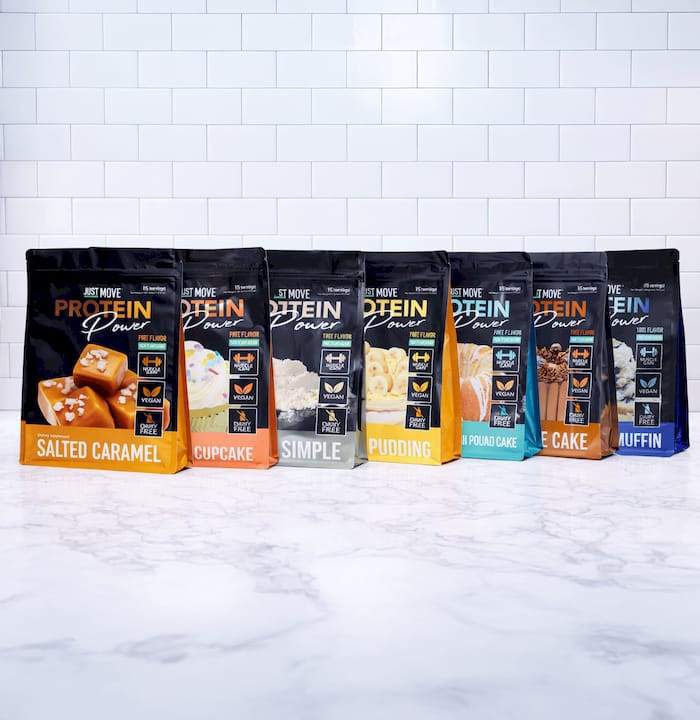
Formulation plays a role too. Plain whey or casein tends to hold up longest. Powders loaded with added fats, probiotics, or fiber blends tend to degrade faster because those ingredients are more chemically reactive than isolated protein. Peer-reviewed stability research backs this up: accelerated shelf-life testing found whey protein held stable beyond 12 months at moderate room temperature, but heat sped up oxidation and flavor loss considerably. Temperature and humidity, not the calendar, drive most of the real risk.
How to Tell If Your Protein Powder Has Gone Bad
Trust your senses before you trust the date. Spoiled protein powder almost always announces itself if you know what to check.
-
Look at the color. Discoloration, dark spots, or visible mold mean it’s done. Do not taste-test to confirm.
-
Check for clumping. Powder should feel loose and dry. Hard clumps usually mean moisture got in, which creates conditions for microbial growth.
-
Smell it. A rancid, sour, or chemical odor signals fat oxidation. Fresh powder smells like its flavor, nothing sharper.
-
Taste a pinch, only if everything else checks out. A bitter or “off” taste is your last confirmation before you decide.
Each of these signs points to a real chemical or biological process, not just a hunch. Rancid smell means the fats have oxidized. Clumping means moisture crept in, and moisture is exactly what supports mold and bacteria. Health experts consistently point to smell, texture, and color as the most reliable spoilage indicators available to a home user.
Pro Tip: When in doubt, throw it out. A tub of protein powder costs a lot less than a week of stomach trouble.
Best Practices for Storing Protein Powder to Keep It Fresh
Where you keep your tub matters almost as much as what’s in it. Store protein powder in its original, opaque container, in a spot that’s cool, dry, and dark. Skip the bathroom shelf and the top of the fridge. Both spots swing in temperature and humidity every time someone showers or the compressor kicks on, and heat is the single biggest accelerant of oxidation.
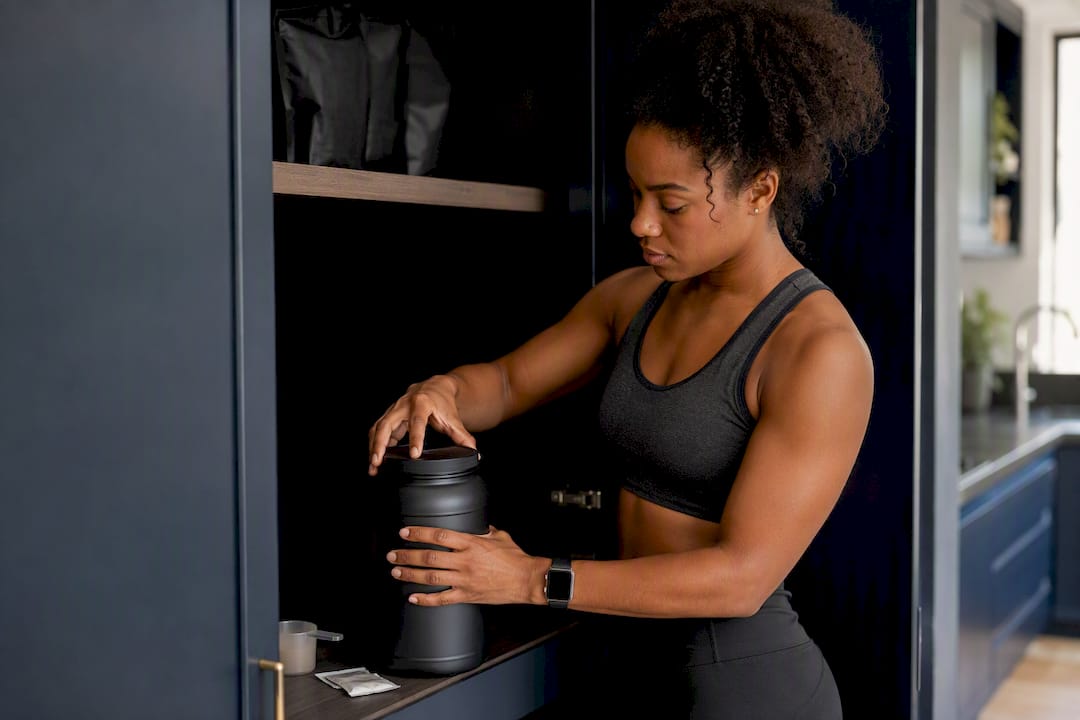
Keep the desiccant packet inside the tub after opening. It’s a small paper sachet, easy to toss out by accident, but it’s doing real work absorbing ambient moisture. Use a dry scoop every time, and reseal the lid immediately after each use rather than leaving it cracked open on the counter.
If you only mix a shake two or three times a week, consider a smaller tub or single-serve packets instead of a bulk container that will sit open for months. Less powder exposed to air for a shorter stretch means less chance of losing flavor or nutrients before you finish it.
Headed to the gym or traveling? Portion powder into small resealable containers rather than carrying the whole tub. A damp gym bag or a sweaty locker room is exactly the kind of humidity that ruins a scoop’s worth of quality fast, so if a portion gets wet, don’t put it back in the main container.
Pro Tip: Keep the scoop dry and the tub sealed. Moisture, not time, is the real enemy of shelf-stable powder.
What “Best By” Actually Means on a Supplement Label
The label language matters more than most shoppers assume. “Best-if-used-by” and “use-by” generally describe peak quality, not a safety wall you fall off the day it passes. “Sell-by” is a retailer stocking instruction and has nothing to do with your kitchen shelf.
The FDA does not require expiration dates on dietary supplements at all. Brands add them voluntarily to signal when flavor and potency are guaranteed to be at their best. Infant formula is the one product category where dating is federally regulated.
- Treat the date as a quality benchmark, never a strict safety deadline.
- Combine it with a smell and clump check every time you scoop.
-
FSIS guidance on food date labeling makes the same point about most packaged foods: dates exist to reduce waste and manage quality, not to draw a hard safety line.
What Actually Happens to Protein Powder as It Ages
Two chemical processes drive most of the decline. Fat oxidation causes rancidity, the sour or chemical smell that’s the clearest spoilage tell you’ll encounter. Maillard browning, the same reaction that browns bread crust, can occur between amino acids and residual sugars in some formulas, and ongoing stability research suggests this can quietly reduce the bioavailability of lysine, one of the essential amino acids, when powder sits in heat and humidity for too long.
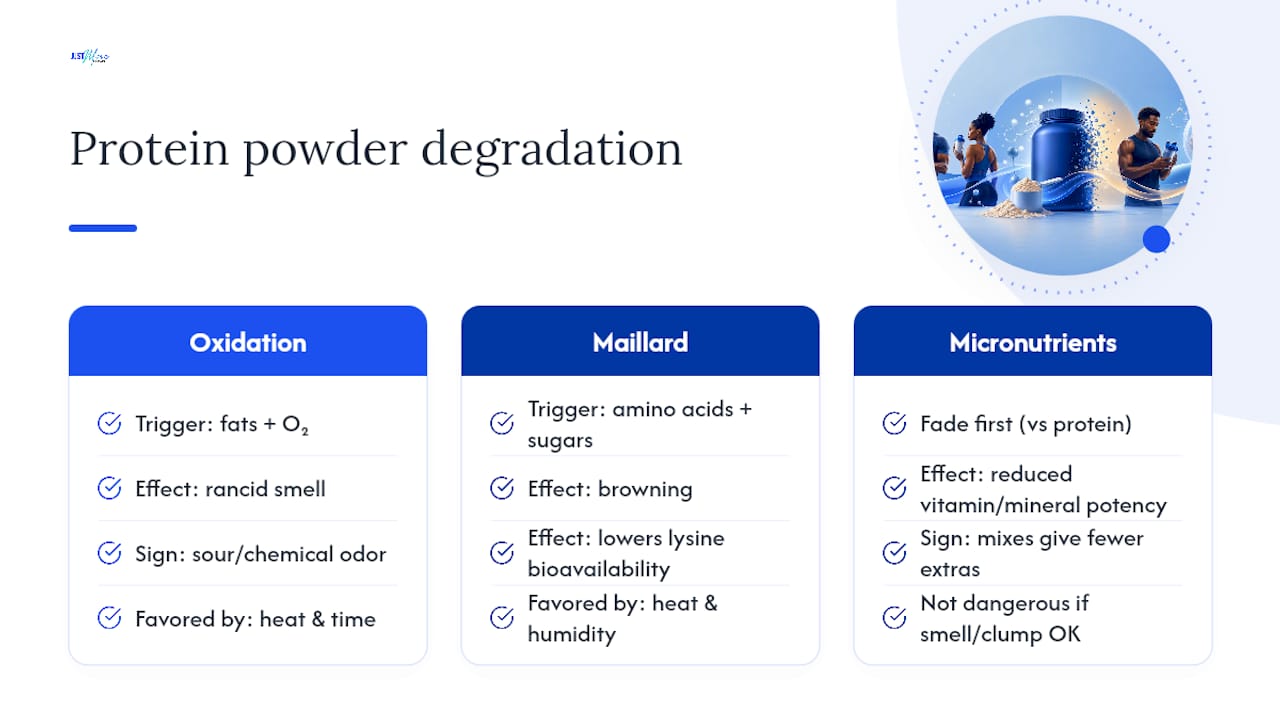
Added micronutrients usually fade first. Prevention notes that vitamins and minerals blended into protein powder tend to lose potency well before the protein itself breaks down. Practically, this means an aging tub is more likely to shortchange you on a fortified vitamin than on protein content. Older powder that still passes the smell and clump test isn’t dangerous. It may just taste flatter and deliver a little less of whatever extras were mixed in.
When to Toss Protein Powder and How to Dispose of It
Some signs leave no room for judgment calls. Discard the tub immediately if you see visible mold, persistent damp clumping, any evidence of pests, or a rancid smell that doesn’t fade.
If the powder is a few weeks past its date but looks, smells, and tastes normal, that’s typically a quality question, not a safety one. Use it if you’re comfortable, or replace it if you’re chasing serious performance goals and want full potency.
- Used or expired powder goes in regular household trash. No special handling required.
- Rinse empty plastic tubs and check local guidelines. Many are recyclable curbside.
Justmovesupplements Advice for Getting the Most Out of Every Tub
Justmovesupplements builds its lineup around one practical idea: buy what you’ll actually finish while it’s still at peak quality. That’s the entire logic behind the Just MOVE Protein Sample Variety Pack, which lets you test seven flavors in smaller portions instead of committing to a five-pound tub of a flavor you might not love.
For readers building a fuller routine, the lineup covers more ground than plain protein. Just Shred Green Apple Fat Burner, Fruit Punch Energy Rush pre-workout, the AM/PM Shred Bundle, and Sleep N Shred all round out a stack without asking you to open five bulk tubs at once.
A Practical Rule of Thumb for Protein Powder Freshness
Dates guide quality, your senses confirm safety, and when the two disagree, your senses win. If a tub smells sharp, clumps in the humidity, or tastes off, no date on the label changes what your nose already told you. The simplest way to sidestep the whole question is to buy amounts you’ll actually finish. If you use protein a few times a week rather than daily, a smaller tub or a sample pack beats a bulk container that outlasts its own peak quality.
Try Before You Commit With a Sample Pack
Buying a full tub of a flavor you’ve never tried is a gamble, and a tub that sits half finished for eight months is exactly how good protein turns into wasted protein. Justmovesupplements built the sample pack model to solve that specific problem: smaller portions, more flavor variety, less risk of a five-pound container going stale in your pantry.
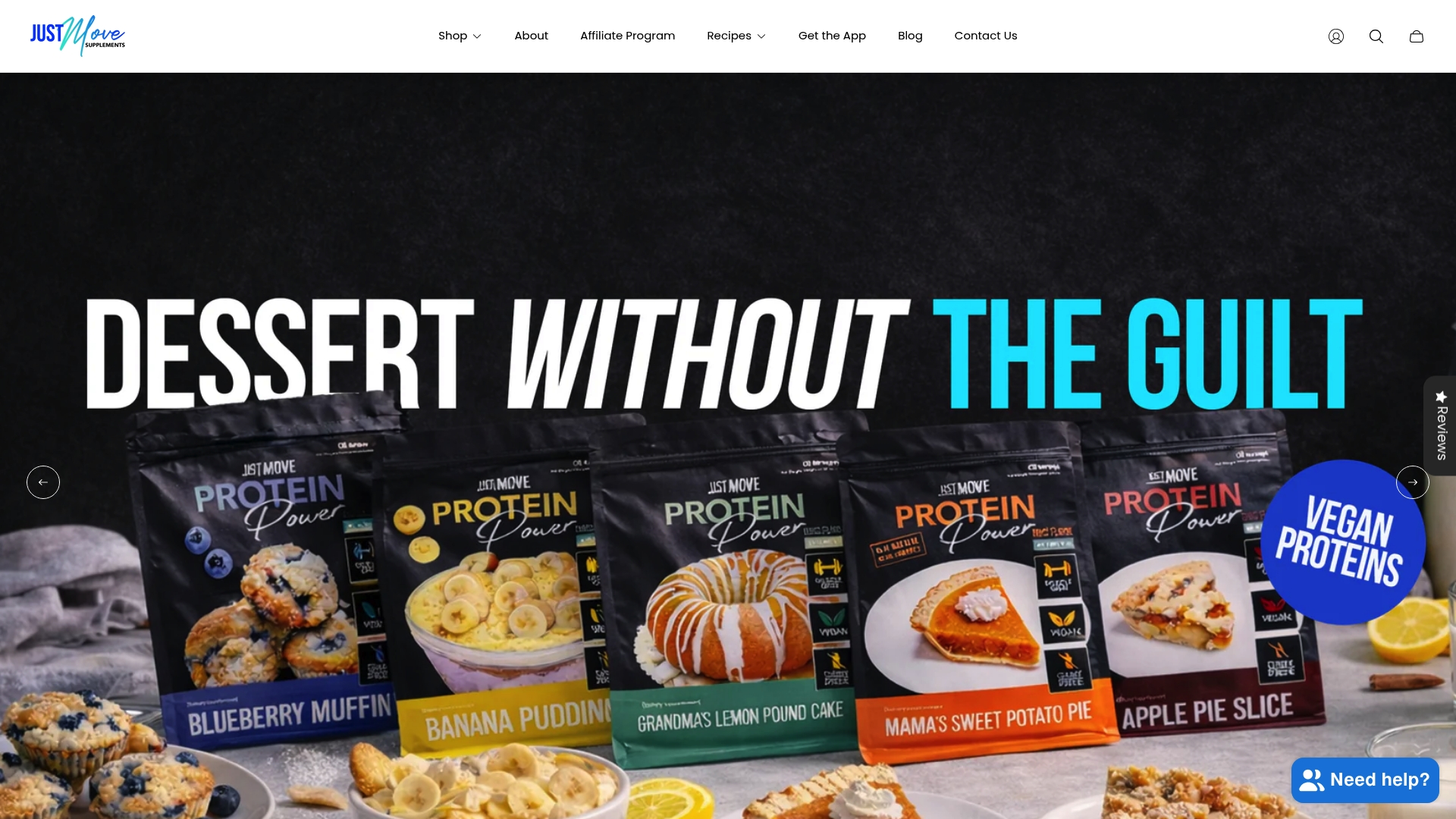
The Just MOVE Protein Sample Variety Pack puts seven flavors in your hands at once, so you find your favorite before committing to a bulk order. If you already know you’ll go through more, the 15 Serving Protein Variety Bundle hits a middle ground between sample size and full tub, sized so most people finish it well within the peak-quality window. Browse the full protein samples collection and pick a size that actually matches how often you shake.
Frequently Asked Questions
Does protein powder expire?
Not in the strict food-safety sense. It loses quality gradually rather than becoming dangerous overnight, and most brands set a voluntary best-by date rather than a regulated expiration.
How long does protein powder last once opened?
Usually 6 to 12 months, depending on how well you control heat and humidity. A tub kept sealed in a cool pantry will outlast one left open on a sunny counter.
Is expired protein powder safe to drink?
Often yes, if it shows no rancid smell, clumping, discoloration, or off taste. If any of those signs show up, don’t risk it, no matter how close to the date you are.
What’s the best way to store protein powder?
Keep it in its original container, sealed tight, in a cool and dark spot away from heat and moisture. Leave the desiccant packet inside and always scoop with a dry spoon.
Can old protein powder make you sick?
Rarely, and mainly if moisture has led to mold or bacterial growth. That’s why a smell and clump check before every shake matters more than the printed date.
Sources
Recommended


