Yes, protein powder can help with weight loss when it raises your daily protein intake while lowering your total calories, especially when paired with resistance training. Protein has a higher thermic effect than carbs or fat, meaning your body burns more calories digesting it, and hitting your protein target helps preserve muscle while you’re in a calorie deficit. That combination is what actually moves the scale, not the shake itself.
A few numbers back this up:
Justmovesupplements built its lineup around exactly this kind of practical use. Plain And Simple Unflavored Protein works into coffee, oatmeal, or any recipe without adding sugar or flavor clutter. Apple Pie Slice Protein solves the adherence problem, since a shake you actually enjoy is one you’ll keep drinking. And the Protein Shake Recipes Downloadable PDF gives you tested, low-calorie combinations so you’re not guessing your way through meal replacement.
Key Takeaways
Protein powder supports weight loss when it replaces higher-calorie foods, raises daily protein intake, and pairs with resistance training to preserve muscle.
| Point |
Details |
| Protein works through displacement |
It helps most when it replaces a higher-calorie meal or snack, not when added on top of normal eating. |
| Match protein type to purpose |
Use whey after workouts, casein between meals, and plant protein if you have dietary restrictions. |
| Check the label ratio first |
Look for 20 to 25 grams of protein per 120 to 150 calories with minimal added sugar. |
| Special populations need more care |
GLP-1 users and older adults should prioritize easily digestible protein and clinician guidance. |
| Justmovesupplements offers practical starting points |
Plain And Simple Unflavored Protein, Apple Pie Slice Protein, and the recipe PDF cover meal replacement, adherence, and low-calorie recipe planning. |
Table of Contents
How Does Protein Powder Support Weight Loss?
Protein fills you up more effectively than carbs or fat, largely through its effect on satiety hormones like GLP-1 and PYY, both of which signal fullness to your brain after a meal. It also carries a thermic effect of roughly 20 to 30 percent, meaning your body spends more energy processing protein than it does breaking down the same number of calories from bread or oil. That difference adds up over weeks, not days.
During a calorie deficit, protein does something else important: it protects lean muscle tissue that your body might otherwise break down for energy. Peer-reviewed research on protein and body composition consistently shows this muscle-preservation effect is strongest when paired with resistance training, not cardio alone. Lifting weights gives your body a reason to keep the muscle you have rather than treat it as expendable fuel.
Here’s where people get it wrong:
- Protein powder still has calories. Adding a shake on top of your normal meals works against you, not for you.
- The benefit only shows up when the shake replaces something higher in calories, like a fast-food lunch or a sugary snack.
-
Mayo Clinic is blunt about this: shakes can lower daily calorie intake, but they’re not a stand-alone fix, and long-term results still depend on whole-food choices and activity.
Think of protein powder as a lever, not an engine. It works because of what it replaces and what it preserves, not because of anything magical in the scoop.
Which Protein Type Works Best For Fat Loss?
Not all protein powders behave the same way once they hit your stomach, and that matters more for weight loss than most labels let on.
Whey isolate absorbs fast and delivers a high protein-to-calorie ratio, which makes it a strong pick for post-workout recovery or a quick breakfast replacement. Whey concentrate costs less but carries slightly more lactose and fat, so isolate is usually the better call if you’re watching calories closely.
Casein digests far more slowly than whey, which extends the feeling of fullness between meals. That makes it a smart choice for an evening meal replacement or a buffer against late-night snacking.
Plant proteins (pea, rice, or soy blends) matter for anyone with dairy allergies or a vegan diet, though they often need a slightly larger serving to match whey’s amino acid completeness. Check the label for a full essential amino acid profile rather than assuming all plant blends are equal.
Blends that add digestive enzymes or collagen show up for a reason: they ease digestion for people who deal with bloating, which is common among GLP-1 medication users.
Pro Tip: If you’re mixing whey and casein in the same day, drink whey after your workout and save casein for your last meal replacement. You get fast recovery and long fullness in one strategy. Justmovesupplements’ flavor mixing guide has more combinations worth trying.
What Should You Look For On A Protein Powder Label?
The nutrition label tells you almost everything you need to know, if you know what to check first.
-
Protein-to-calorie ratio. Aim for at least 20 to 25 grams of protein for every 120 to 150 calories. Anything lower is padded with fillers you don’t need.
-
Added sugar. Zero to 3 grams per serving is the target for meal replacement use. Anything higher defeats the purpose of a low-calorie protein powder.
-
Fiber and sweeteners. A few grams of fiber support fullness; check whether sweeteners are natural or artificial if you’re sensitive to either.
-
Ingredient list length. Shorter is almost always better, and it makes portion math easier when you’re tracking calories.
Beyond the panel itself, a few practical habits make selection easier:
- Look for third-party testing seals and clear allergen labeling before you buy.
- Compare price per serving, not price per tub, since scoop sizes vary widely between brands.
- Try a sample pack before committing to a large tub, since taste fatigue kills adherence faster than nutrition ever does.
For a deeper walk-through of avoiding hidden sugar, Justmovesupplements’ guide to low-sugar protein breaks down brand-by-brand comparisons in more detail.
How Do You Use Protein Powder For Weight Loss Day To Day?
Timing and purpose change what a shake should look like.
-
Meal replacement: use a full serving with fruit or fiber to hit 300 to 400 calories total, reserved for busy days when a whole-food meal isn’t realistic.
-
Snack: a smaller half-serving mixed with water curbs hunger between meals without adding much calorie load.
-
Post-workout: prioritize fast-digesting whey here, since the goal is muscle repair, not appetite control.
For daily targets, most fat-loss guidance points to 0.7 to 1.0 grams of protein per pound of goal body weight, split across three to five servings so your body isn’t overloaded at one sitting. Pair that intake with resistance training two to four times a week, and track progress with more than the scale. Strength gains, waist measurements, and how your clothes fit all tell you things a number on a scale can’t.
Justmovesupplements’ guide on high-protein meal replacements has more on structuring this. And treat shakes as a bridge, not a destination: the long-term goal is shifting back toward whole-food meals once the habit and the results are established.
Do GLP-1 Users And Older Adults Need A Different Protein Strategy?
Rapid weight loss from GLP-1 medications carries a real risk: a meaningful share of that weight loss can come from muscle, not just fat. U.S. News reporting on this population recommends low-carb, easily digestible protein powders, since appetite suppression from these medications often leaves little room for large meals or heavy fiber loads that cause GI discomfort.
Muscle loss during GLP-1 treatment isn’t automatic, but it’s common enough that protein intake and resistance training deserve deliberate attention rather than an afterthought.
Older adults face a related issue: sarcopenia, the gradual loss of muscle mass with age, accelerates during any calorie deficit if protein intake isn’t deliberately increased.
A few practical notes for both groups:
- Choose formulas with digestive enzymes if bloating or discomfort is a concern.
- Split protein across more, smaller servings rather than one large shake.
- Talk to a clinician before changing protein intake significantly while on GLP-1 medication, and consider resources like this muscle-loss guidance for GLP-1 users for more context.
What Most Weight-Loss Advice Gets Wrong About Protein Powder
The supplement industry loves to sell protein powder as a shortcut, and that framing does readers a disservice. The research actually supports something more modest and more useful: protein powder is a tool for calorie displacement and muscle preservation, not a substance with fat-burning properties of its own. When people fail with protein shakes, it’s rarely the product’s fault. It’s because they added the shake on top of their normal eating instead of using it to replace something worse.
Conventional advice also tends to treat all protein powders as interchangeable, pushing whey by default regardless of someone’s digestion, schedule, or medication status. That’s backwards. The right protein type depends on when you’re using it and what problem you’re solving, whether that’s post-workout recovery, appetite control between meals, or muscle protection during rapid GLP-1-driven weight loss.
If you take one thing from this guide, prioritize the protein-to-calorie ratio on the label before anything else. Flavor and brand loyalty matter for adherence, but they come second to the math that actually drives results.
— Just
Try Justmovesupplements’ Approach To Protein-Powered Weight Loss
Most protein powders on shelves right now are either loaded with added sugar to mask a chalky taste or so bland you stop using them within two weeks. Justmovesupplements built its lineup to avoid both problems.
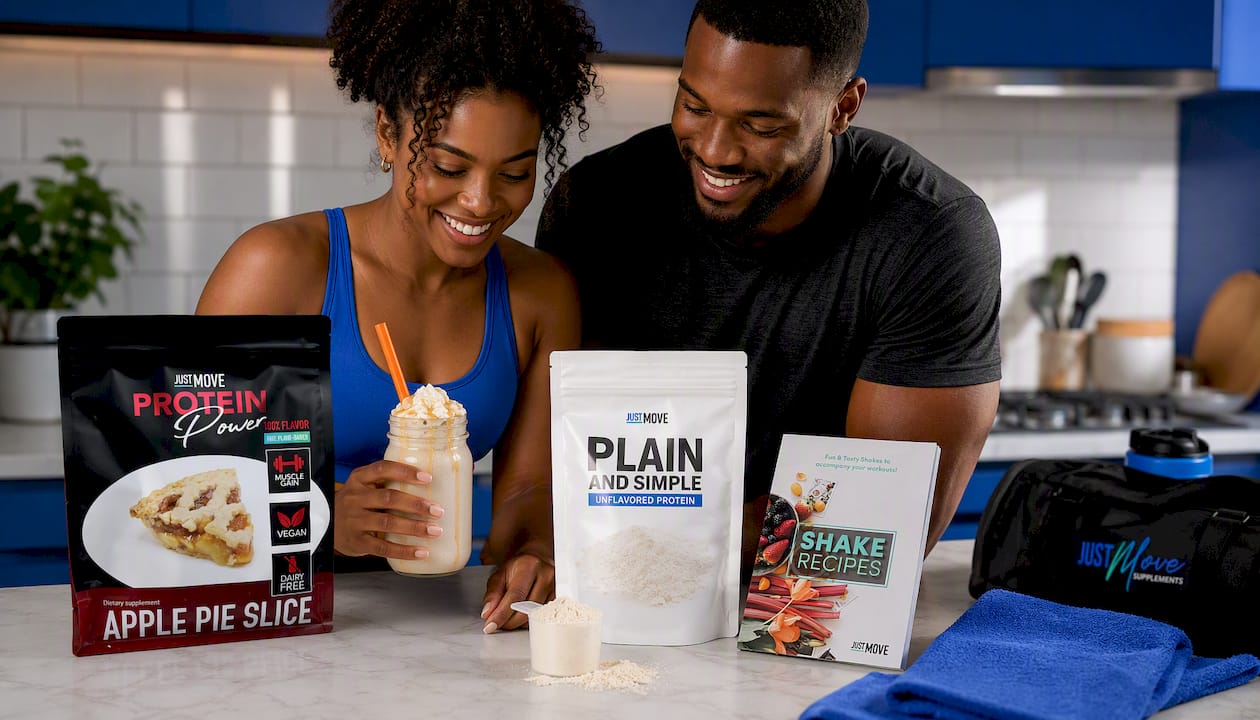
Plain And Simple Unflavored Protein is the option to reach for when you want full control, whether that’s stirring it into coffee, oatmeal, or a recipe from the Protein Shake Recipes Downloadable PDF without fighting an overpowering flavor. Apple Pie Slice Protein solves the opposite problem: a shake worth looking forward to, with a protein-to-calorie ratio built for meal replacement rather than dessert. And the recipe PDF takes the guesswork out of building low-calorie, high-protein combinations that don’t taste like a compromise.
If you’re not sure which flavor fits your routine, start with a sample pack so you can test options before committing to a full tub. Visit the Apple Pie Slice Protein product page to see the full nutrition breakdown and place your order today.
Sources
Recommended


