What is layered protein powder and why does it matter?
Layered protein powder is a formula that combines multiple protein sources, each with a different digestion rate, into a single supplement. Instead of delivering one burst of amino acids, it creates a sustained release that supports muscle repair across hours, not just minutes. For fitness enthusiasts who train hard and need consistent nourishment, that extended delivery window is a real advantage.
Here is what layered protein powder typically delivers:
-
Sustained amino acid release across multiple hours post-consumption
-
Broader nutritional coverage by combining the strengths of fast, medium, and slow proteins
-
Flexibility for use post-workout, between meals, or before sleep
-
Reduced digestive strain compared to high doses of a single protein type
Pro Tip: When selecting a layered blend, check the label for at least two distinct protein sources. A formula listing only one type, regardless of how it is processed, is not a true layered product.
Key protein types commonly found in layered blends
Understanding what goes into a layered formula helps you choose the right one. Each protein source contributes something different to the overall absorption profile.
-
Whey protein concentrate (WPC): Contains 35–80% protein by weight, retains bioactive compounds like lactoferrin and immunoglobulins, and supports immune function. Lower-grade WPC includes lactose, which matters for sensitive athletes.
-
Whey protein isolate (WPI): At 90% or higher protein content with minimal lactose and fat, WPI is ideal for those watching carbohydrates or managing lactose sensitivity.
-
Whey protein hydrolysate (WPH): Enzymatically broken down for faster absorption and reduced allergenic potential, making it a strong choice for post-exercise recovery.
-
Casein: Digests slowly, releasing amino acids over 6–8 hours, which prevents muscle breakdown during fasting periods like overnight sleep.
-
Pea protein: A high-quality plant source rich in arginine, suitable for dairy-sensitive athletes and vegans.
-
Soy protein: Contains all nine essential amino acids, making it a complete plant protein that works well in layered formulas.
-
Rice protein: Often paired with pea protein to create a complete amino acid profile comparable to dairy sources.
Leucine deserves special attention across all these sources. It directly activates the mTOR pathway, the signaling cascade that triggers muscle protein synthesis. Whey delivers leucine efficiently due to its biochemical properties, which is why it anchors most layered formulas.
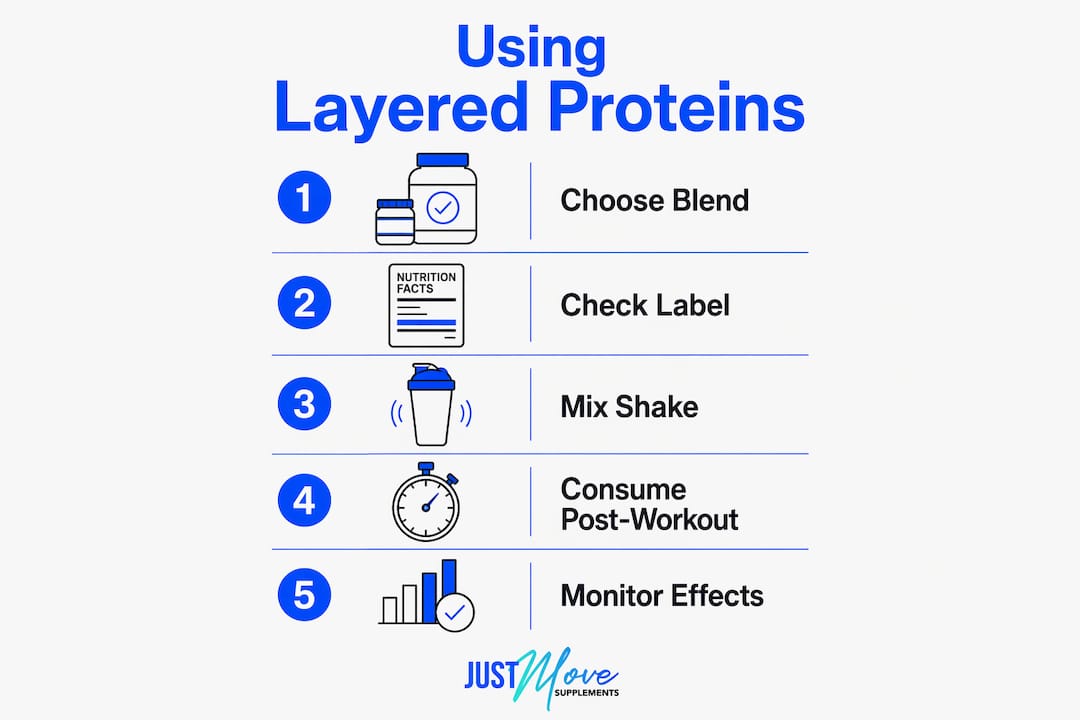
How to use layered protein powder effectively
Timing and portion size shape how much benefit you actually get from a layered blend.
-
Post-workout: Consume within 30–60 minutes after training to take advantage of the fast-acting proteins like WPI or WPH.
-
Between meals: A mid-day shake sustains amino acid levels and reduces muscle breakdown during long gaps between eating.
-
Before bed: Casein-heavy blends work best here, given their 6–8 hour release window that aligns with overnight recovery.
-
Daily intake target: The ISSN recommends 1.4–2.0 grams per kilogram of body weight per day for most active individuals.
-
Mixing: Blend with water for a clean, low-calorie option, or use milk for added protein and calcium. You can also incorporate layered powder into oats, yogurt, or smoothies for variety. Justmovesupplements has a helpful guide on using protein as a meal for more practical ideas.
Pro Tip: If you experience bloating with a layered blend that includes WPC, try switching to a formula that uses WPI or WPH as the primary fast-digesting component. The lower lactose content often resolves the issue without sacrificing absorption speed.
Nutritional benefits of layered protein powders for fitness enthusiasts
Layered formulas offer advantages that go beyond simple protein delivery.
-
Prolonged muscle nourishment: Combining fast and slow proteins keeps amino acids circulating longer, reducing the catabolic window after training.
-
Muscle protein synthesis support: Leucine from whey triggers the mTOR pathway, while casein sustains the environment for continued repair.
-
Reduced digestive load: Spreading protein absorption across multiple sources and timeframes tends to be gentler on the gut than a large single-source dose.
-
Allergen flexibility: Blends that include plant proteins like pea and rice offer options for those avoiding dairy entirely.
-
Satiety: Slower-digesting proteins in the blend help you feel full longer, which supports body composition goals alongside muscle building.
-
Palatability: Layered formulas often mix better and taste more balanced than single-source powders, which can have a chalky or overpowering flavor profile. Justmovesupplements covers protein flavor formulation in depth for those curious about how taste is achieved.
How layered protein powder compares to single-source options
Single-source powders, like a pure whey isolate or a standalone pea protein, do one thing well. Whey isolate delivers a fast, clean hit of amino acids ideal for the immediate post-workout window. Casein alone is excellent before bed. The limitation is that neither covers the full recovery timeline on its own.

Layered blends address that gap directly. By combining fast, medium, and slow proteins, they sustain amino acid availability across a longer period, which better supports both acute recovery and ongoing muscle maintenance. For athletes who train once or twice a day and need consistent nourishment throughout, a layered formula reduces the need to time multiple separate supplements precisely.
Single-source powders still have their place, particularly for athletes with specific dietary restrictions or those who prefer simplicity. But for fitness enthusiasts focused on maximizing muscle protein synthesis across the full recovery window, a layered blend offers broader coverage in a single scoop.
Potential drawbacks and allergens to know
Layered protein powders are not without trade-offs. Because they combine multiple protein sources, the allergen profile is more complex than a single-source product.
Dairy-based components like WPC, WPI, and casein contain lactose and milk proteins. Athletes with lactose intolerance or milk allergies need to read labels carefully, since even WPI, which is low in lactose, may still trigger reactions in those with true milk protein allergies. Soy protein, another common layering ingredient, is a top allergen for a portion of the population.
Cost is another consideration. The processing required to combine and balance multiple protein types typically makes layered formulas more expensive per serving than basic concentrates. Some blends also use proprietary matrices that obscure the exact ratio of each protein type, making it harder to evaluate what you are actually getting. Learning to read supplement labels is the most practical way to cut through that ambiguity.
Popular examples of layered protein powders
Justmovesupplements offers a protein sample variety pack that lets you try multiple protein types and flavors before committing to a full-size purchase. This is particularly useful when exploring layered formulas, since taste and digestive response vary by individual. Their Plain and Simple Unflavored Protein is a clean, versatile option that works well as a base in layered shake recipes.
Across the broader market, layered blends typically appear under labels like “protein matrix,” “sustained release protein,” or “time-release blend.” These terms signal that the formula includes at least two protein sources with different digestion rates. When evaluating any layered product, look for a clear breakdown of each protein type and its percentage of the total formula.

Ready to find your ideal protein formula? Explore Justmovesupplements’ protein sample collection and discover which blend fits your training and taste preferences best.
Key Takeaways
Layered protein powder outperforms single-source options for sustained muscle nourishment because it combines fast, medium, and slow proteins to extend amino acid availability across the full recovery window.
| Point |
Details |
| Definition |
Layered protein powder blends multiple protein types to deliver amino acids at different rates. |
| Leucine and mTOR |
Leucine from whey activates the mTOR pathway, directly triggering muscle protein synthesis. |
| Casein’s role |
Casein releases amino acids over 6–8 hours, making it ideal for overnight recovery. |
| Daily intake target |
ISSN recommends 1.4–2.0 g per kg of body weight daily for active individuals. |
| Allergen awareness |
Dairy and soy components in layered blends require careful label review for sensitive athletes. |
Why protein quality shapes your results more than quantity
The fitness community tends to fixate on hitting a daily protein number, and the number matters. But the type and timing of protein you consume shapes how effectively your body uses it. A layered blend is not a marketing gimmick. It reflects a real physiological reality: muscle repair does not happen in a single post-workout window. It continues for hours, and the amino acid environment during that period determines how much adaptation actually occurs.
What gets underestimated is how much digestive tolerance affects consistency. If a protein powder causes bloating or discomfort, most people quietly stop using it. A well-formulated layered blend, with WPI or WPH as the fast component and casein or a plant protein for sustained release, tends to be gentler and more versatile. That consistency, showing up with quality nutrition day after day, is what drives long-term results.
Justmovesupplements was built around exactly this idea: that taste, tolerance, and quality all have to work together. Trying before committing, through a sample pack, is the most honest way to find what works for your body.
Recommended


